
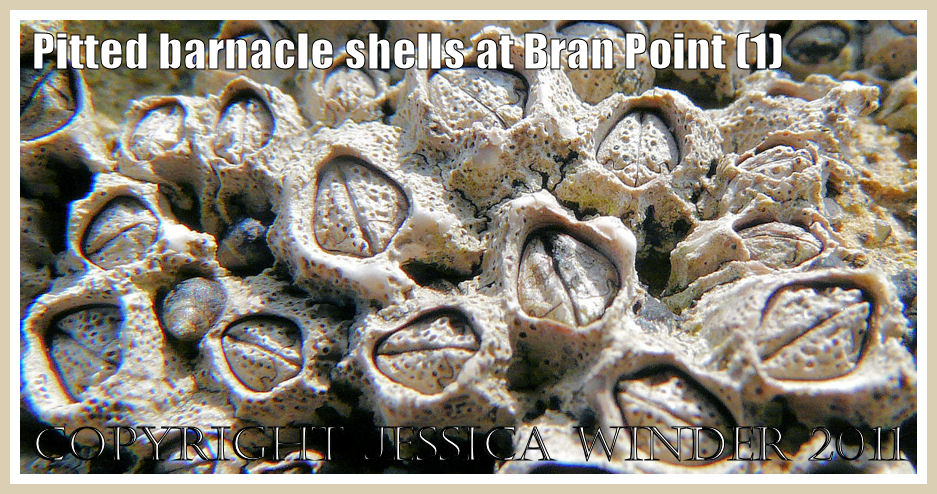
Incredible sculpturings and pittings are revealed in this close-up of barnacle shells. This sort of barnacle is known as Chthamalus montagui Southward and encrusts the rocky ledge of Bran Point at Ringstead Bay in Dorset. The species is characterised by the kite-shaped opening and the shape of the four plates (terga and scuta) that make up the operculum or lid. What really intrigued me was the pit marks on the shells. These are not normal. I looked in the literature but could only find references to regular growth ridges and rows of pits on the opercular plates: that didn’t seem to fit the bill.
Then I speculated that the thick rough shells might be the result of age or external calcium deposition from solution of the adjacent limestone rocks. Maybe the pits were evidence of corrosion by acid rain or the nearby natural oil seepage.
The truth about the pits, now that I have eventually tracked it down, is more amazing than I could have imagined. There is a minute lichen called Collemopsidum sublitoralis (used to be called Pyrenocollema halodytes) which lives in and on rocks – it is endolithic. It also lives in the shells of barnacles and affects their appearance. Lichens are strange organisms which are part alga and part fungus. The pits in the barnacle shells are caused by the occupying lichen and contain the fungal fruiting bodies or perithecia of this lichen.
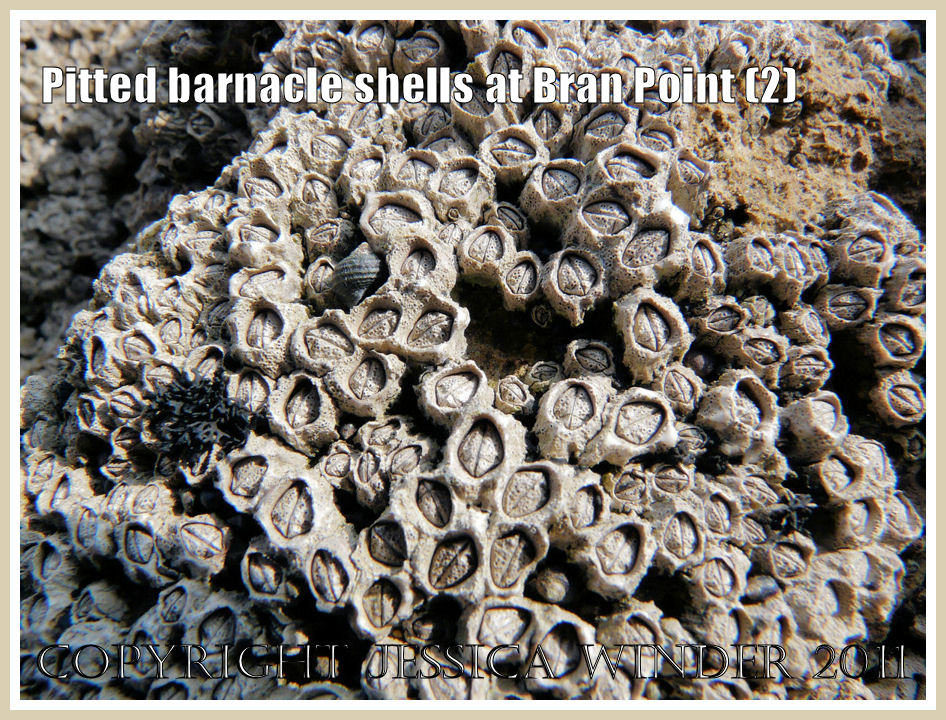
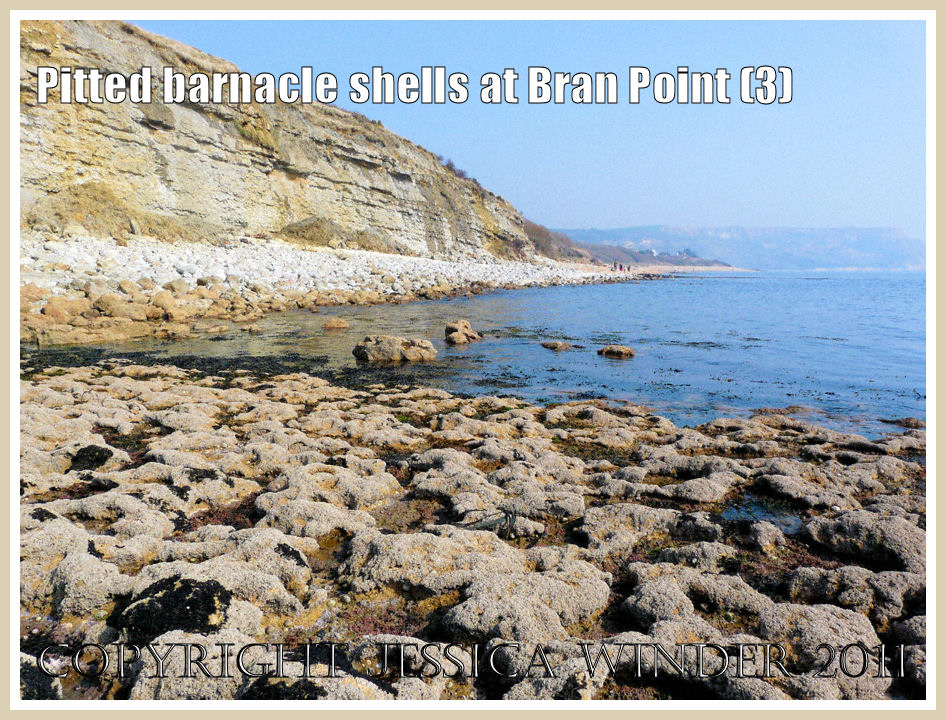
Pictured above is a general view of the encrusting layer of Chthamalus montagui barnacles. The photograph below shows the view from the same barnacle-encrusted rocky ledge of Bran Point looking eastwards acrross Ringstead Bay.
COPYRIGHT JESSICA WINDER 2011
All Rights Reserved
 Jessica's Nature Blog
I must say that your attention to the details of the shore is amazing. Keep up the good work!
LikeLike
Thank you. I guess you really need to be aware of the details in order to understand and appreciate what is going on in the wonderful world of the seashore. Thank you for showing an interest.
LikeLike