
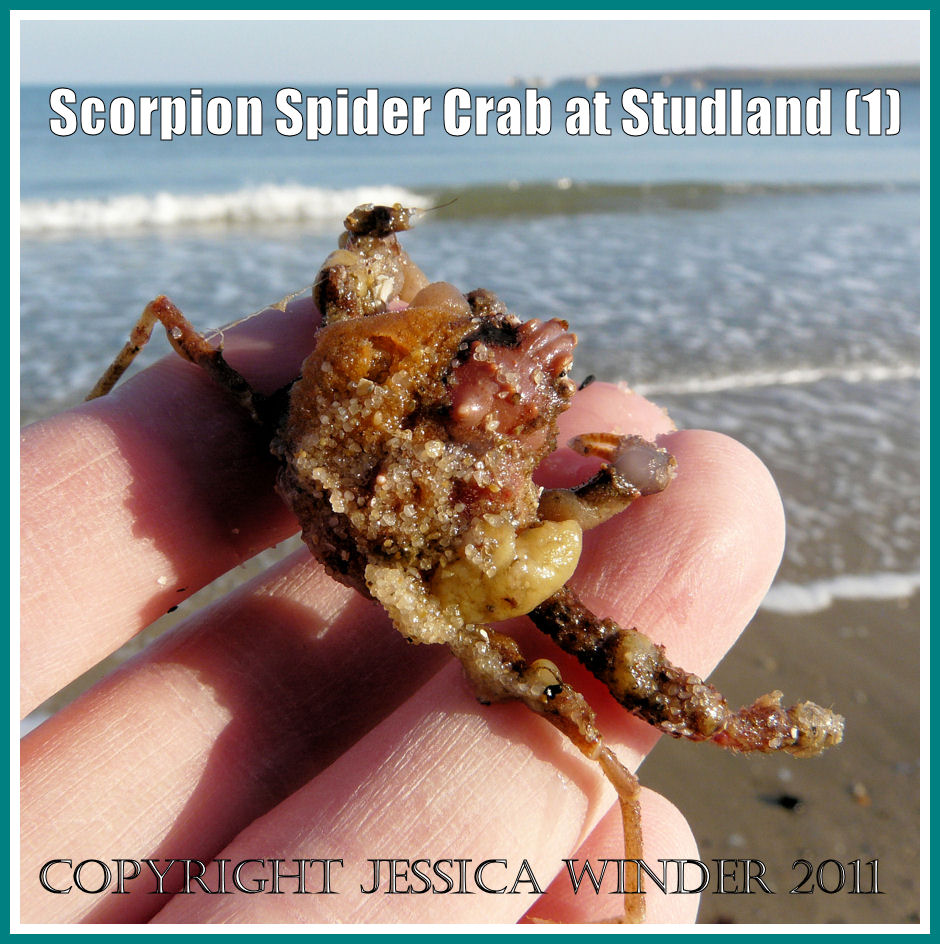
You could be excused for not noticing this little creature on Studland’s strandline. In the first place: it is very small. In the second place: it shouldn’t really be there. And in the third place: it is in disguise.
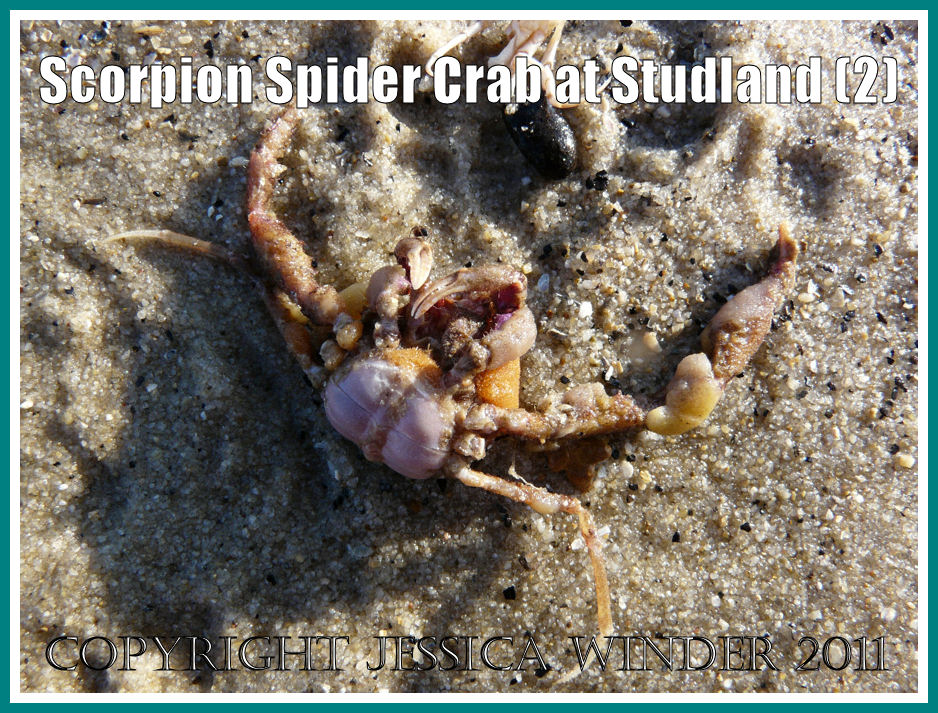
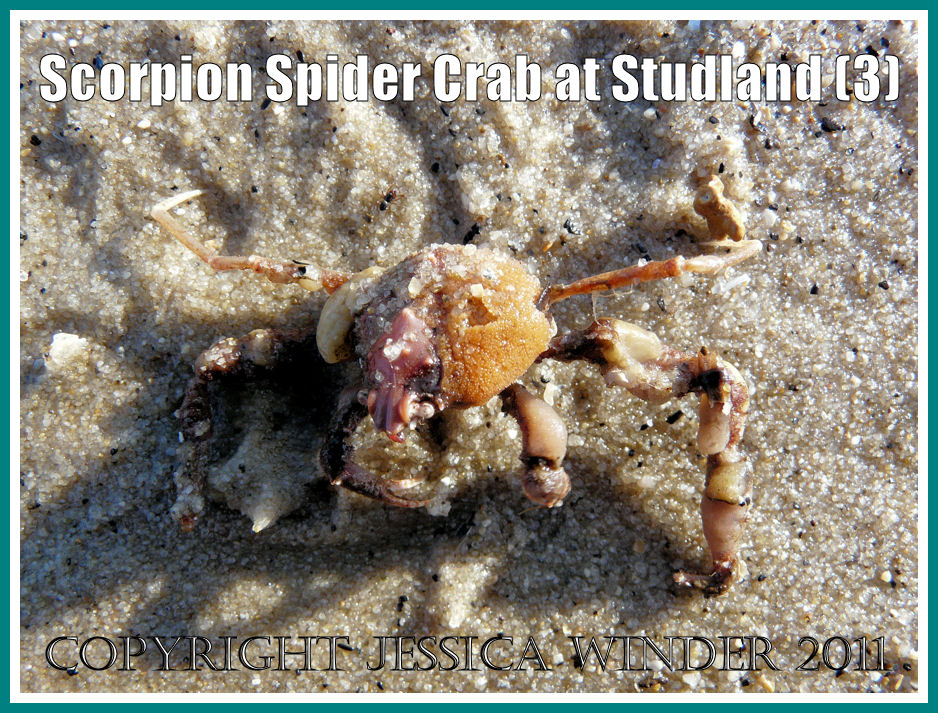
So what actually is it? It is a Scorpion Spider Crab, Inachus dorsettensis (Pennant). The body is small (the carapace of this specimen is about 20mm long) and roughly pear-shaped. Four of its pairs of legs or pereopods are very long and thin in relation to the body. The two front legs or chelipeds, are shorter, and more swollen in the males.
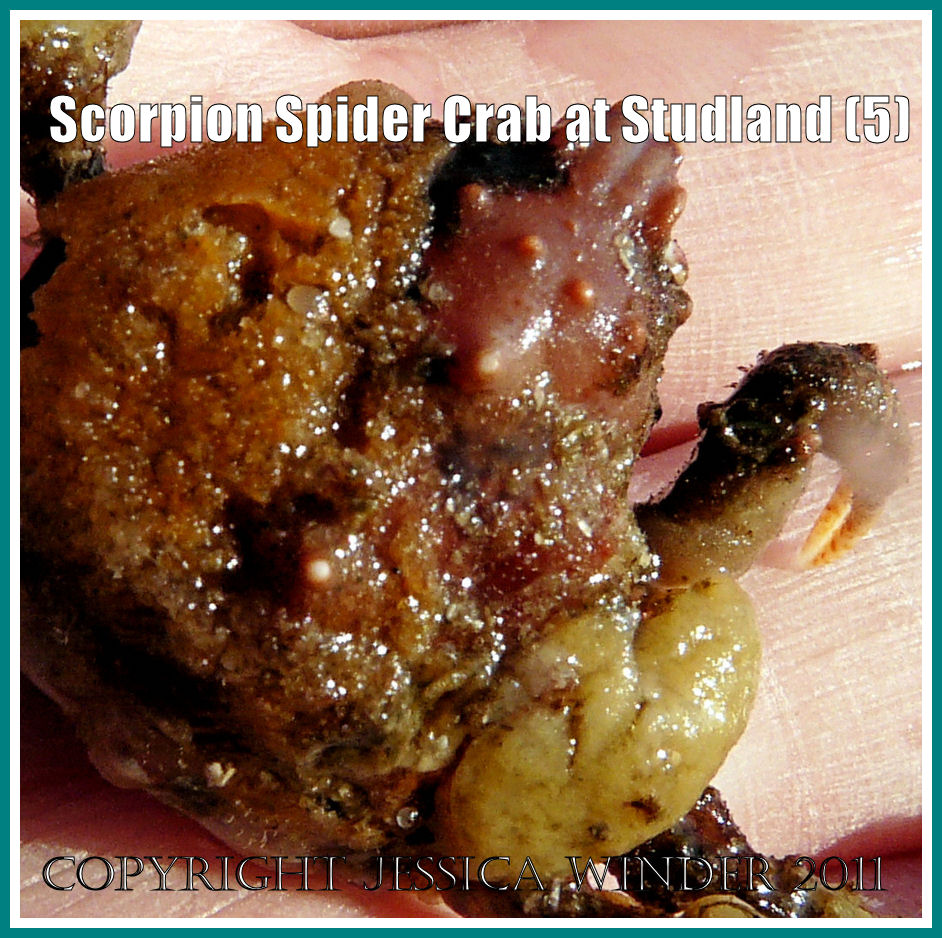
There is a row of four even-sized and equally-spaced bumps or tubercles across the narrower front part of the carapace – with six larger blunt spines spread over the broader hind part behind the row. This is a diagnostic feature of the species dorsettensis. A second distinguishing feature is a u-shaped cleft between two rostral horns projecting from the front edge of the carapace. This is not clearly visible in the photographed specimen because the horns are under-developed and blunt rather than having the more normal points.
Apparently, this species of crab is not usually found on the shore. It lives on sand, mud or stoney substrates in the shallow sublittoral zone – that is, just off-shore at depths from 6 – 100 metres. It is common on all British coasts.
One of the peculiar habits of this type of small, slow-moving crab is the way it deliberately attaches other living organisms (such as algae or hydroids) to its carapace and legs in order to camouflage itself from predators. The crab I found on Studland beach had orange, yellow, and white sponge encrusting it. Sand was also helping to conceal the identity of this tiny creature when I initially spotted it struggling to move on the wet sand where it had been washed ashore. I gave it a quick rinse when the next wave broke to get a better look at it and make the identification.

Revision of a post first published 12 March 2010
COPYRIGHT JESSICA WINDER 2011
All Rights Reserved
 Jessica's Nature Blog
I like your beachcombing life.
I liked to find out there are more people like that around the world 😉
LikeLike
Hello, Wim. Thank you for visiting my blog and leaving a comment. Beachcombing is very enjoyable isn’t it? I had a quick look at your own blog – it looks fun and your photographs are excellent. I am glad you decided to leave Paris for a warmer and more colourful climate!
LikeLike