

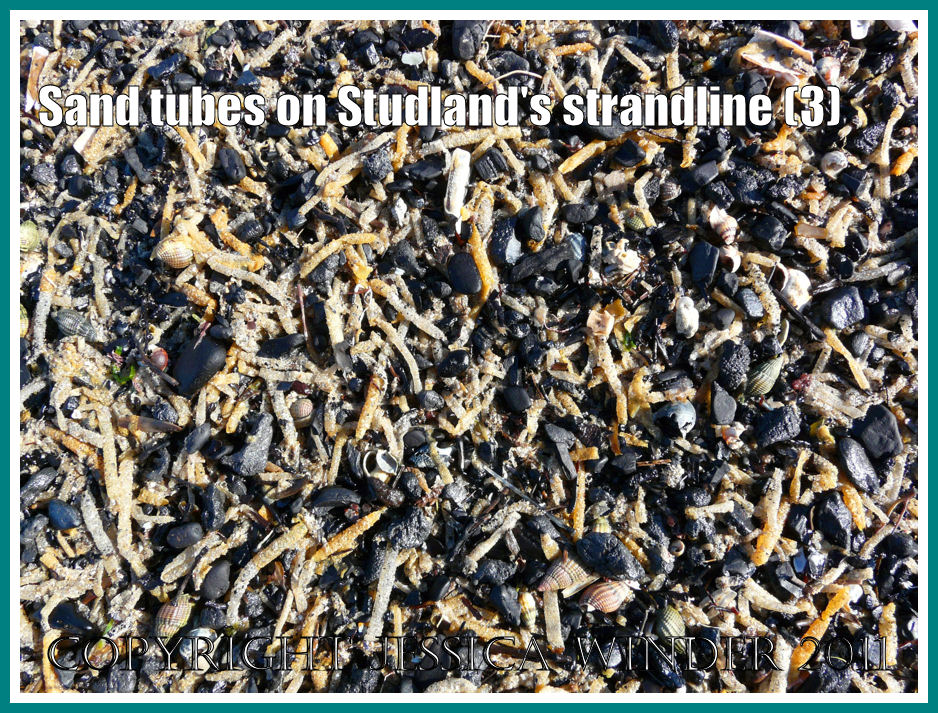
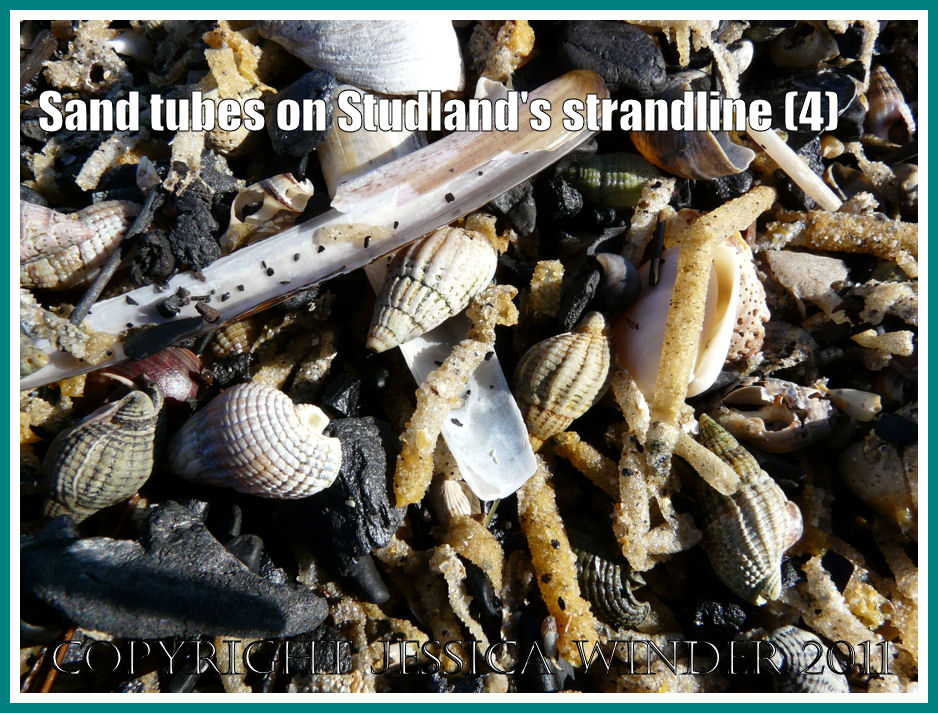
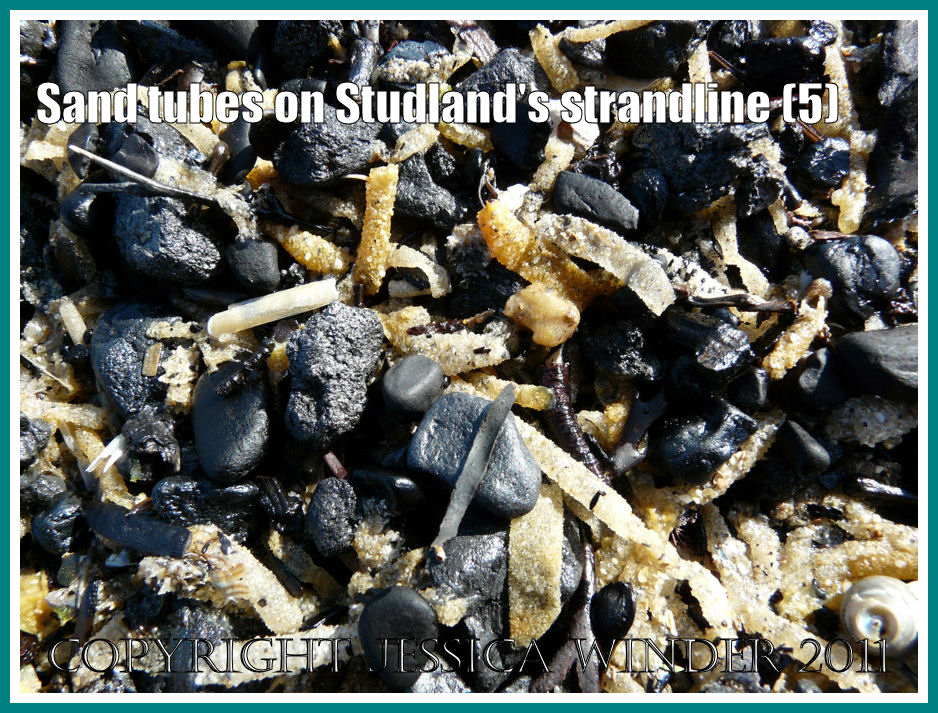
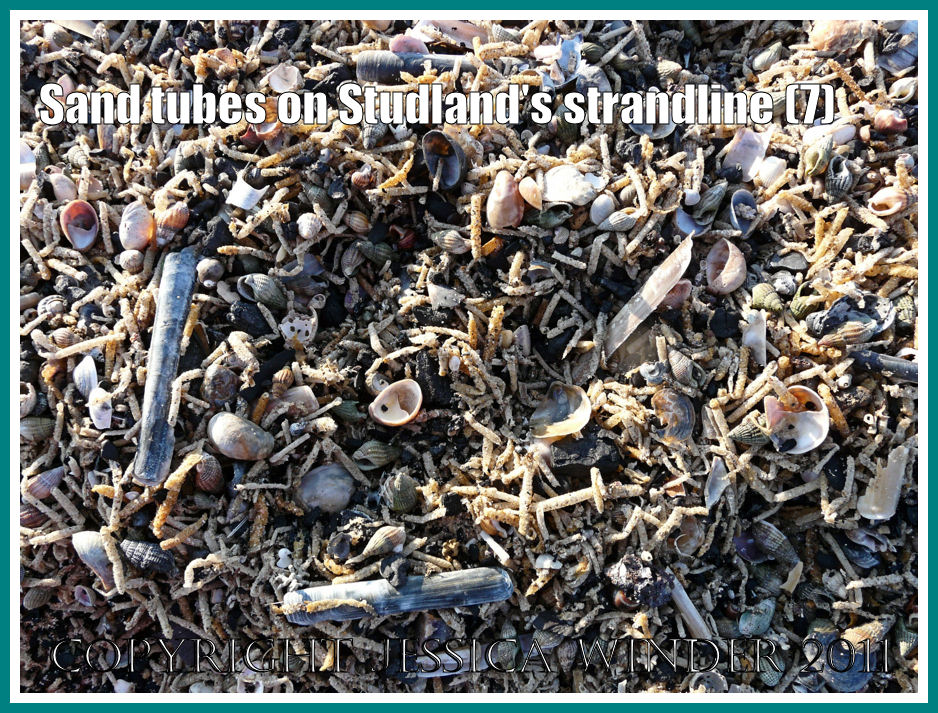
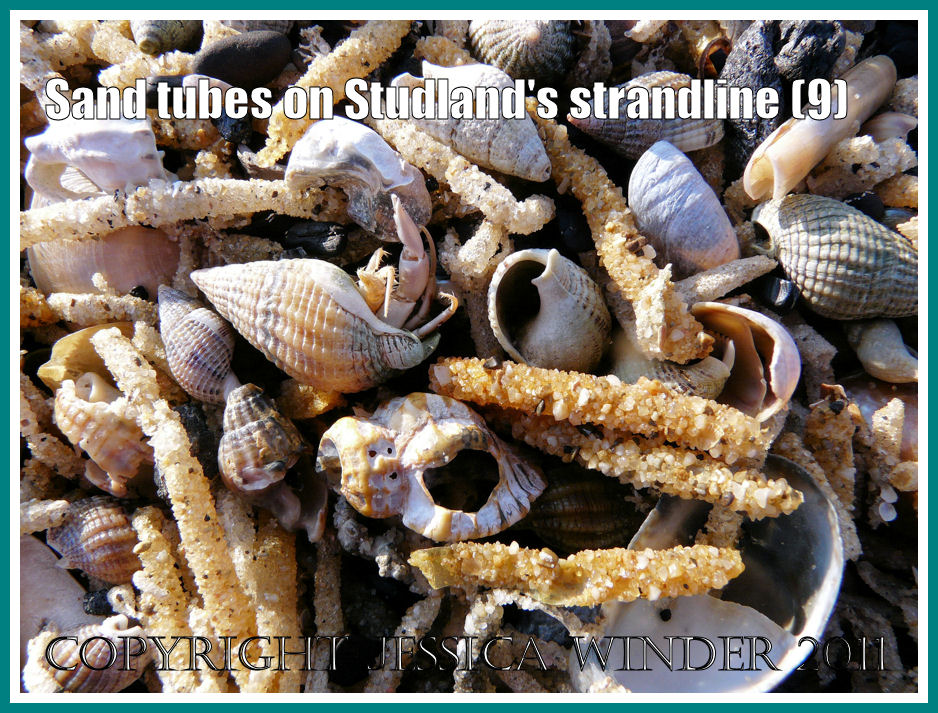
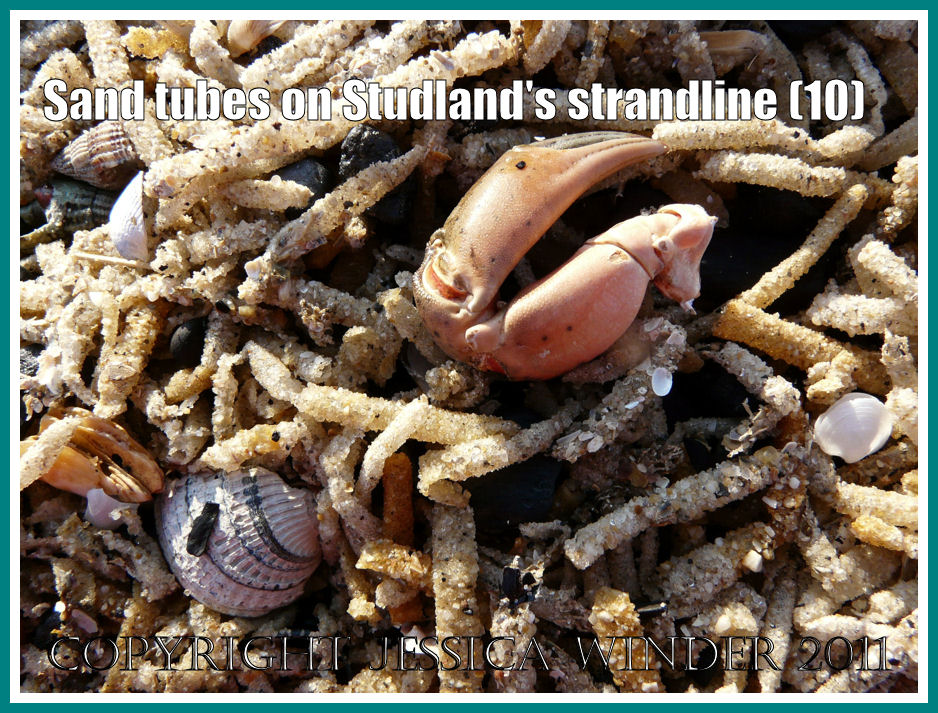
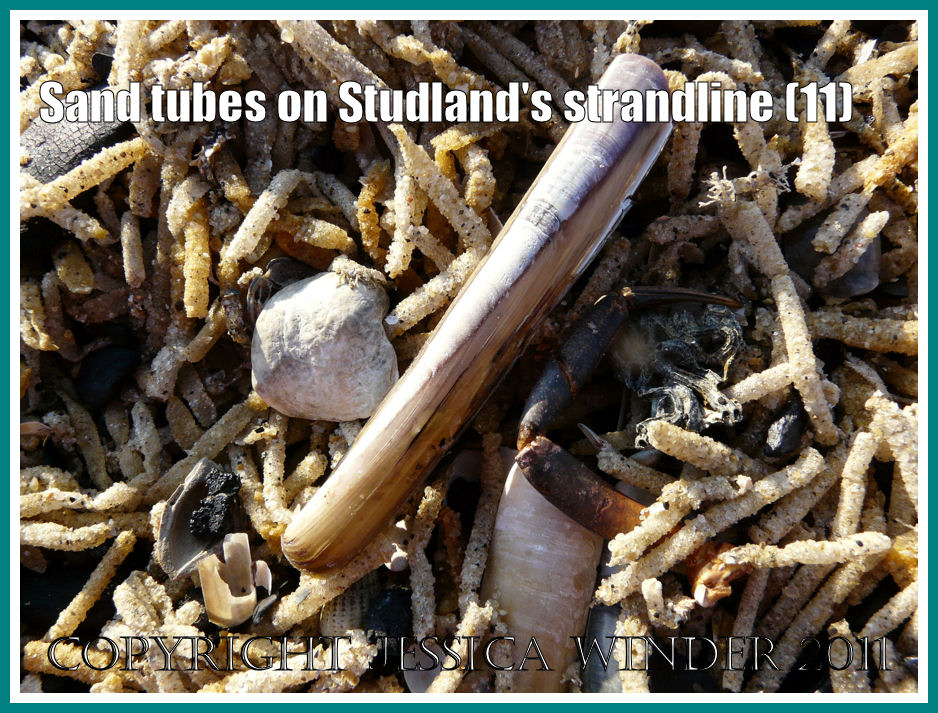
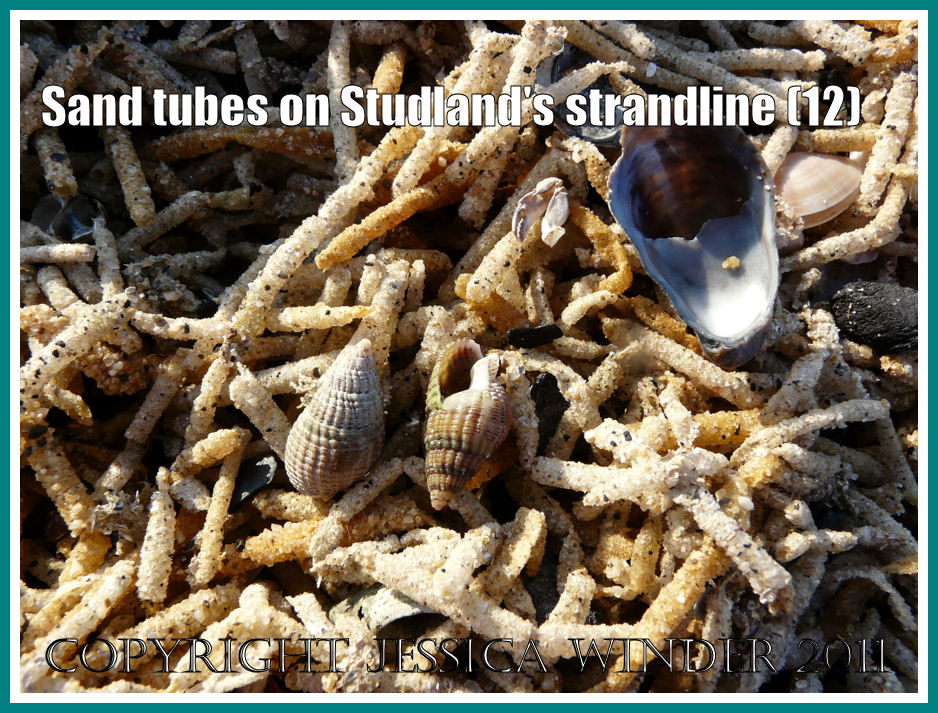
Millions of small sandy tubes washed ashore in great piles at Studland in Dorset recently. These are made by marine bristle worms to line their burrows on the sea bed. The tubes were inter-mixed with all sorts of other things including many different types of empty seashells. Most abundant of these were the Netted Whelks, Slipper Limpets, Razor Shells, Cockles, Saddle Oysters, and Sting Winkles. There were many other bivalves and gastropods in smaller numbers scattered over the beach.
In some places the worm tubes were accompanied by thousands of small water-worn pieces of coal and charcoal – making a striking colour combination of yellow and black. A lot of seaweed with soft bodied creatures were also washed ashore but mainly in accumulations distinct from the heaps of sandtubes.
More about SAND-TUBES at Studland.
More about STRANDLINES at Studland.
More about Netted Whelks.
More about Slipper Limpets.
More about Saddle Oysters.
More about Cockles.
More about Razor Shells.
All the postings in Jessica’s Nature Blog about STUDLAND.



Revision of a post first published 10 March 2010
COPYRIGHT JESSICA WINDER 2011
All Rights Reserved
 Jessica's Nature Blog
One Reply to “Sand tubes on Studland’s strandline”