
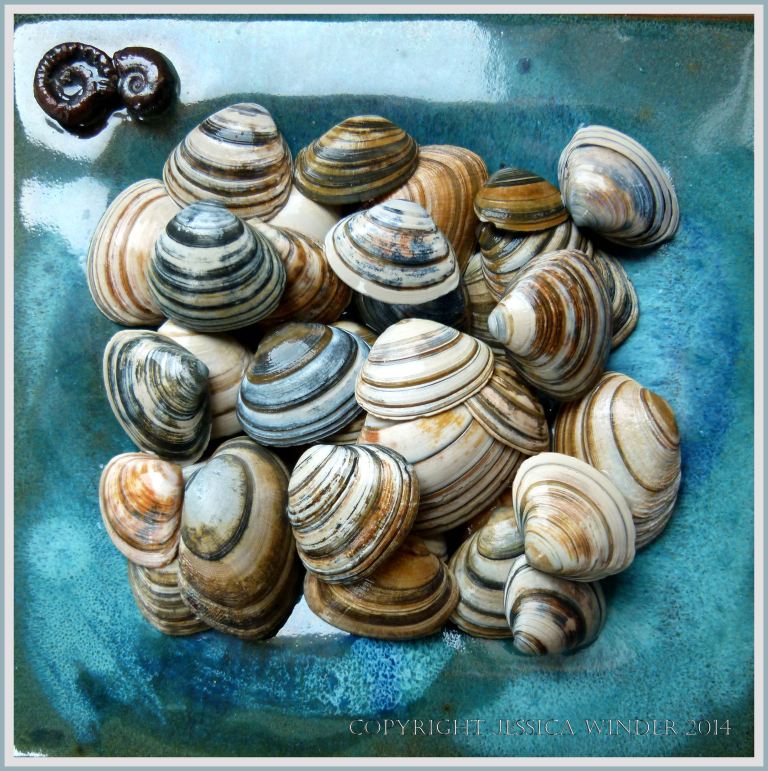
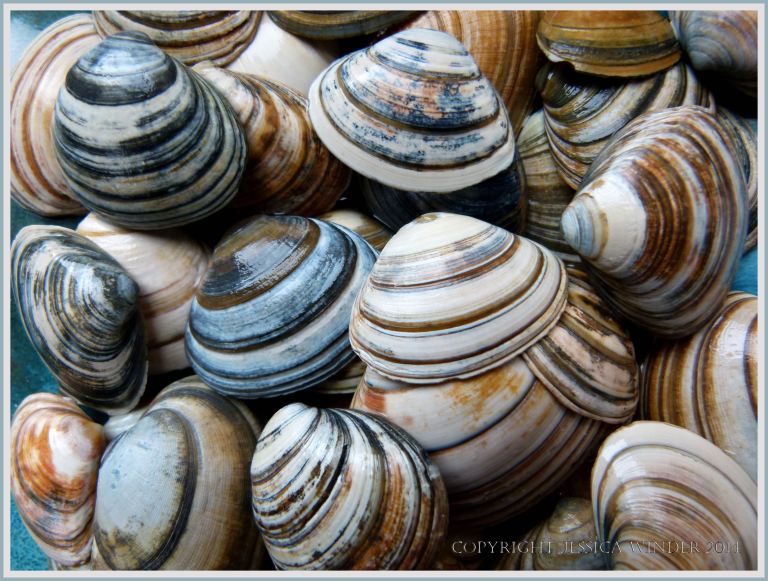
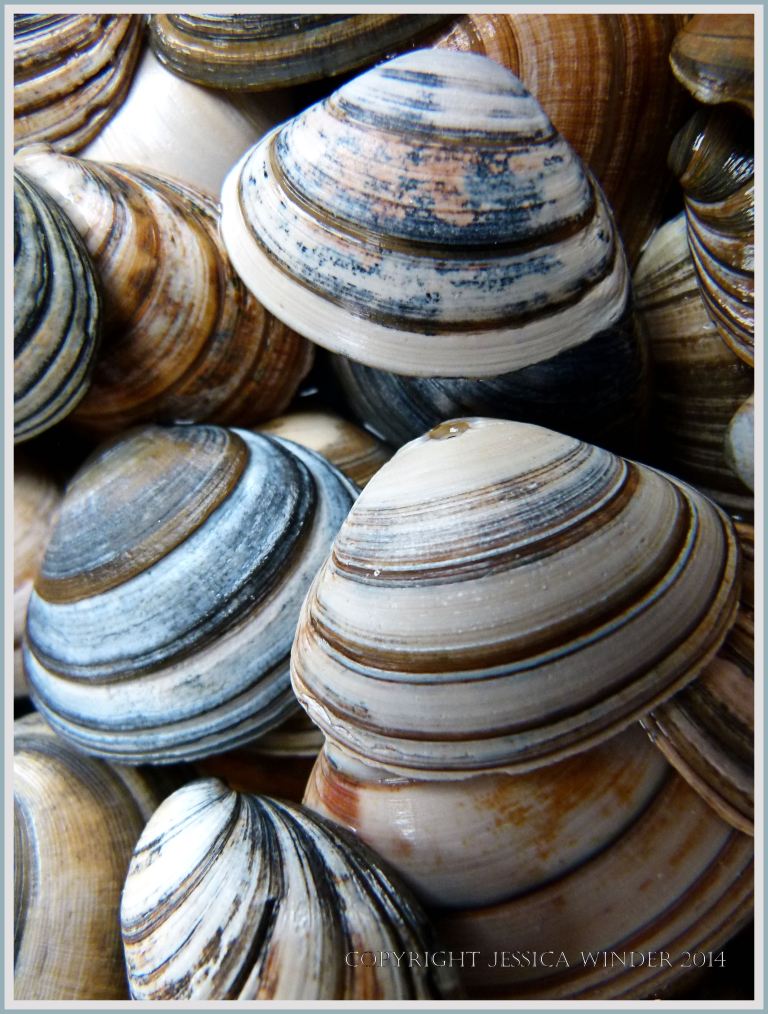
Pictures of some seashells in a dish on my windowsill. I picked them up on the strandline at Studland Bay when I last visited because I liked the striped patterns. I think the concentric darker bands reflect the slower winter growth of the living mollusc while buried in deeper, mainly oxygen-poor, sediments offshore. This is where anaerobic bacteria thrive and their sulphur-rich waste products stain objects black.
Hayward (1994) says of this deeper sandy layer:
Below the boundary the black sand is essentially anoxic; free oxygen is totally absent, and the microfauna must survive through anaerobic processes. Bacteria still thrive but in the absence of oxygen use fermentation, or other chemosynthetic processes, to break down organic compounds. Many bacteria reduce sulphate, nitrate or carbonate ions to produce hydrogen sulphide. ammonia or methane, which give black sand the same unpleasant smell as sticky estuarine muds. The hydrogen sulphide reacts with iron in the sand to give black iron sulphides; as these are gradually carried to the surface by burrowing animals they are oxidised to ferric oxide, which imparts the yellow colour characteristic of the upper layers.
REFERENCE
Hayward, Peter J. (1994) Animals of sandy shores, Naturalists’ Handbooks 21, Richmond Publishing, page 10, ISBN 0 85546 293 0
COPYRIGHT JESSICA WINDER 2014
All Rights Reserved
 Jessica's Nature Blog
Beautiful! Nature’s patterns are so much fun!
LikeLike
Thank you, Jody.
LikeLike
You’re very good at these type of shots. They have a beautiful simplicity.
LikeLike
Beautiful images!…and thanks for the information too 🙂
LikeLike
Thank you.
LikeLike
Thank you.
LikeLike