

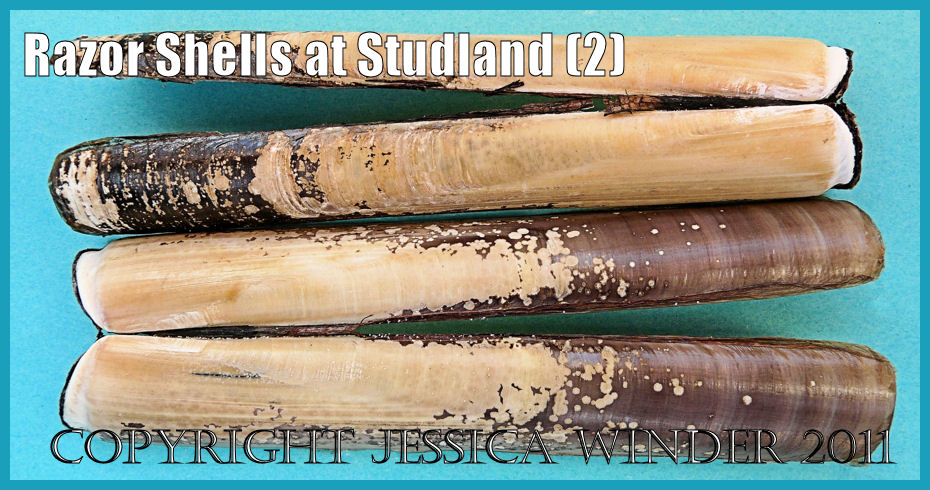
The Pod Razor Shell Ensis siliqua (Linnaeus) shown above and the Grooved Razor Shell Solen marginatus Montagu shown below are two very common types of razor clam. Their long narrow bivalved shells are very characteristic.
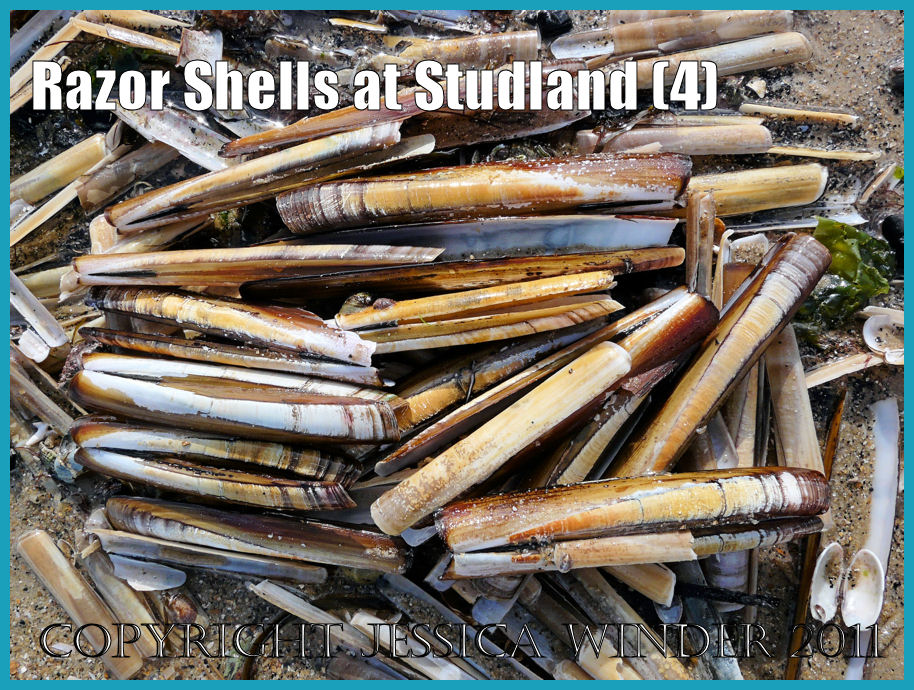
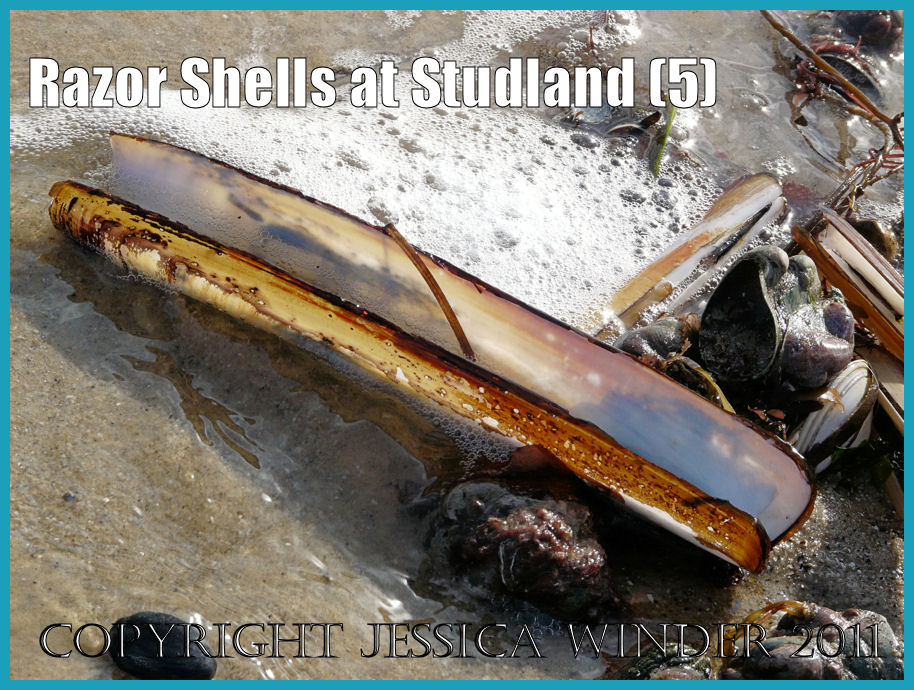
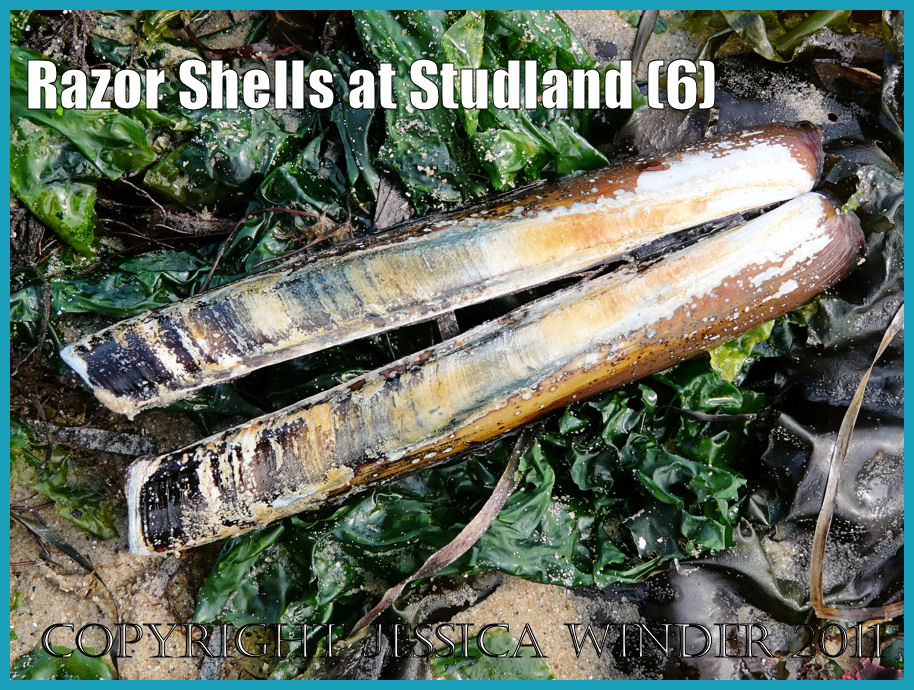
This autumn, thousands of empty shells of these species of razor clam were washed ashore at Studland Bay in Dorset. The photographs below show some of these accumulations and individual shells as they were found on the wet sand and amongst the sea foam when the incoming tide pushed them up the beach.
In the posts Strandlines at Studland in February and Strandlines at Studland in March there are more pictures of empty razor shells together with other shells such as slipper limpets.

Revision of a post first published 31 October 2009
COPYRIGHT JESSICA WINDER 2011
All Rights Reserved
 Jessica's Nature Blog
What an amazing find. I’ve only found the odd one on the beach here. Am I right in guessing the ones in your photos are about 6 inches in length?
LikeLike
Yes, you are right. The Pod Razor shells can grow up to 200mm (about 8 inches) long; while the Grooved Razor Shells are smaller and only achieve about 120 mm (5 inches) at most.
LikeLike
Extraordinary accumulations.
They taste good (the animals, not the shells) although they must be tricky to dig up.
LikeLike
I have heard that razor clam meat is tasty although I have never eaten any. What about you? I first saw one eaten (alive) by an Irish Professor on a field trip to Galway when I was an undergraduate. Rick Stein has demonstrated on TV how you can pour salt down their burrow and make them pop out of the ground. I have crept up on the burrows with a spade and dug them out with one swift scoop. Sometimes they obligingly protrude from their burrows just before the tide comes in and engulfs them. If you see them like this, you can just pick them up. I’ve got some photos of this that I’ll post on the blog later.
LikeLike
Jessica,
We were presented with a series of seafood and fish dishes at a friend’s restaurant in the middle of Spain (how do they do that?), one of which was razorshells. Not unlike a long oyster!
LikeLike
I must try razor shells some time. Despite my long-standing interest in molluscs, I have remained very cautious about eating them – very much aware of possible contamination problems, I think. However, the lean muscular foot of the razor clam does look appetising – much more so than oyster meat.
LikeLike
Have been at Old Hunstanton beach today, and have seen at least 2 miles of Razor shells washed up on high tide line, estimated to be in excess of a million shells , an amazing sight.
LikeLike
Hello, Sylvia. Thank you for telling me about your amazing find at Hunstanton. It must have been a really incredible sight. The shells I found at Studland were all empty – no meat in them. I suppose they had been brought to the surface by turbulence on the sea bed – nature having a clear out so to speak. It just goes to show how many of them are normally living deep down and out of sight off shore. What about your razor shells? Were they alive when washed ashore or just empty shells?
LikeLike