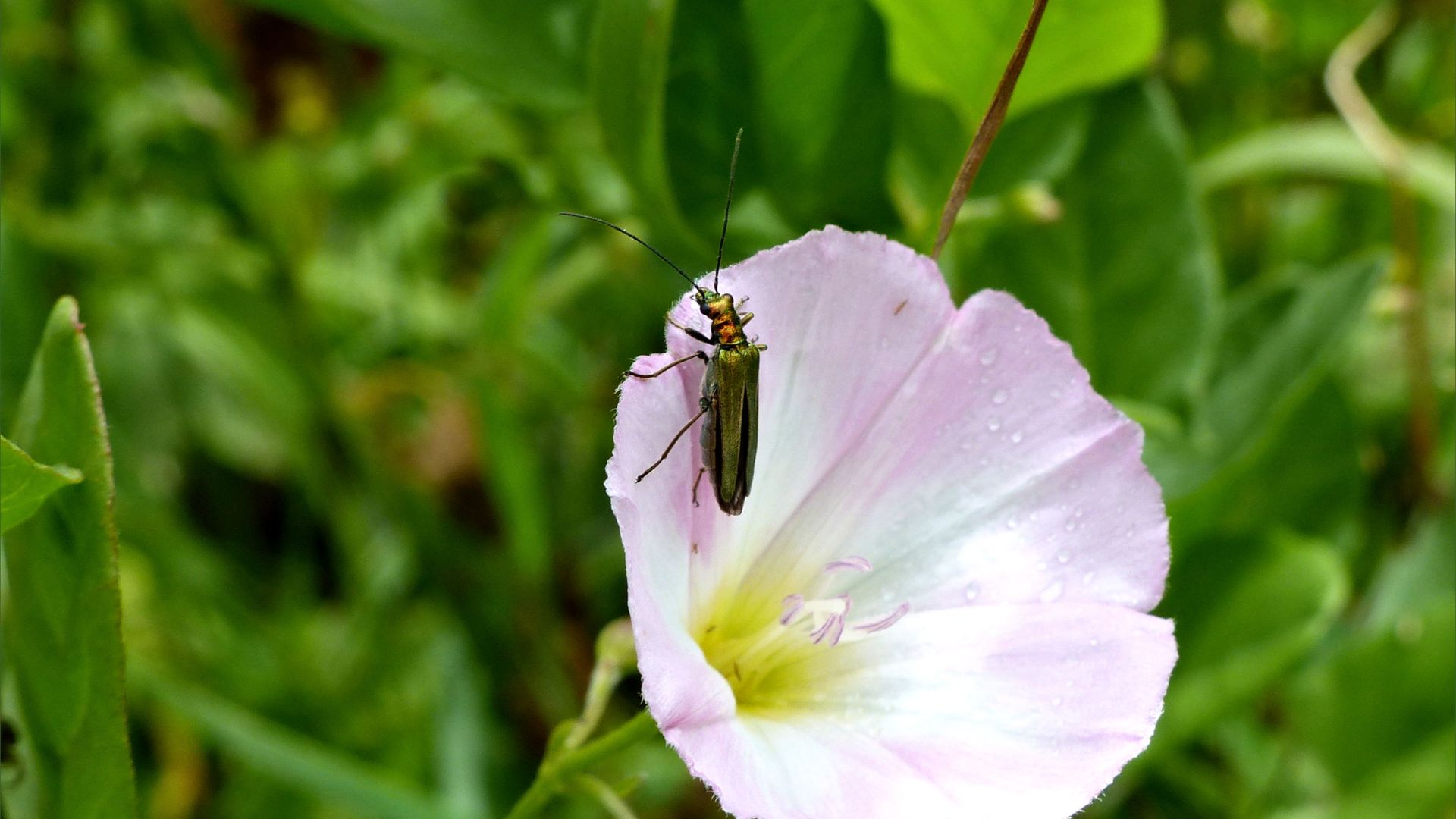
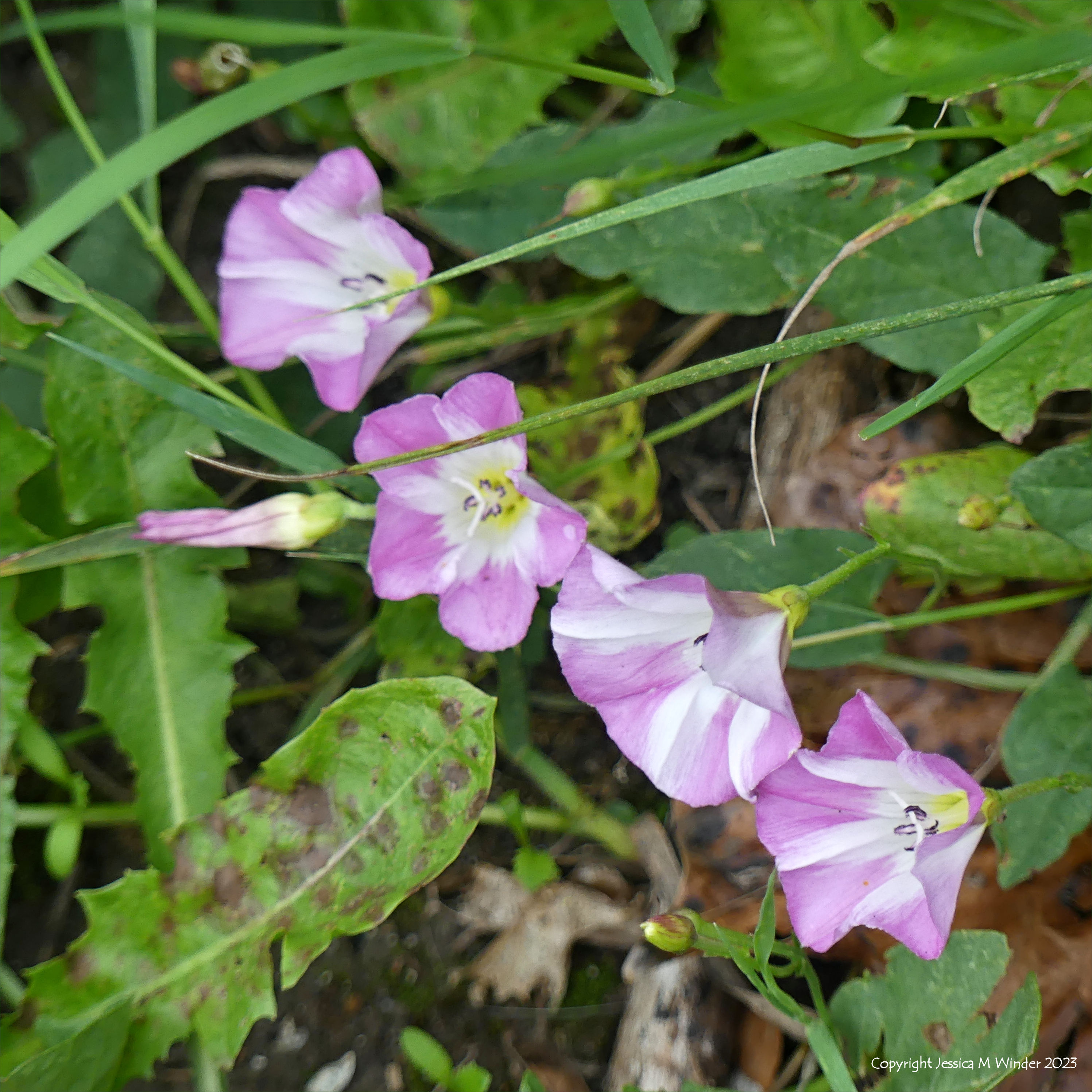
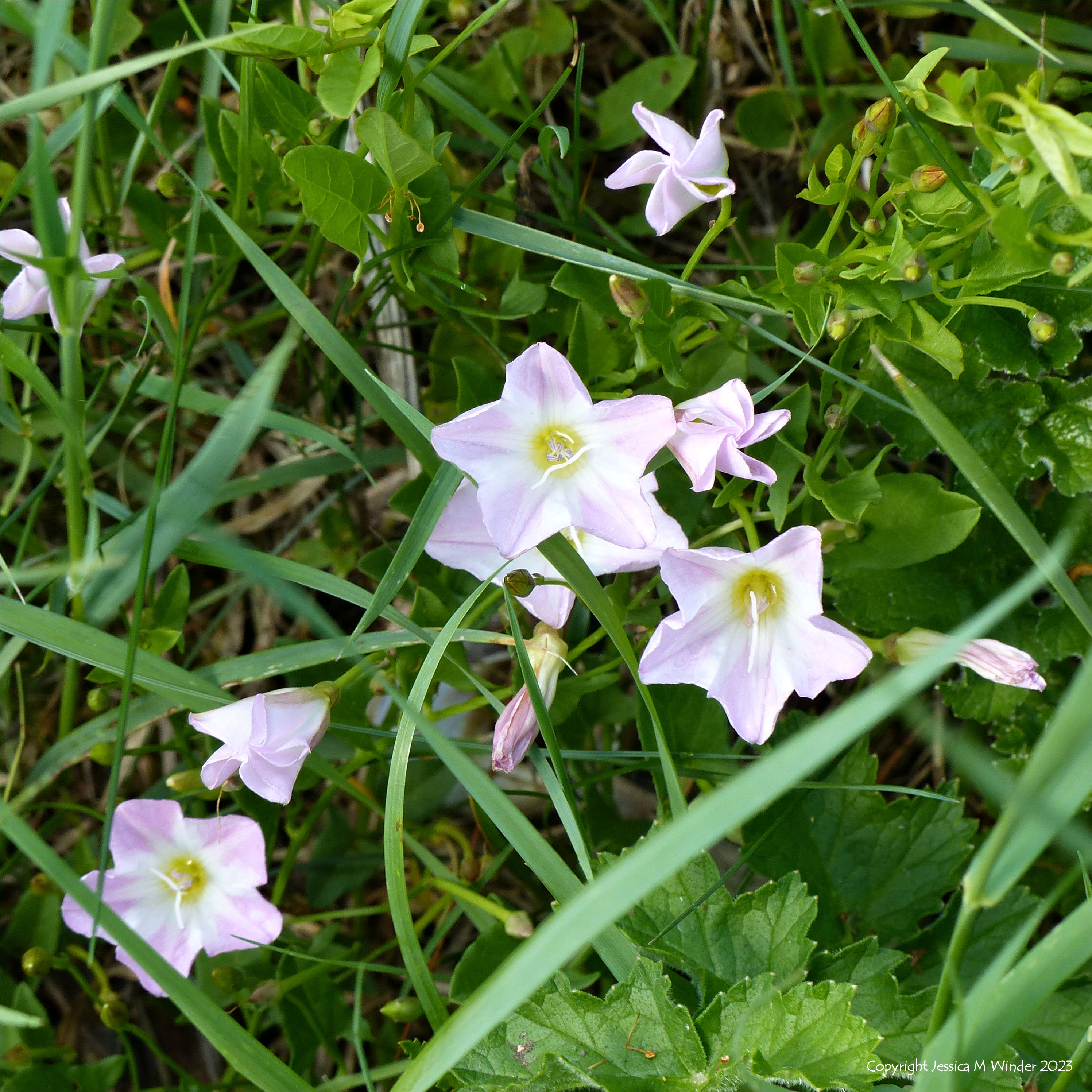
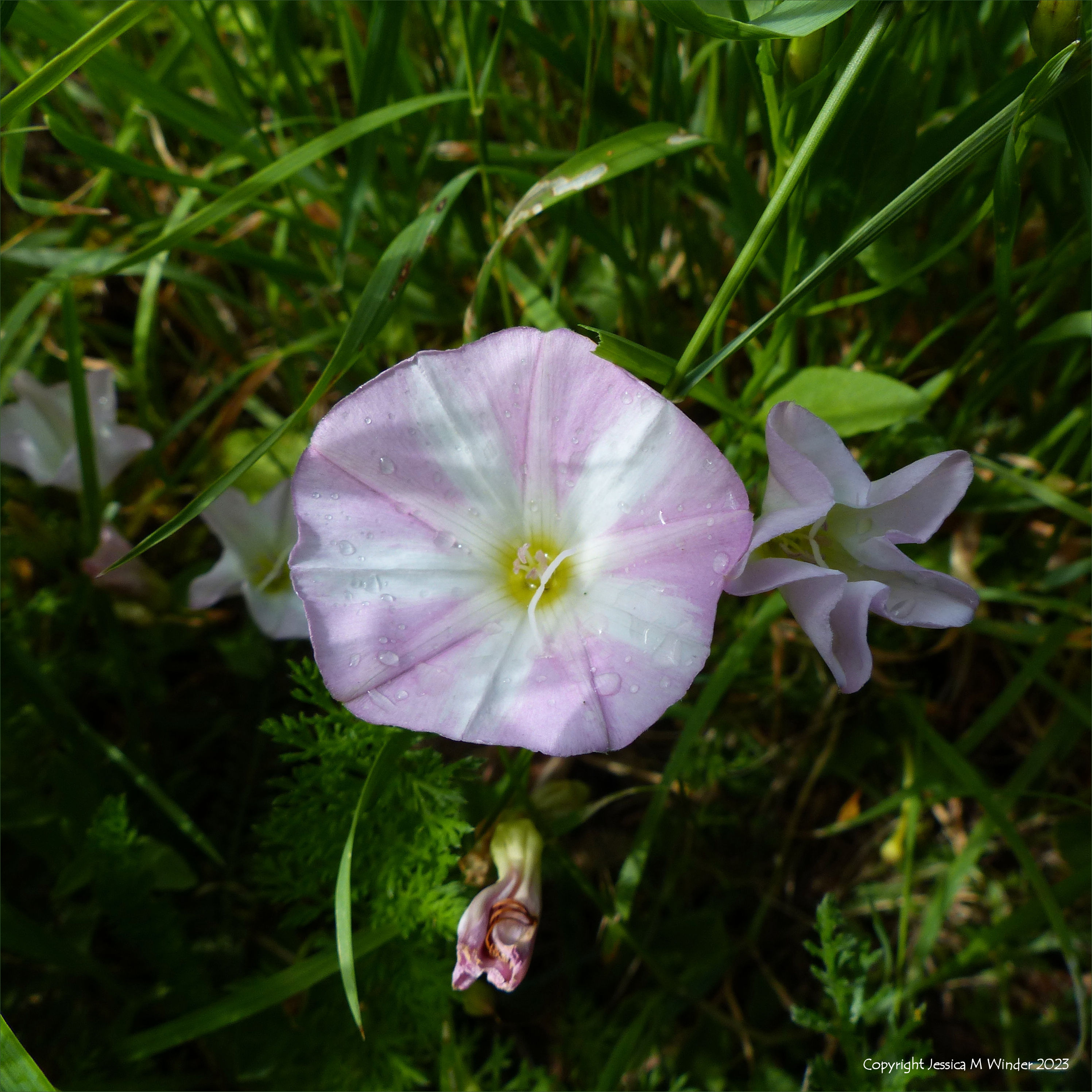
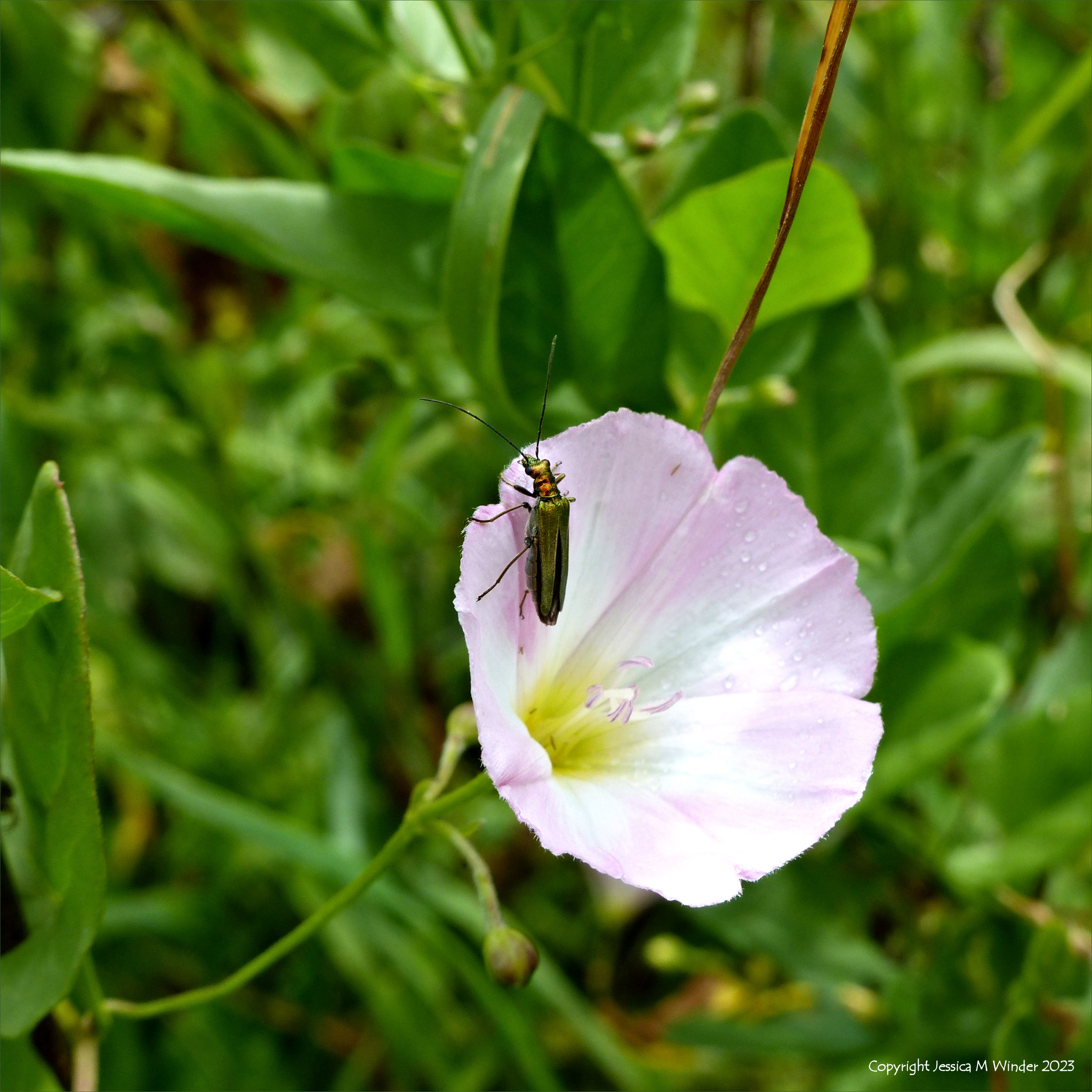
This is the 6th post about the transition of a piece of waste ground into a purposed wild garden. These photos were taken during the year 2020 when it was in its natural state, that is to say, the “before” pictures, when there were already lots of interesting flowering plants, mostly native species but some escapees from gardens. The images this time feature Field Bindweed (Convolvulus arvensis) which is a smaller and more colourful species than the more common Large or Hedge Bindweed. In this location it mostly grew at ground level.
 Jessica's Nature Blog
What a magnificent-looking insect, nicely perched on what I’ve always called a morning glory. Good catch. Do you also call this bindweed by the name morning glory, or is that an Americanism?
LikeLike
Thank you, Linda. My flower is Field Bindweed (Convolvulus arvensis) and its shape, colour, and pattern are superficially similar to one of the colour-variants of Morning Glory (Ipomoea spp) because they belong to the same family but they are not the same.
LikeLike
The insect is a female Swollen-thighed Beetle (Oedemera nobilis). It is the male that has the big thighs.
LikeLiked by 1 person
About morning glories: I was going by what was said here: https://www.maine.gov/dacf/php/gotpests/weeds/factsheets/morning-glory-wash.pdf. But another site (https://ipm.missouri.edu/MEG/2023/6/morningGlory-DT/#:~:text=Ipomoea%2C%20the%20largest%20and%20most,common%20name%20of%20morning%20glory.) may clear things up: “Morning glory is the common name applied to more than 1000 species of flowering plants belonging to the Convolvulaceae plant family. Ipomoea, the largest and most well-known genus in the family, contains some very attractive species such as Ipomoea purpurea. The latter is just one of several species in the genus that carries the common name of morning glory.”
LikeLiked by 1 person
Thanks for that information, Linda. Seems like it is as you say, an American thing to call Bindweed Morning Glory. Useful links.
LikeLike