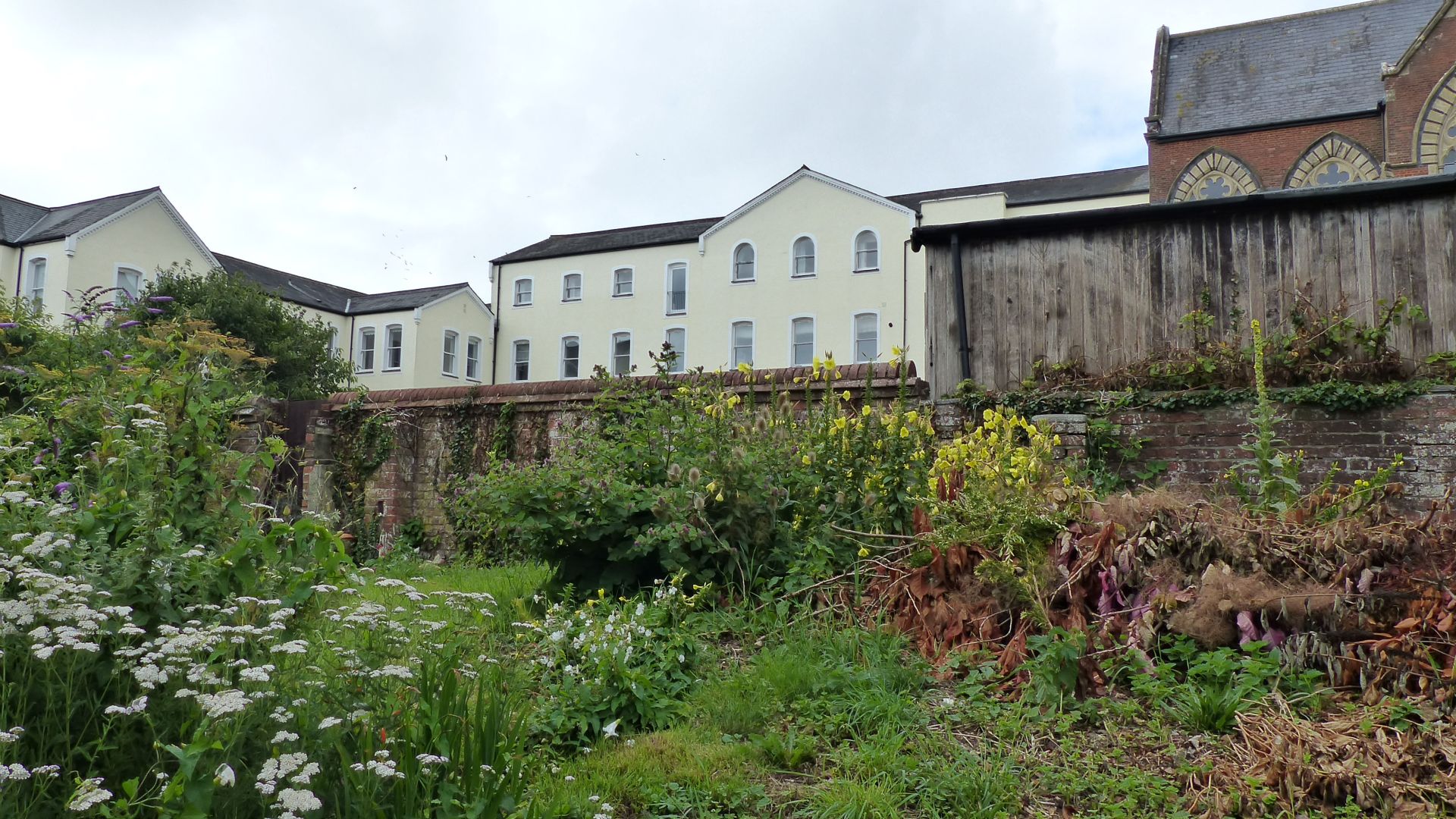
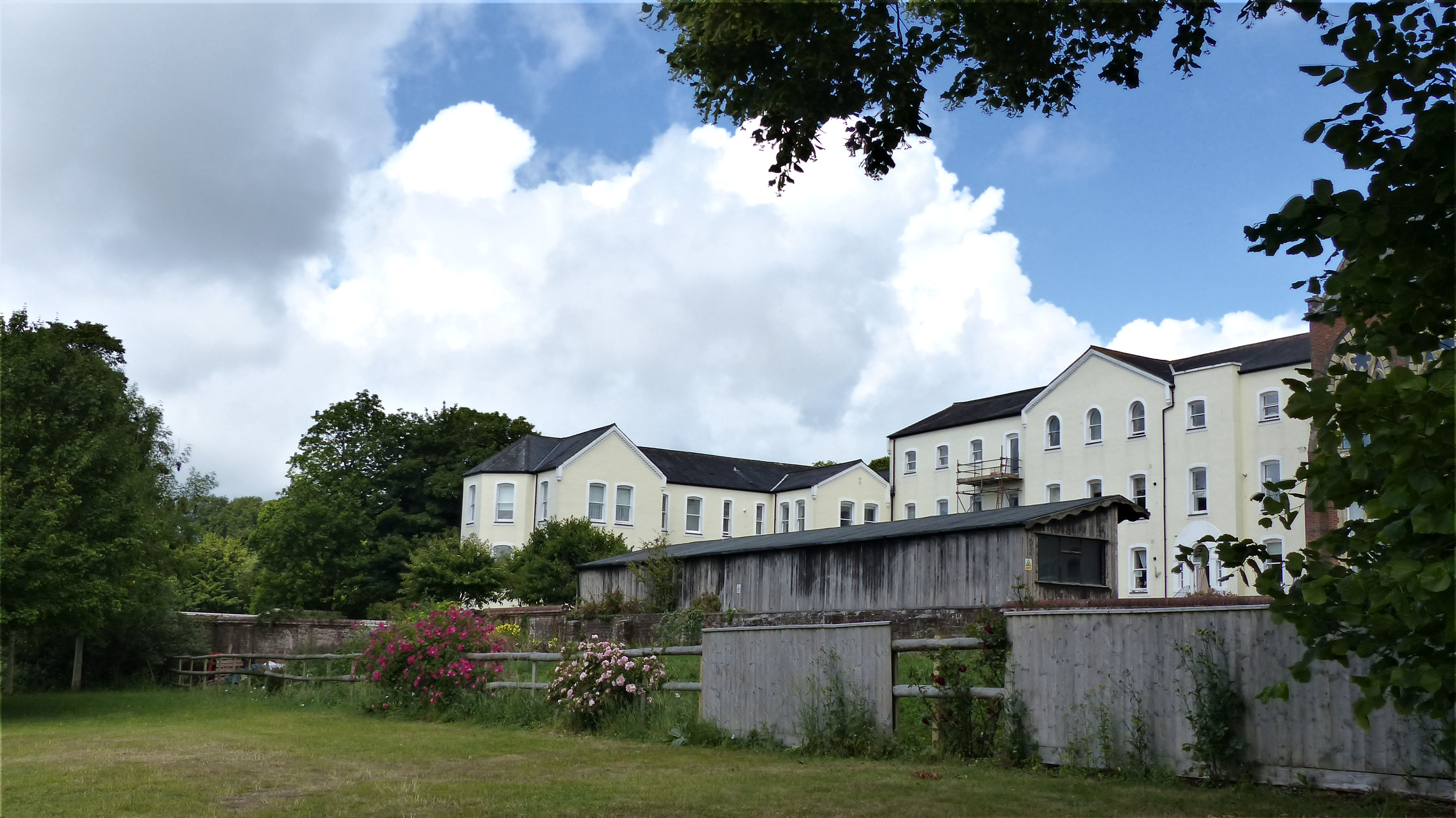
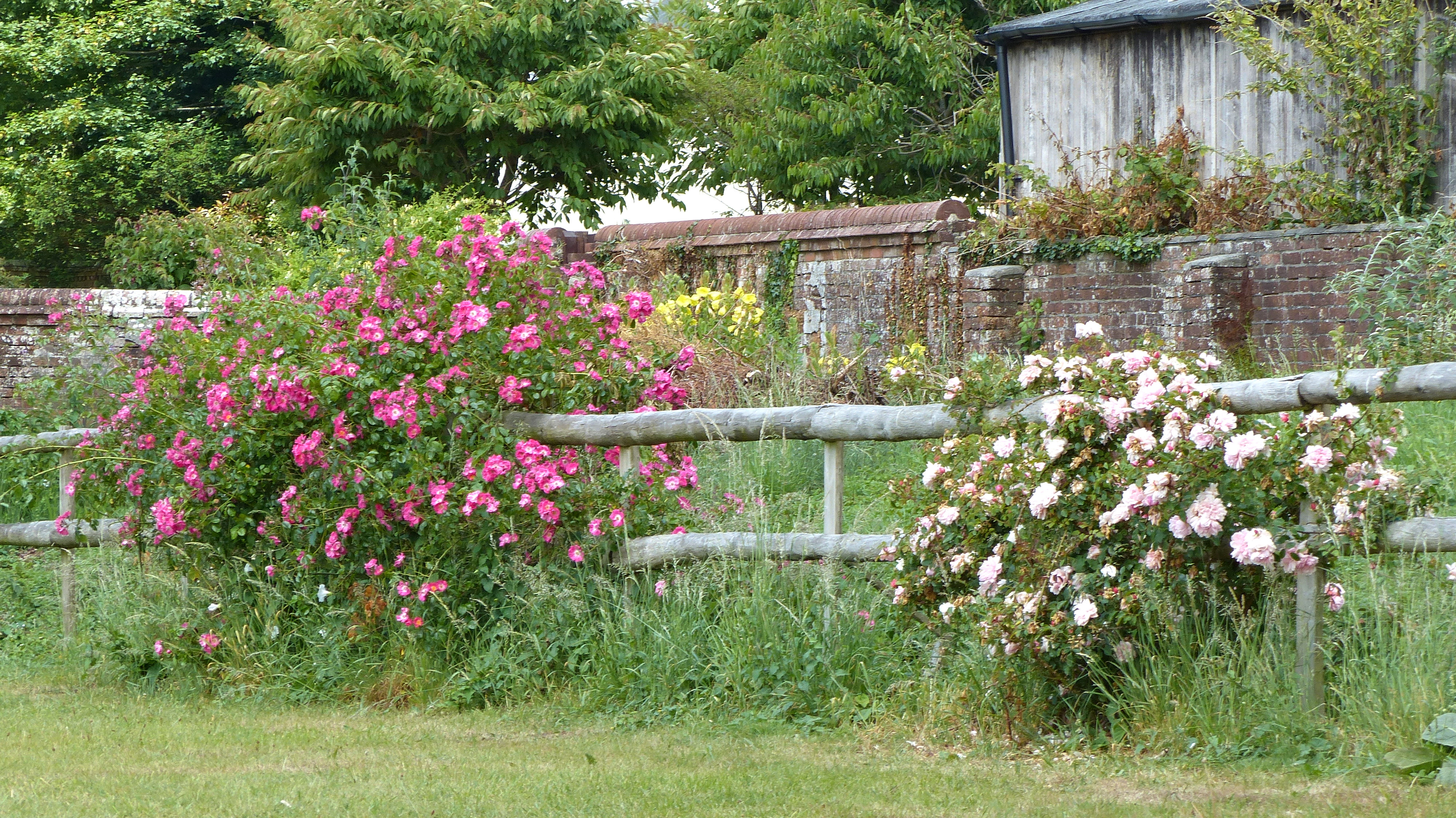
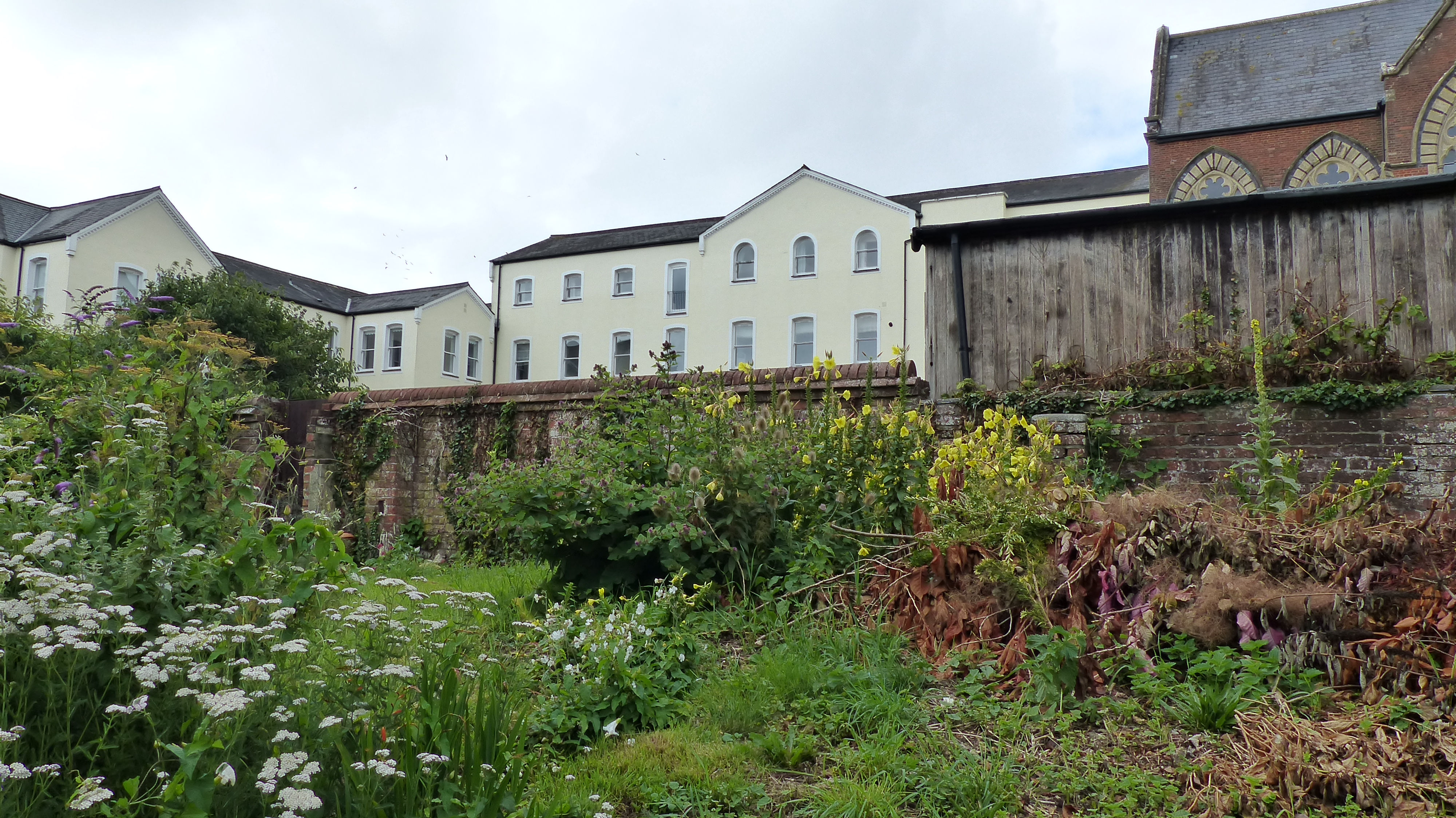
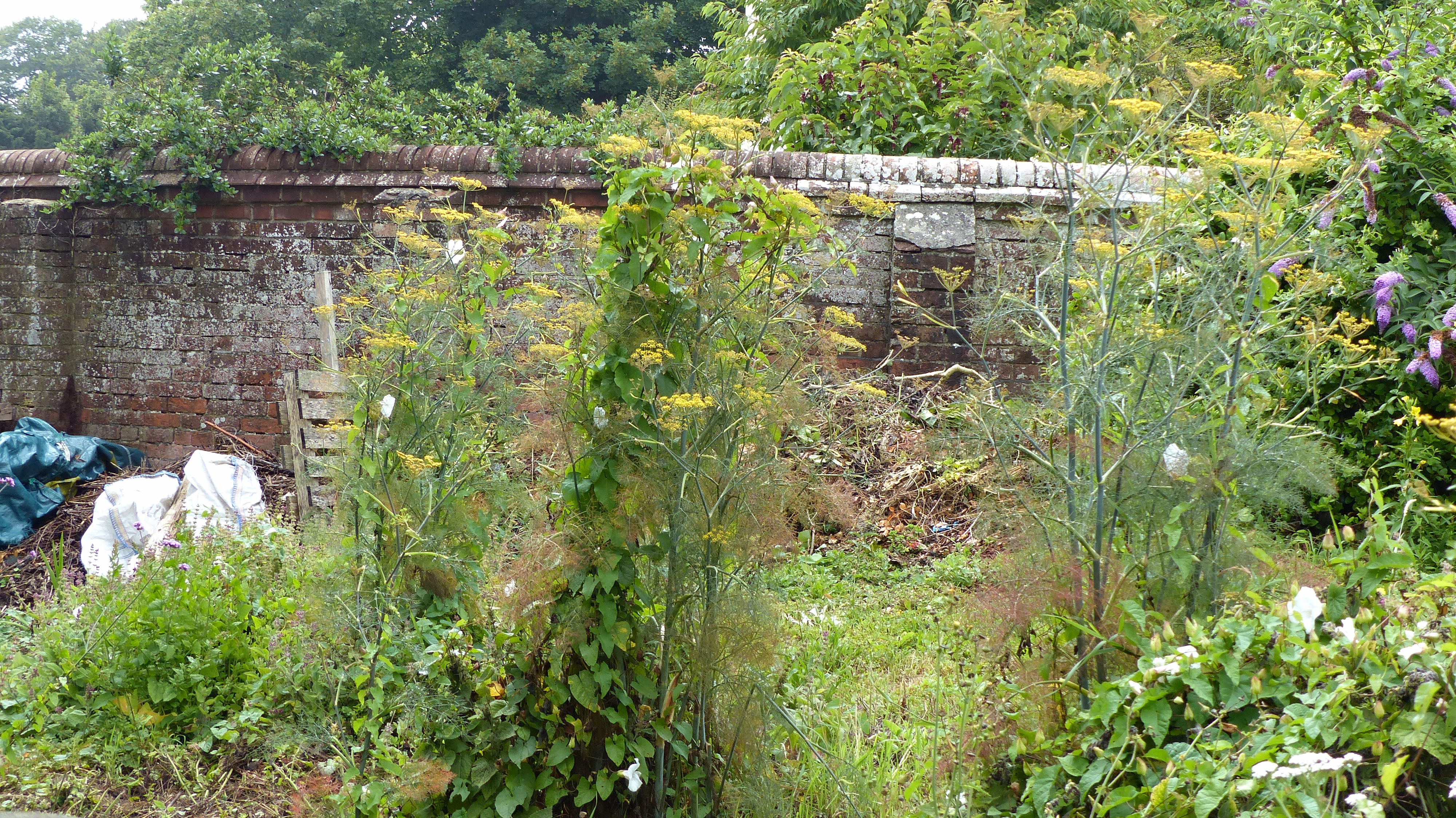
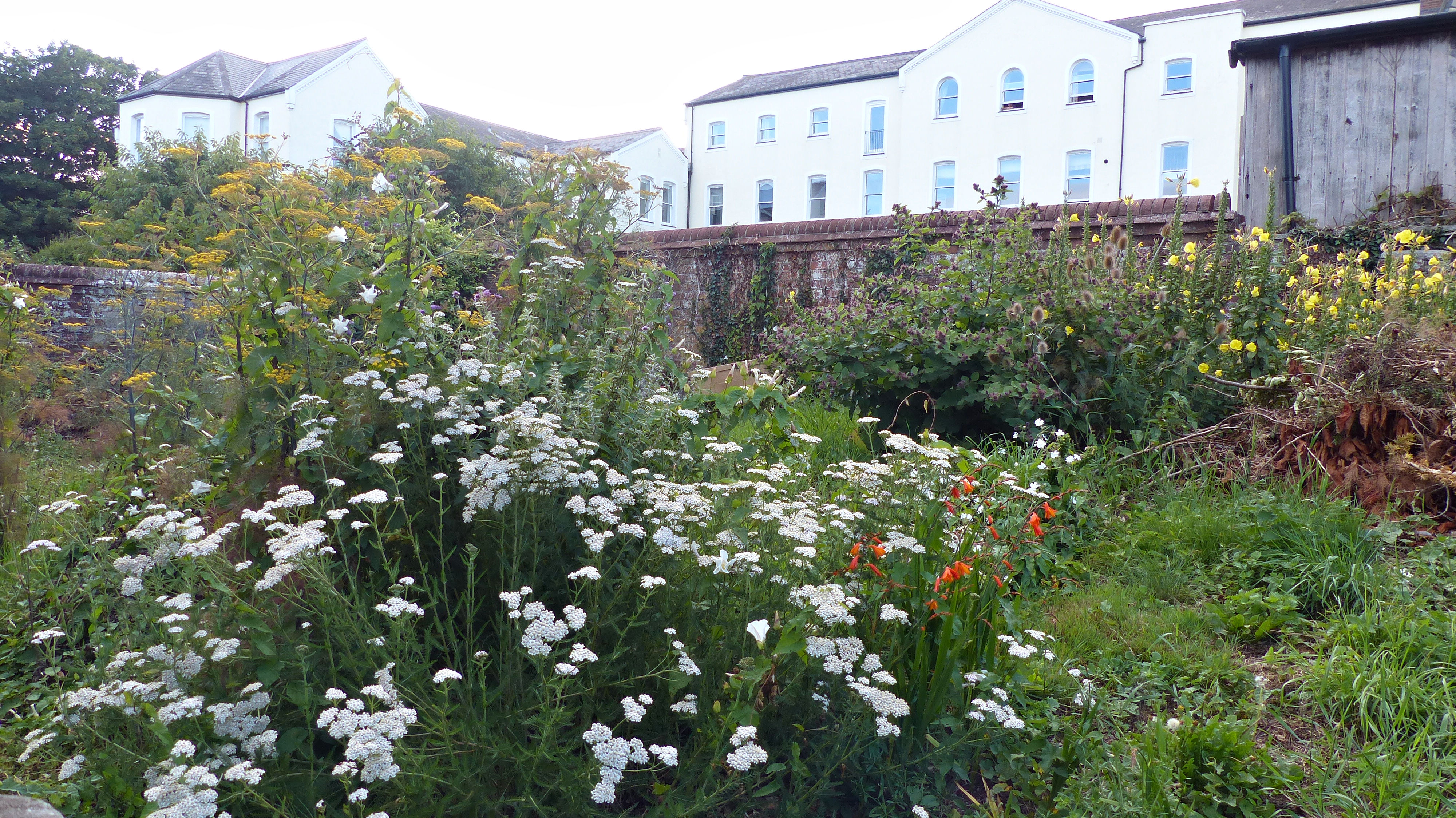
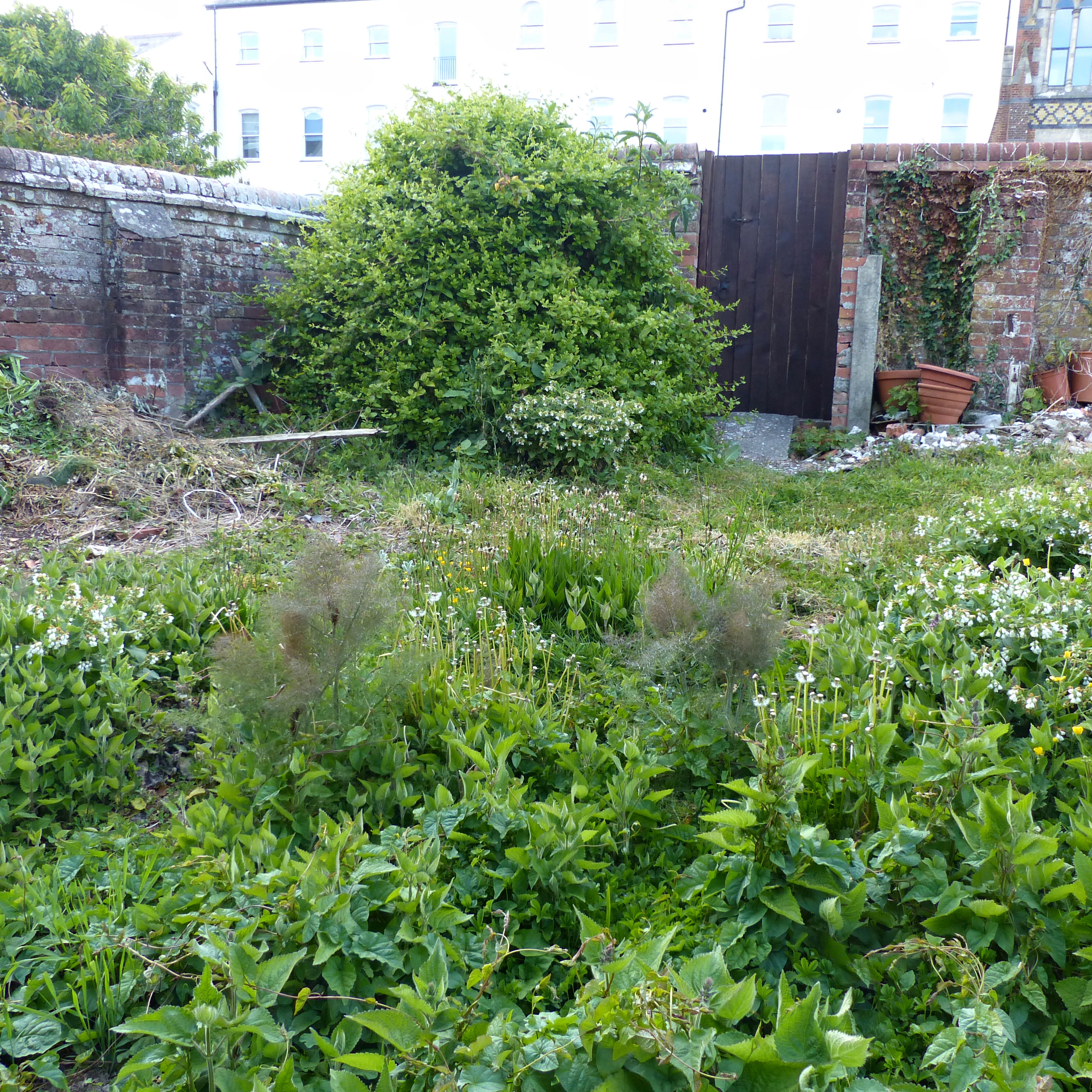
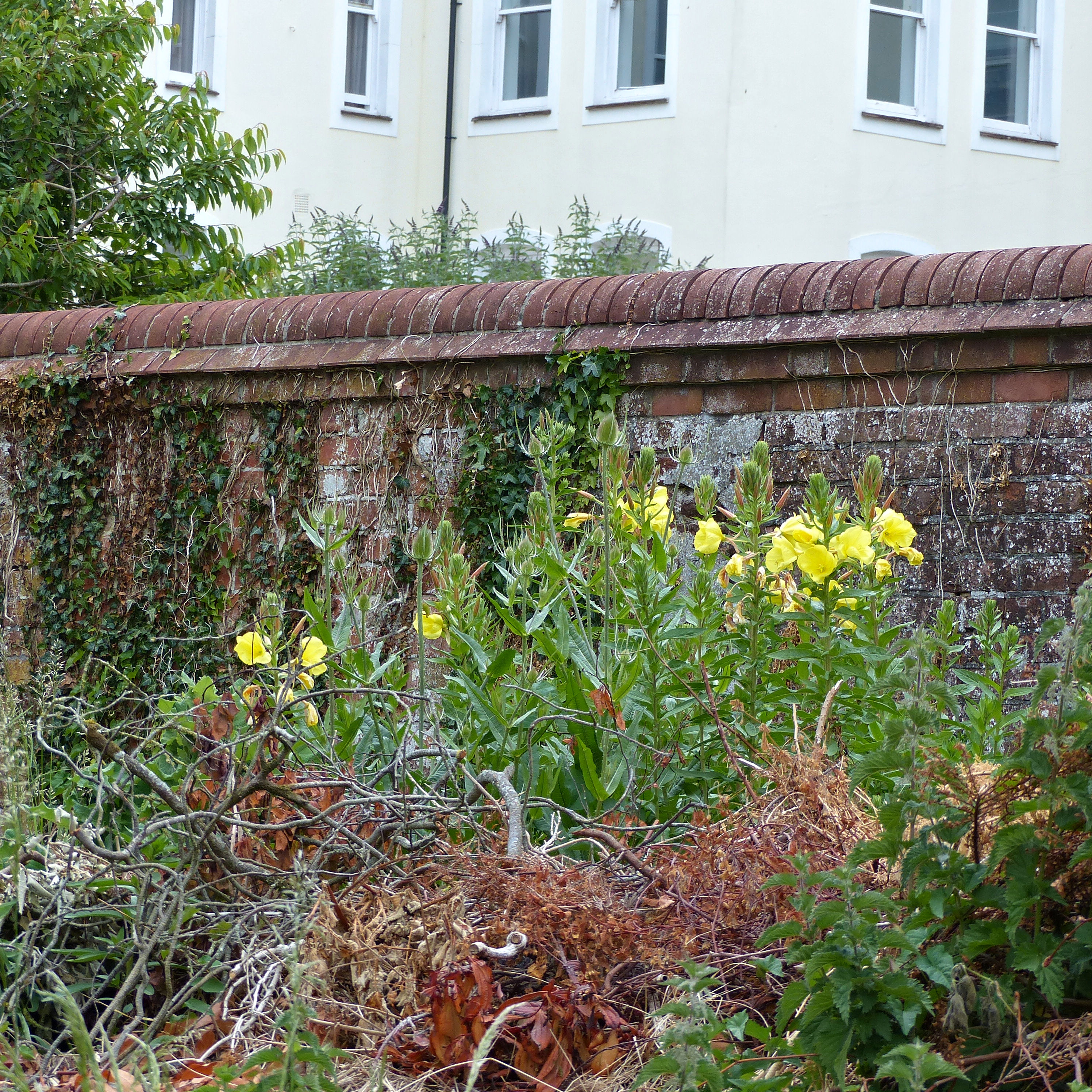
This is the start of a photographic story about the transition of a patch of waste ground into a wild garden in my small Dorset village of Charlton Down. I have not played a part in this transformation but have merely been an observer of this patch of ground since the Covid pandemic lockdown times in 2020. The Charlton Down Cricket Club have their pitch and club house next to this previously untended patch of ground which is attached to, and belongs to, the adjacent Redwood House.
I need to explain straight away that my village has grown up in and around the buildings of an the old Herrison Hospital that was constructed in the latter half of the 19th century to accommodate people with mental illness. It was mostly a self-contained and self-supporting community where the extensive open spaces were made into gardens, recreational areas, allotments, and even a farm. It continued in use by the National Health Service in one way or another until the mid-late twentieth century.
Redwood House is one of the three main structures, along with Greenwood House and Herrison House, all of which have been converted into apartments. New-build houses have been developed around the hospital buildings. The extensive grounds around the original hospital buildings remain as open spaces. Most give free access for residents and, in some cases, the general public (where the local parish council has ownership responsibilities). Only one part of the former grounds is privately owned as far as I know, and that is by the Charlton Down Cricket Club.
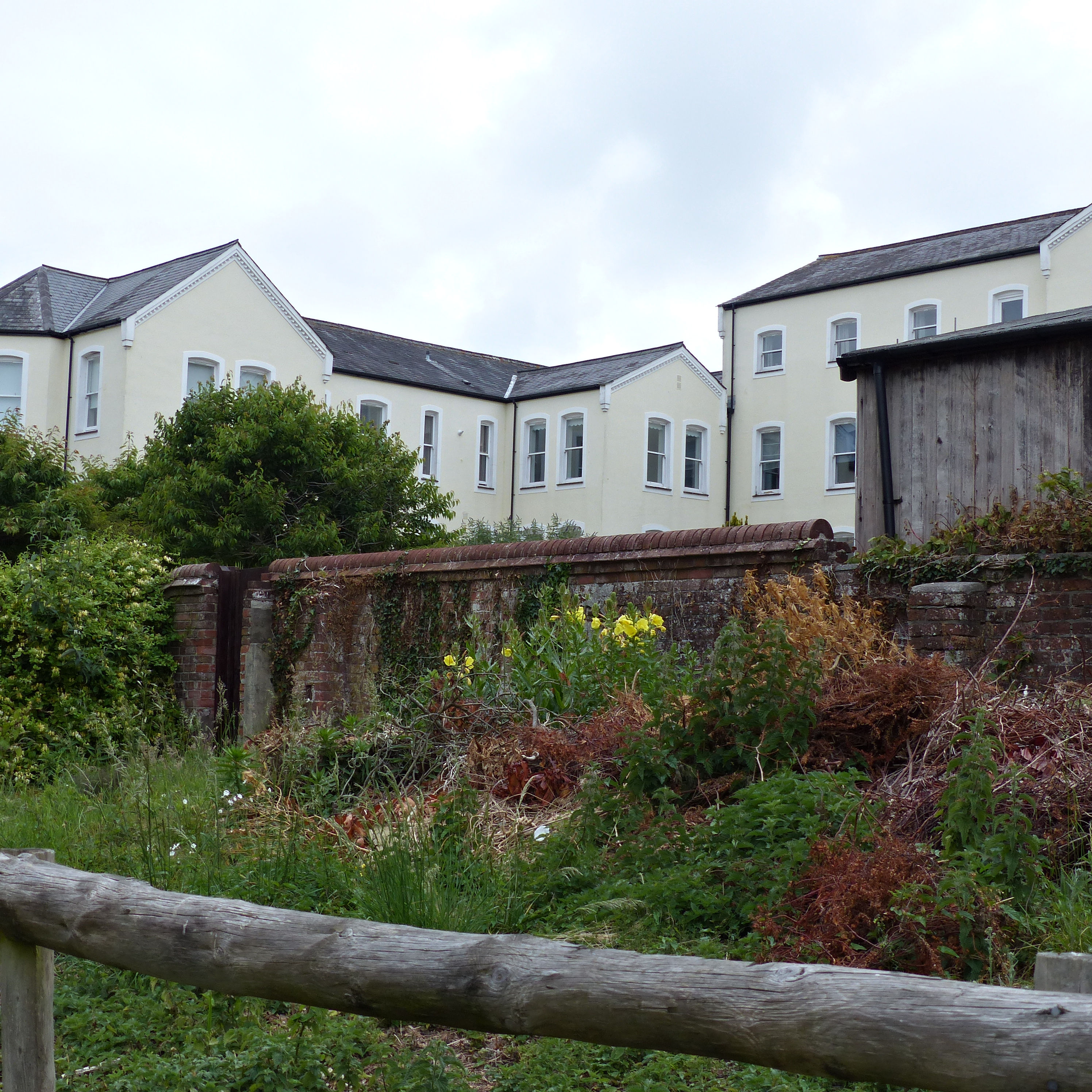
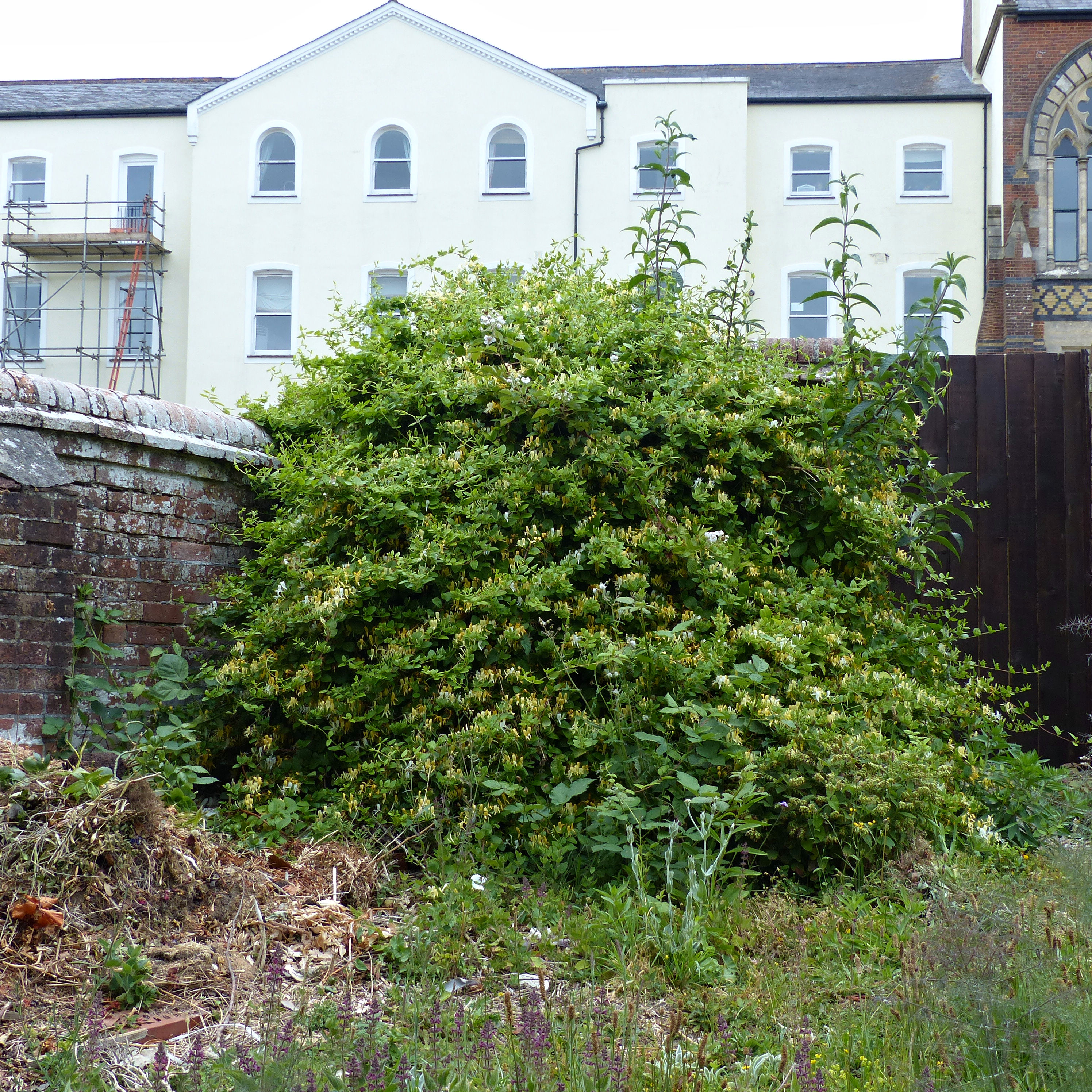
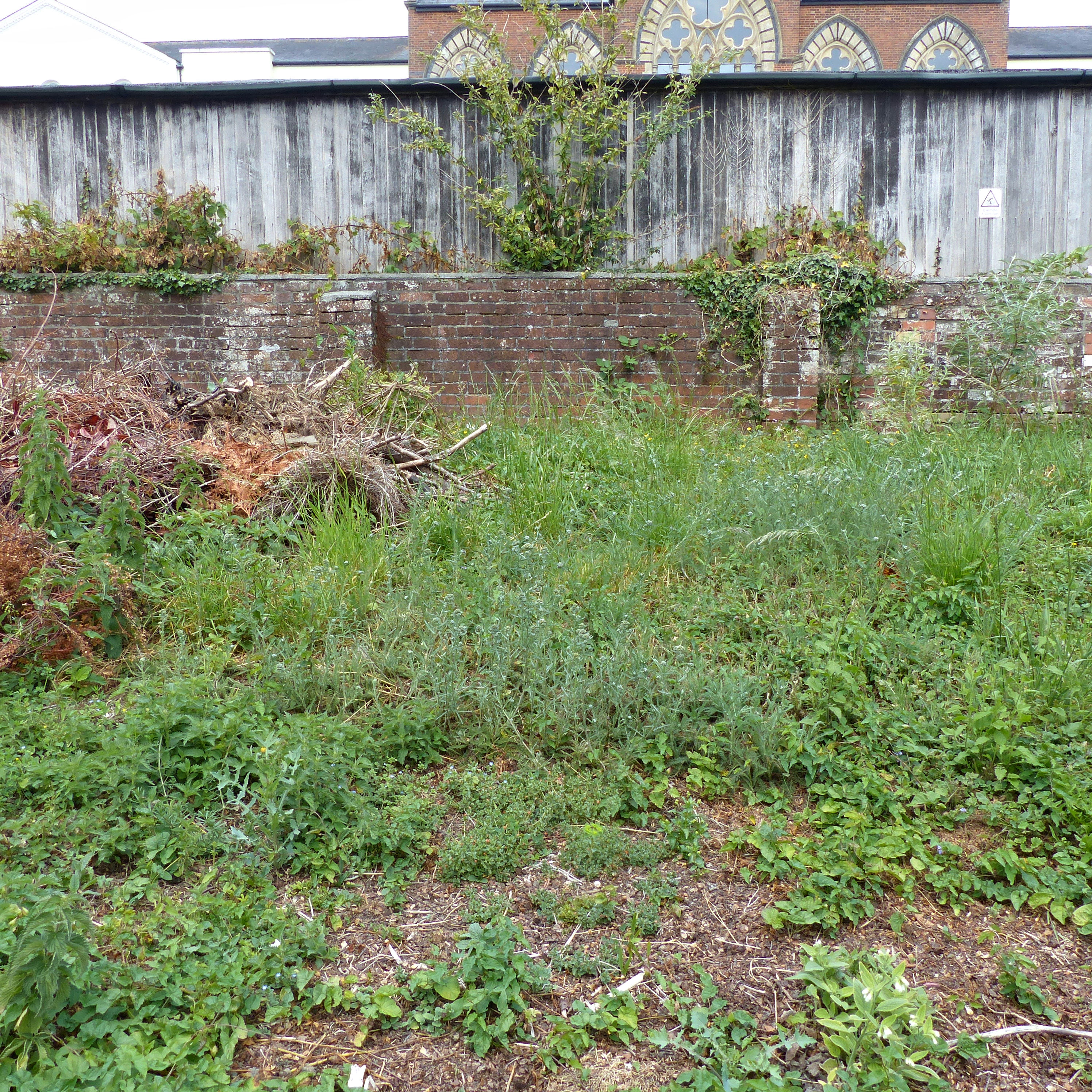
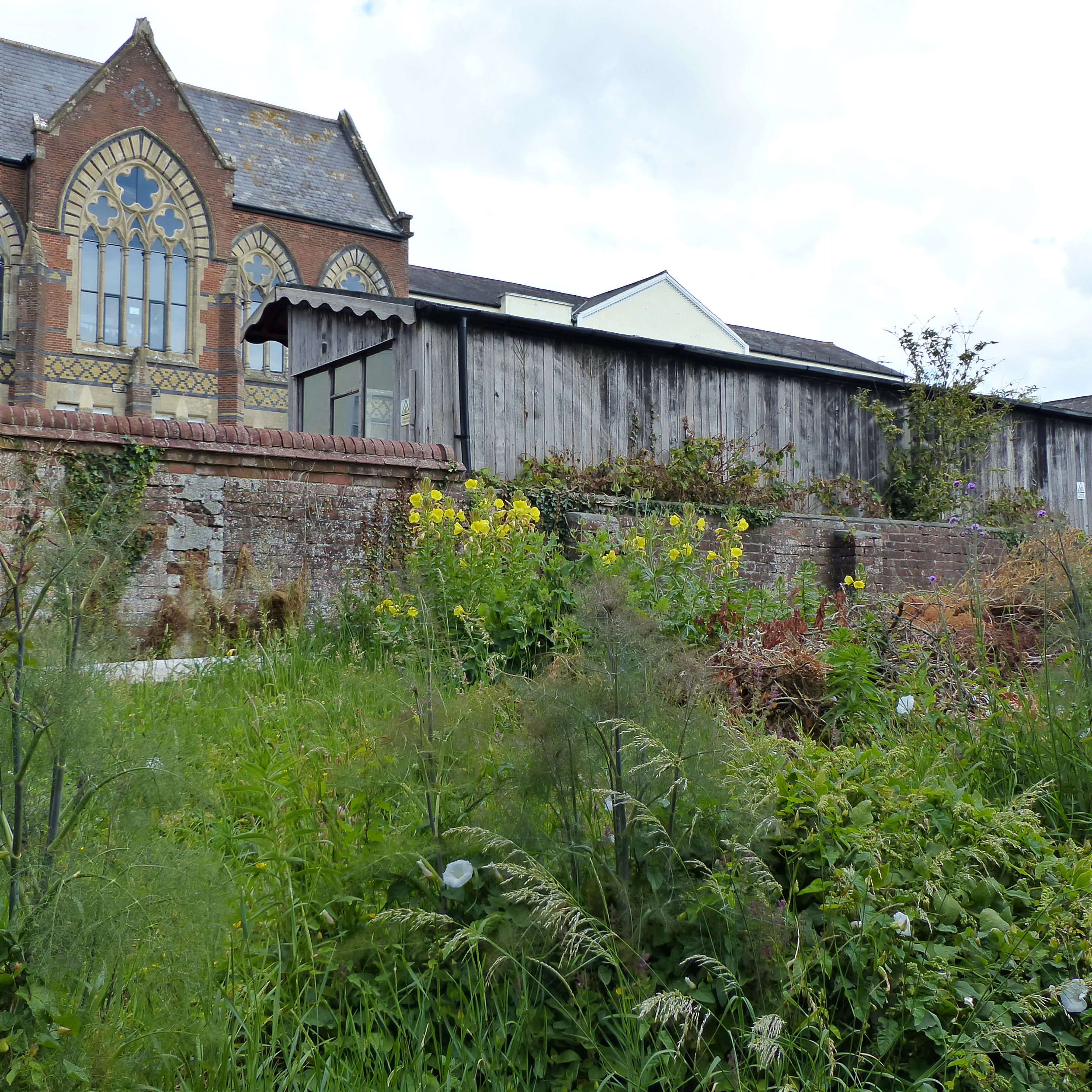
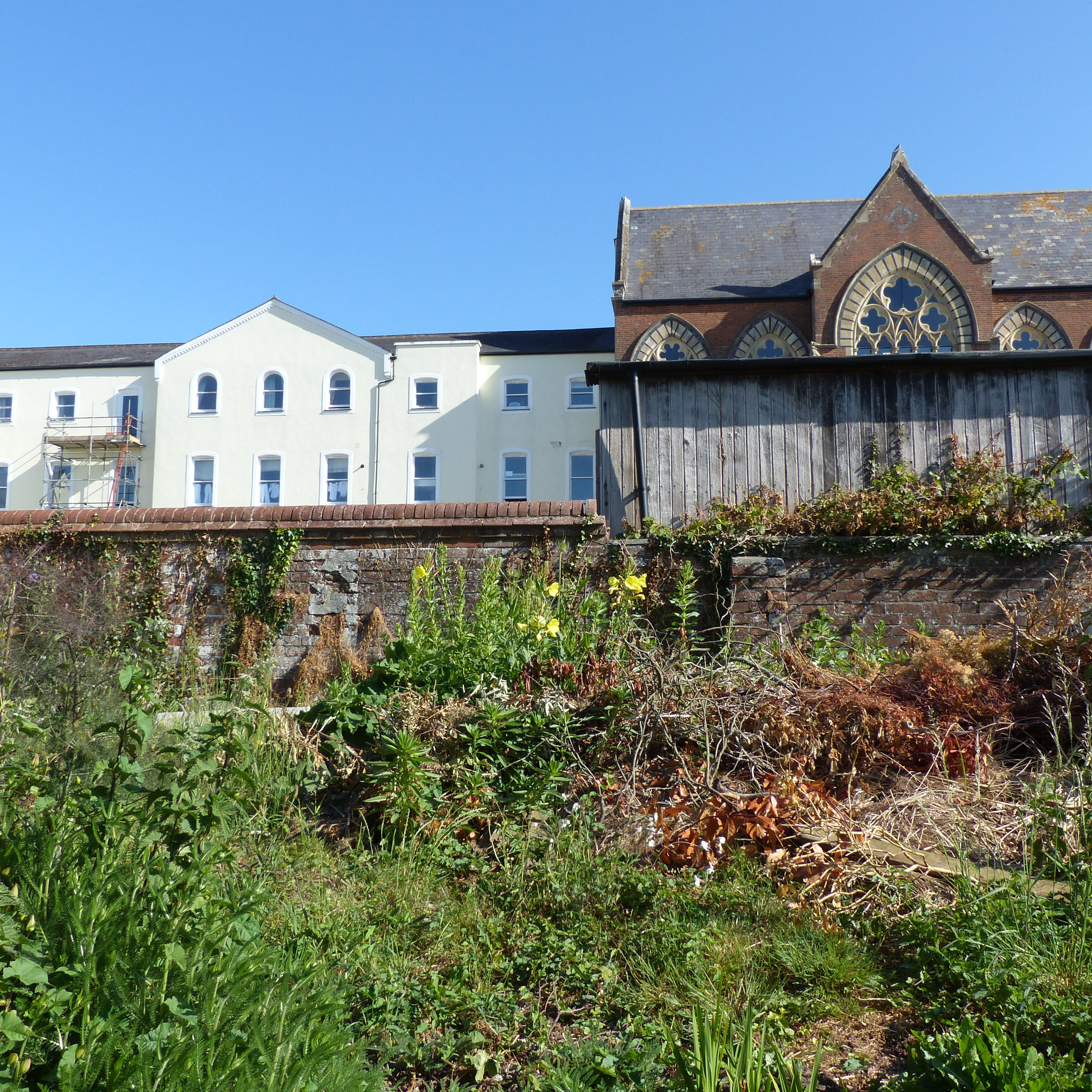
During the first Covid lockdown when freedom to walk outside your home was severely restricted, I would walk around the grounds for the short period allotted, and take special notice of everything I saw, and watched day-by-day as nature unfolded in the warm Spring weather. During the twenty odd years that I have lived in the village, I must have walked past this uncultivated area many times but without paying much attention. Between the manicured gardens of Redwood House and the cricket pavilion was a long narrow strip of land bordered by a low red brick wall on one side and wooden fencing supporting roses on the other. It was a place where garden and other refuse was dumped. It was periodically cut back to control the weeds. The roses perhaps acted as a partial screen to draw the eye away from the mess. It seemed a kind of neglected no-man’s land. I wondered if it originally had another purpose. Perhaps it had been a sort of kitchen garden.
The more I looked at this patch of waste ground, the greater the number of flowering plants I could see. Mostly wild and native but including a few that had naturalised from gardens. I was curious about what was growing there in such a lovely tangle. I started taking pictures to record what I had seen and to try and identify the plants. That is how it all started. And this is what the waste ground looked like in 2020 in random general shots taken at various times during that year.
 Jessica's Nature Blog
I’m looking forward to these posts. Thank you.
LikeLiked by 1 person
Thank you, Sandy.
LikeLiked by 1 person
What a great project! We often drive past on “the top road” but haven’t investigated. Now we will – including the cricket ground!
LikeLiked by 1 person
One of (very few) blessings of the pandemic was the impulse to connect with nature in our most local areas. I’m glad it has been made into a wild garden.
LikeLiked by 1 person
The wild garden is very much a work in progress as far as I can see. I am not directly involved. Right now, the glorious explosion of colour and plant life in June and the beginning of July has died back with just a few plants still flowering. I am looking to see how the area will be managed long term – that is the difficult bit. And a decision will no doubt be made about whether the place is predominantly for the benefit of wildlife or for people to get a glimpse of nature. Decisions will be made collaboratively I guess between all parties concerned. The Cricket Club by the way is a hive of activity on all levels and is the social hub of the village.
LikeLike
Yes, that is true, Sandy. From what I can see as a mere observer, the garden is developing well at the moment but will need a lot of thought about management.
LikeLiked by 1 person
It’s fascinating to watch nature reconquering patches of wild ground, isn’t it? Giving us an idea of how our planet is going to look when mankind will have become extinct. 😊
LikeLiked by 1 person
Yes, you are right, Markus. This particular area has been undergoing an interesting process, a story with a twist you might say. Very much a work in progress. Elsewhere I have seen just how readily wildlife springs back naturally when permitted to do so. There are large scale rewilding projects in Dorset.
LikeLiked by 1 person