
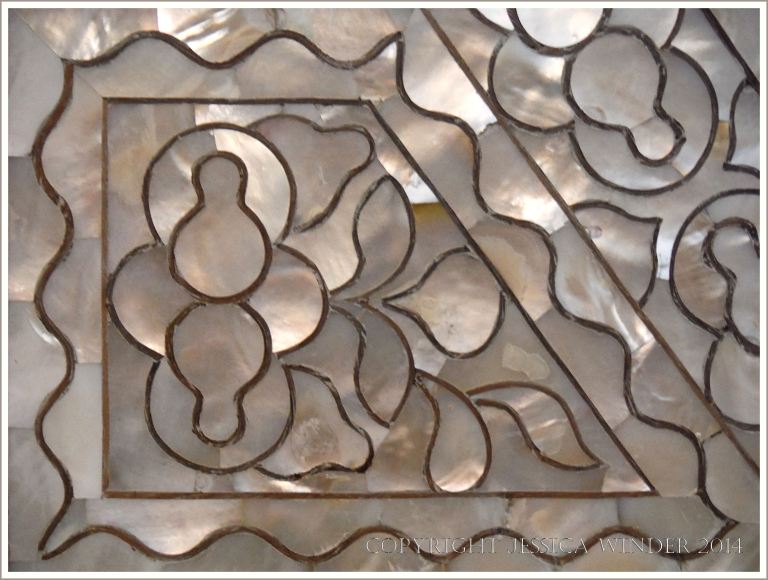
Mother of pearl is a wonderful iridescent material that is frequently used for artistic purposes. It comes from the inner surface of certain shells, sometimes gastropods like the Button Top Shell, and other times from bivalves such as the Freshwater Pearl Mussel. The inner or nacreous layer of certain shells is composed of crystals which are arranged in layers that reflect light in an attractive way. The colours reflected, and the intensity of the sheen, depend on the type of shell from which it has been obtained and also on the quality of light to which it is exposed. The same piece of mother of pearl can look different in different lights.
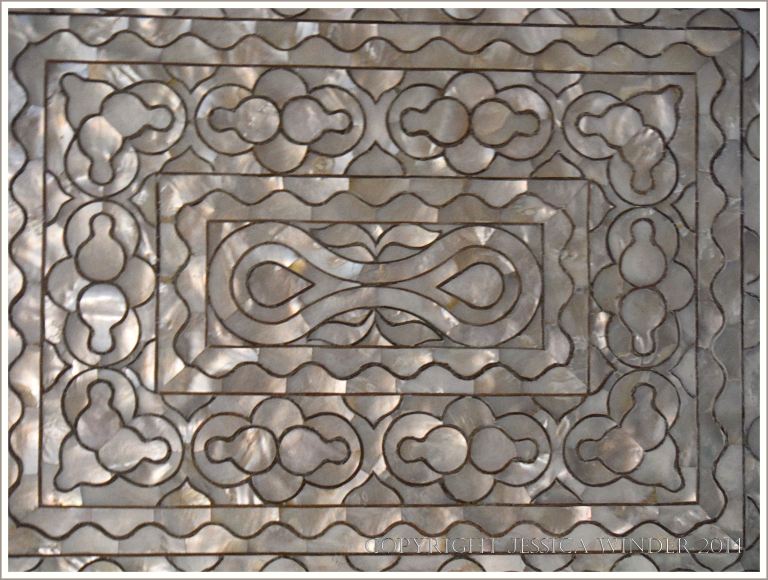
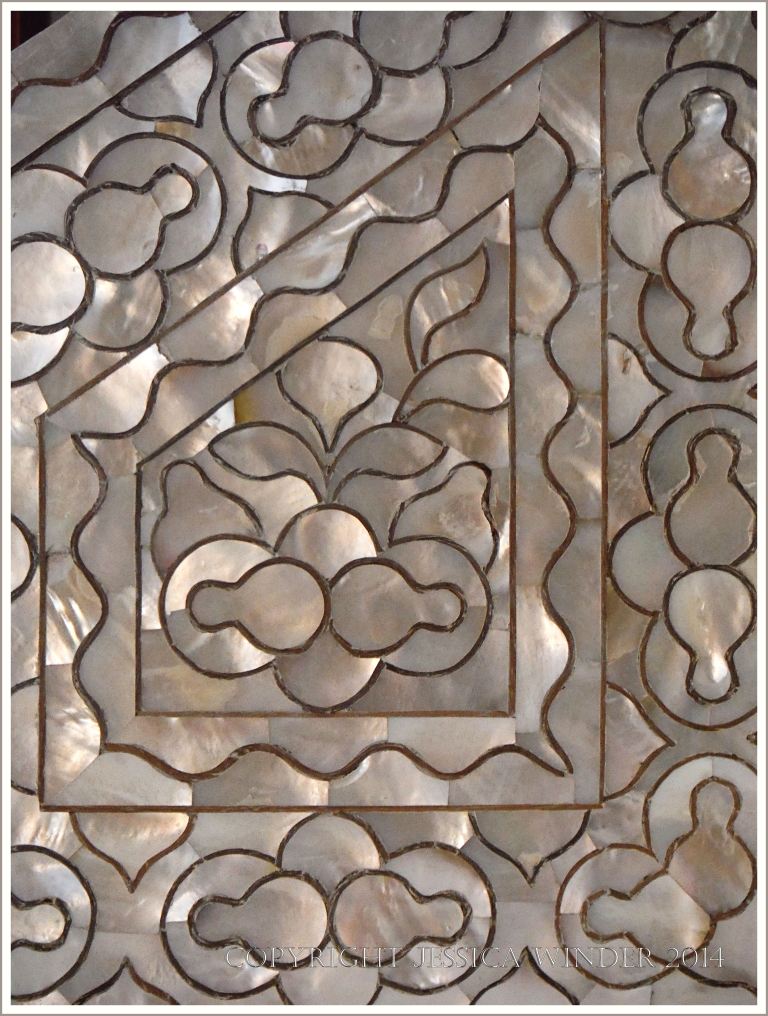
The photographs here show the details of the decorative veneer on a bureau-bookcase probably made in Mexico between 1780 and 1820. This is one of many fine items of antique furniture displayed in the Victoria and Albert Museum in London. The veneer is composed of about 7,000 individual pieces of shell, each piece from a separate individual shell (most likely freshwater mussel), and each one having taken about 40 minutes to prepare and shape. The shape of every shimmering piece is highlighted to great effect by a very narrow border of contrasting dark wood.
COPYRIGHT JESSICA WINDER 2014
All Rights Reserved
 Jessica's Nature Blog
Thank you for including the science with these photographs of the beautiful Mexican bureau-bookcase. I like knowing (now) that it’s the crystalline structure that creates the iridescence.
LikeLike
Beautiful material, and well captured – I always find it difficult to get things like this across in a photograph.
LikeLike
Thank you, Adrian. Sometimes shots work and sometimes they don’t. Especially with indoor shots, the artificial lighting can be wrong – not enough or too much reflection. This was a good stet-up but in the past I have also found it very difficult to capture with the camera the subtle changes in colour or sheen that I can see with the naked eye.
LikeLike
Thank you. I guess the way that the crystals are arranged in horizontal sheets allows them to act on light in much the same way as a glass prism splits white light into all its constituent colours, reflecting back all the colours of the rainbow.
LikeLike