
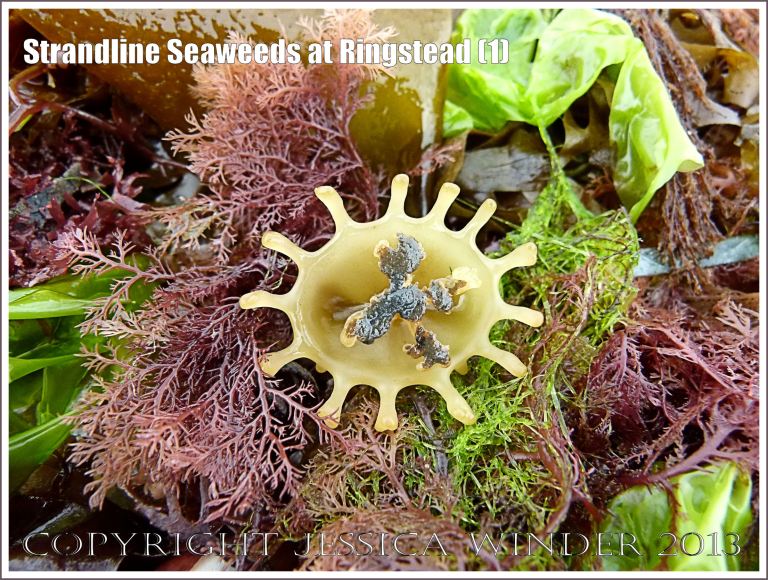
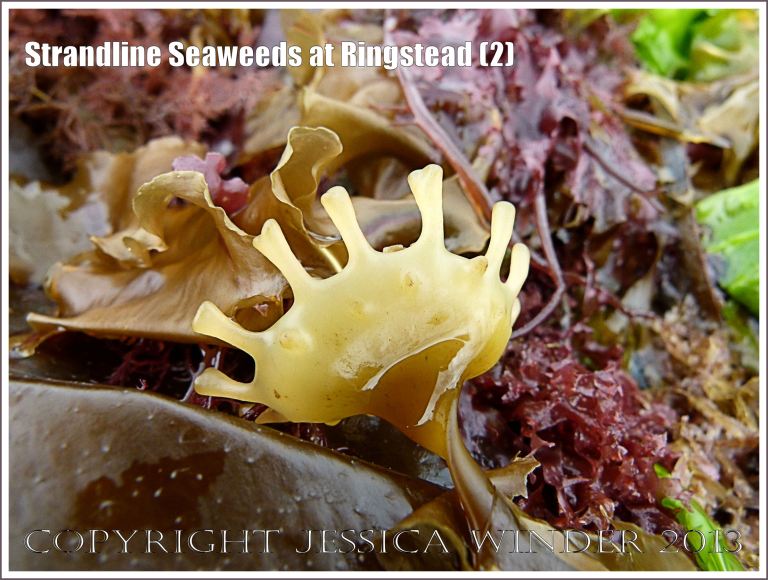
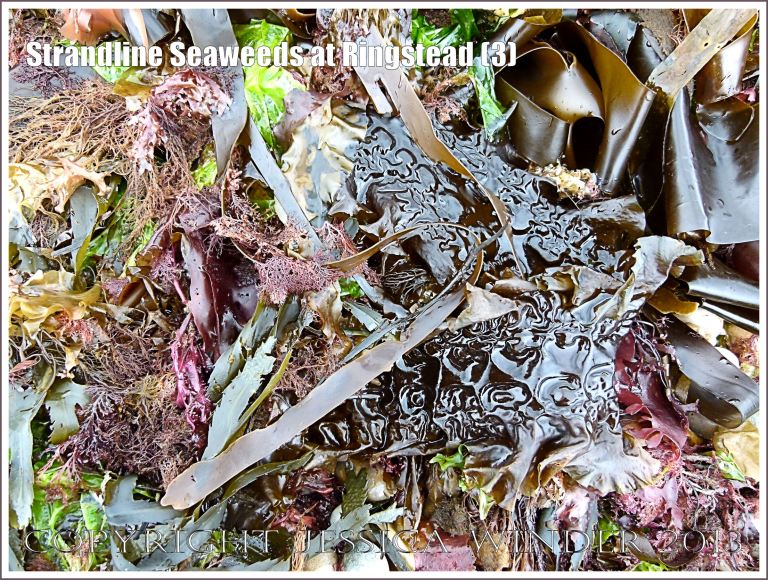
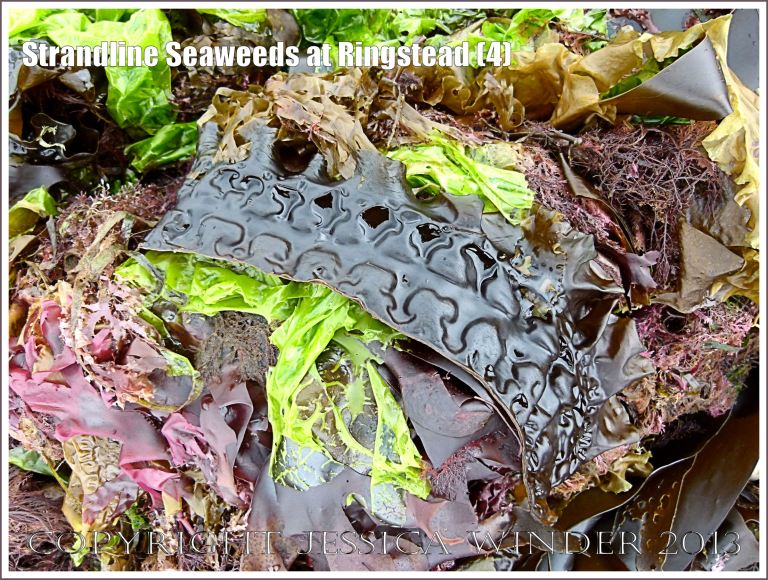
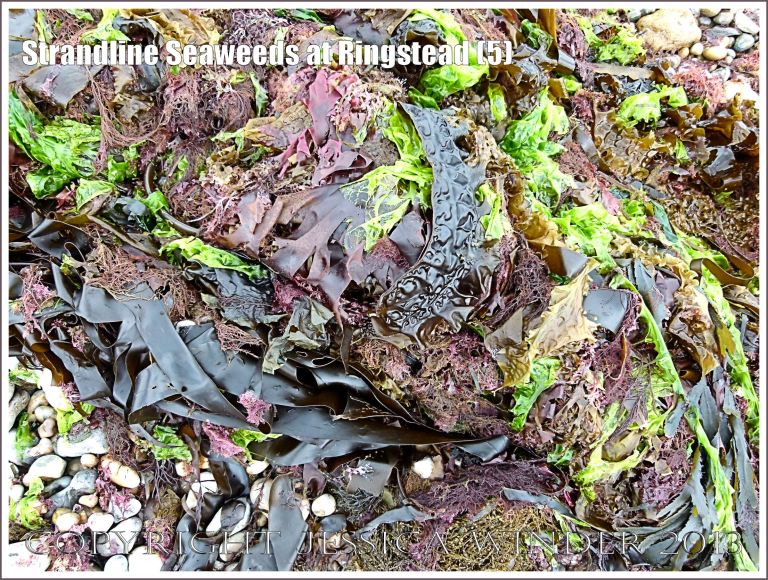
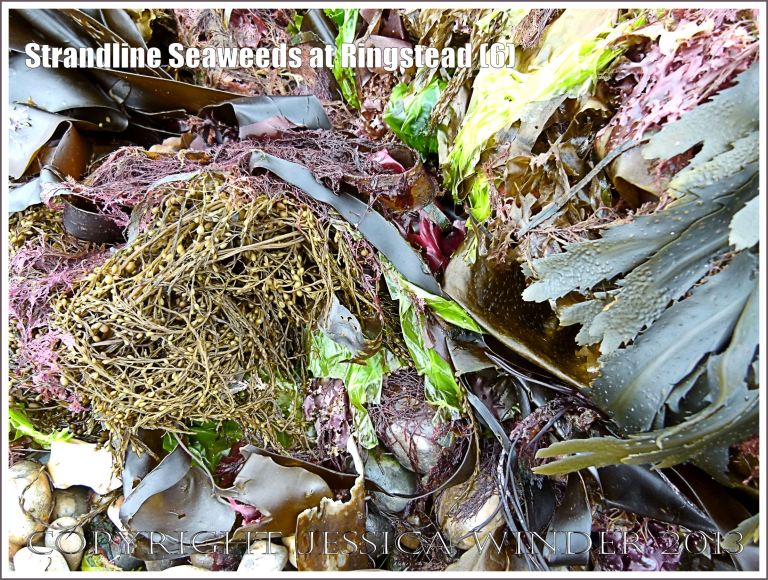
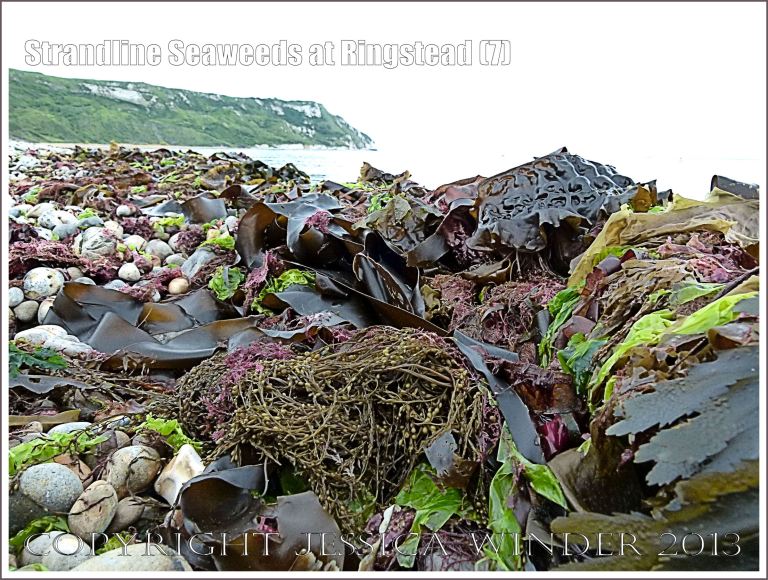
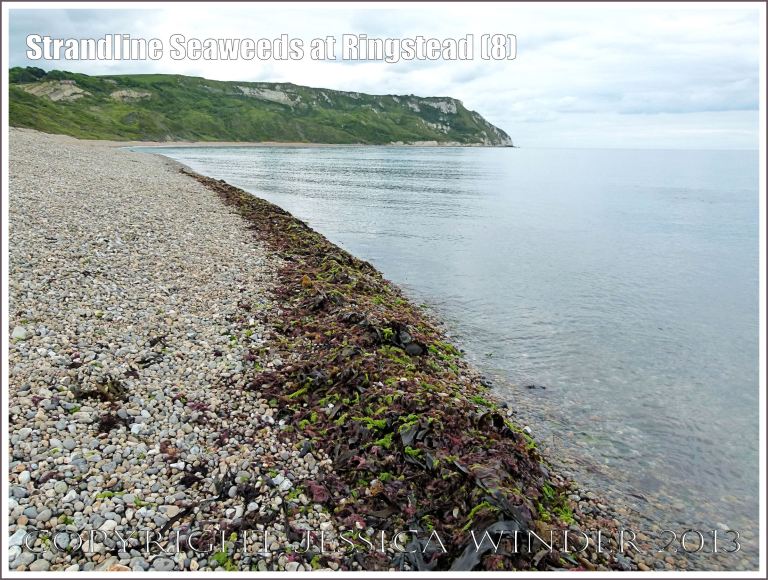
Many UK shorelines are characterised by the wealth of seaweeds that colonise them. These seaweeds are as often likely to become detached from where they have settled and subsequently wash ashore, sometimes in great profusion and abundance. The textures and colours are varied with representatives of many groups – often with species of brown (Phaeophyceae), green (Chlorophyceae), and red (Rhodophyceae) marine algae. They contribute to a great multi-coloured strandline along the waters’ edge and provide the average beachcomber with an opportunity to discover and appreciate varieties of algae normally well out of reach.
COPYRIGHT JESSICA WINDER 2013
All Rights Reserved
 Jessica's Nature Blog
Would be fascinated to know what the white cog-type one is . . . and the one with patterns which make it look like an elaborate tyre tread.
LikeLike
Such wonderful colours, Jessica. Some look edible. Last at Ringstead for Olympic sailing – tiny dots on the horizon seen from the Downs above the bay… having forgotten the binox! It still seemed quite exciting.
LikeLike
The flower-like or cog-like object in the first two images is the partly-formed holdfast of a kelp seaweed (not certain which species). There is a picture of a similar but more developed holdfast in the blog at Kelp textures at Ringstead – in this example the holdfast is still attached to the original stone on which the seaweed settled but the weed itself has become detached.
The seaweed with the tyre-tread patterns is Sea Belt or Poor Man’s Weather Glass, Laminaria saccharina (Linnaeus) Lamouroux. I’ll be posting some more pictures of these seaweed patterns shortly.
LikeLike
Yes, I love the colours. I think that quite a few may be edible – but I don’t think I’ll try! The downs above Ringstead are a lovely spot with great views over the Bay – must have been an ideal spot for watching the sailing events.
LikeLike
Thanks, Jessica. Appreciate that info.
LikeLike