
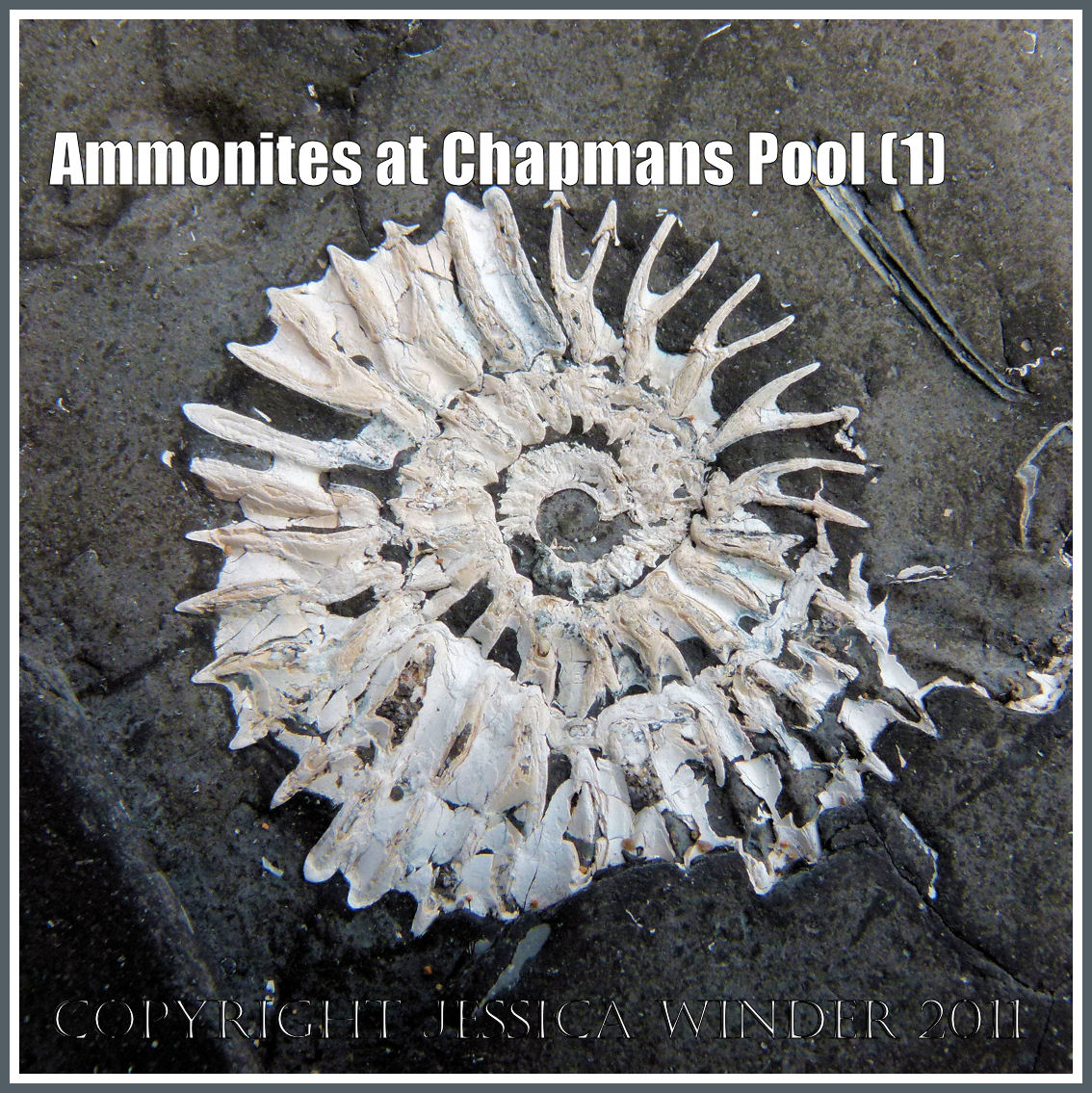
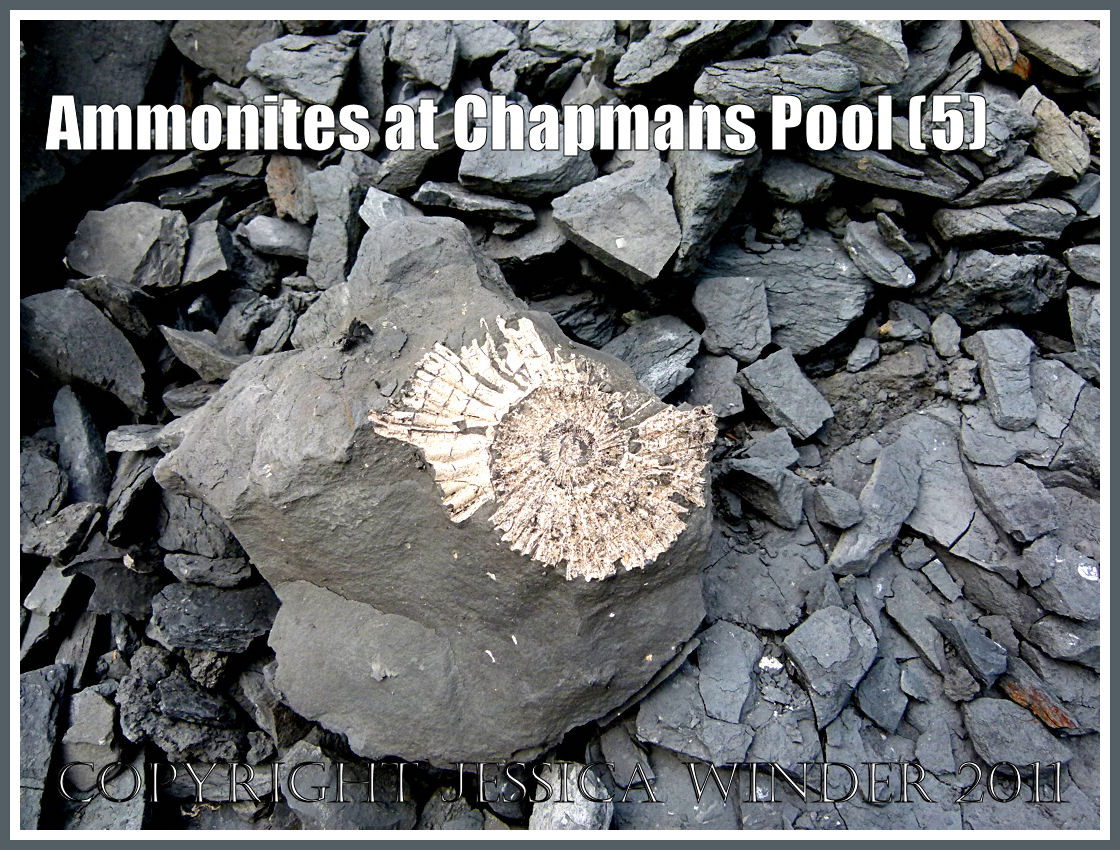
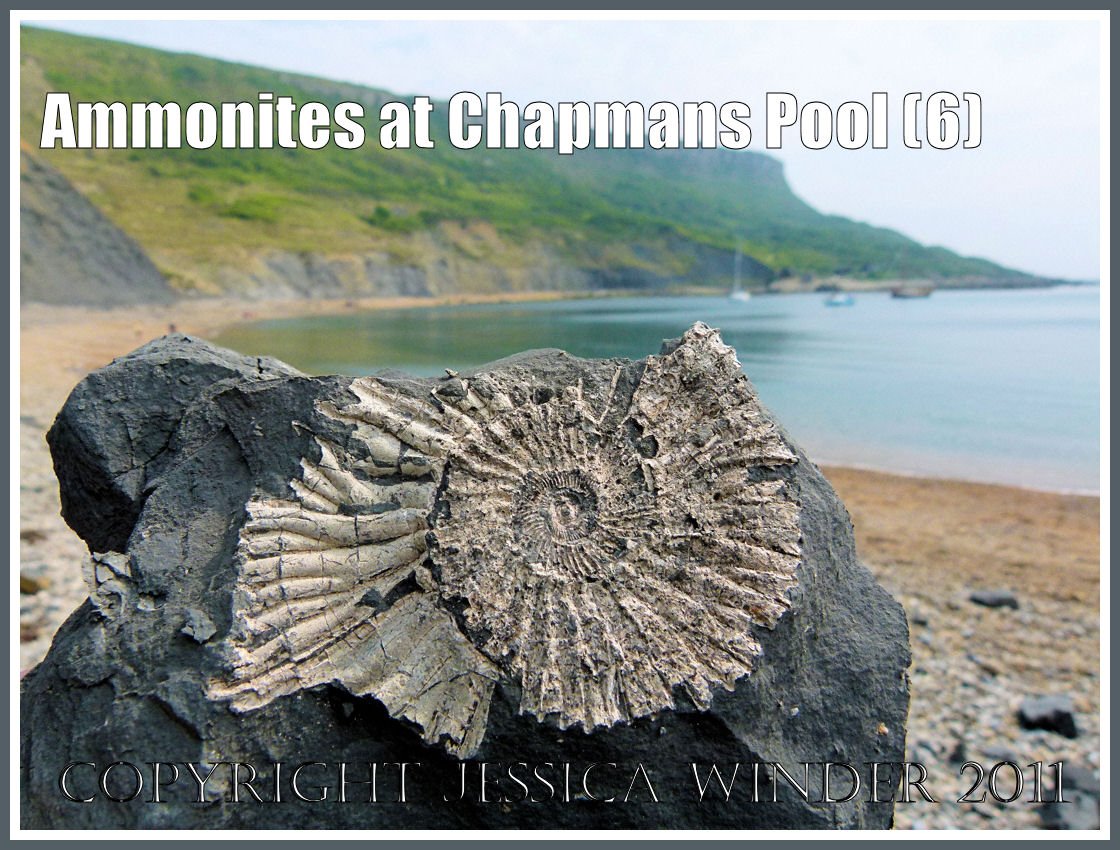
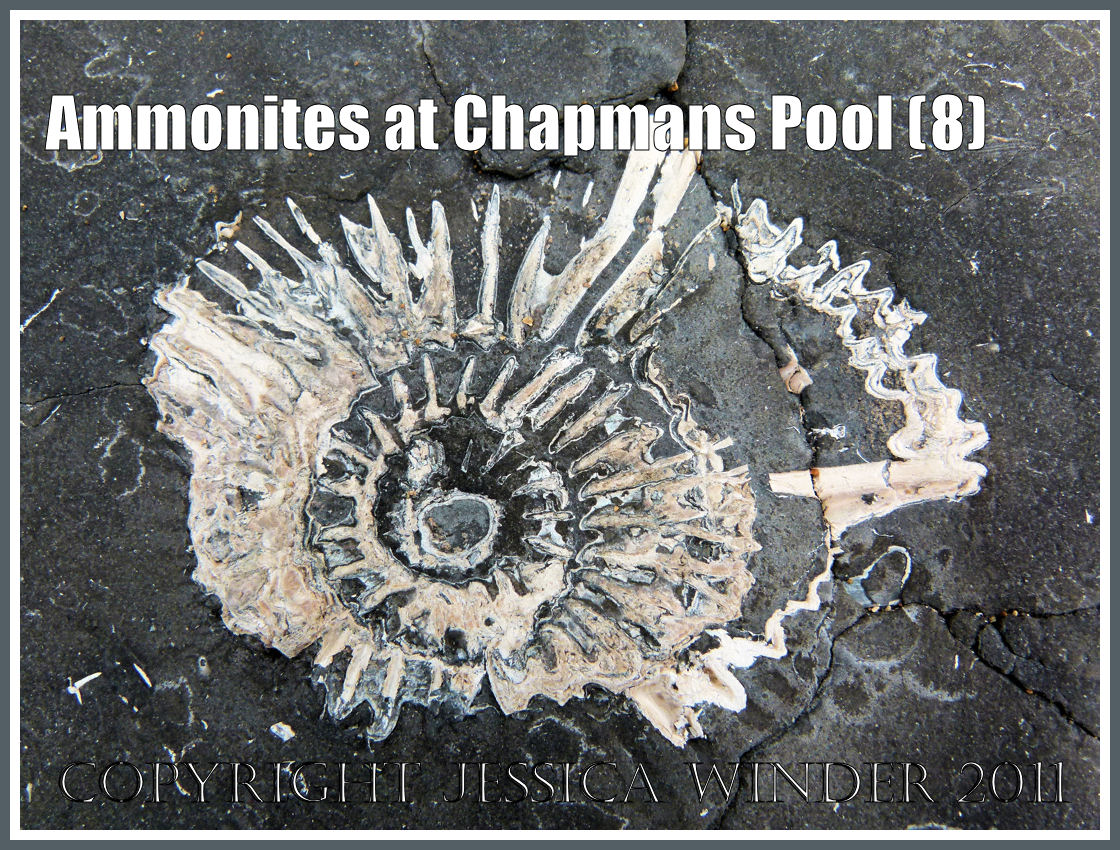
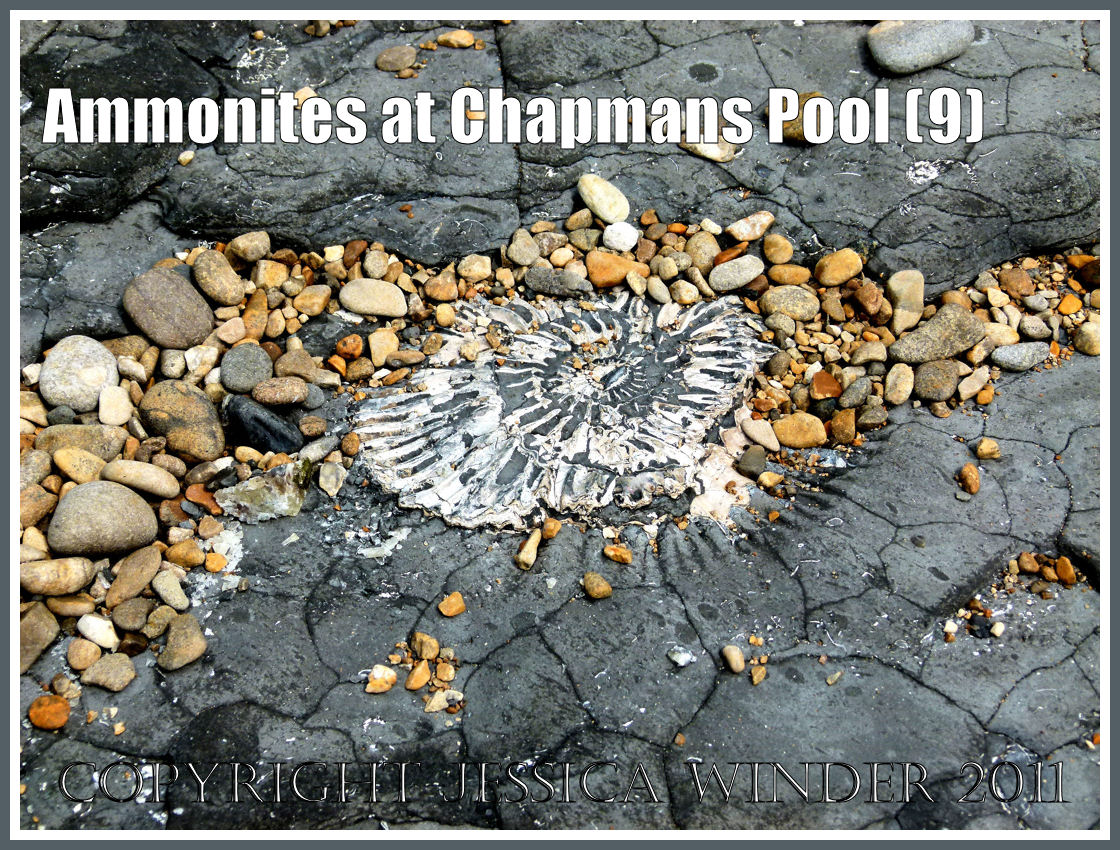
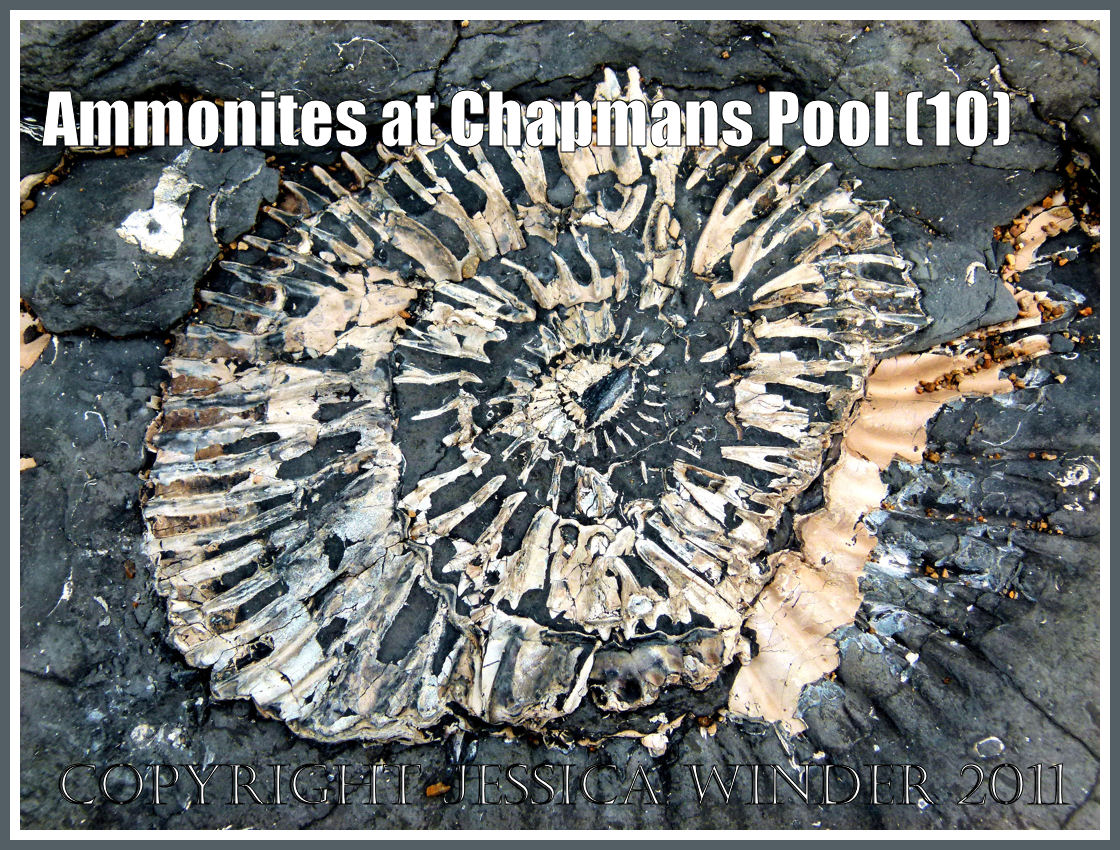
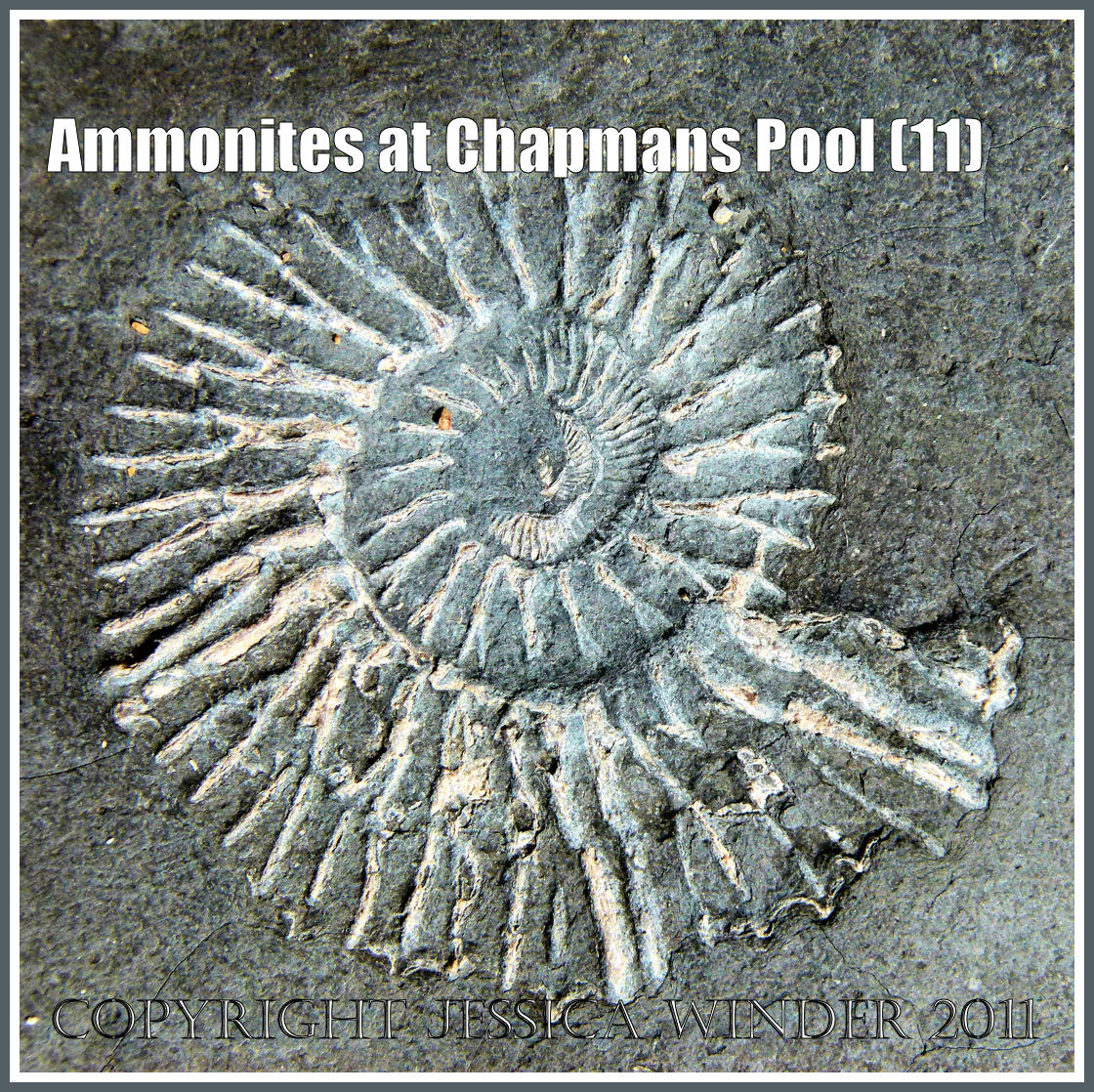
There is one type of fossil that you are more likely to find than any other at Chapmans Pool in Dorset, UK – and that is the ammonite – possibly Pavlovia rotunda or maybe even Pavlovia pallasiodes. These are fossil cephalopods dating from the Jurassic Period. The shelly remains of many thousands of these were buried in sediments that were later compressed into rocks – the so called Rotunda Shales – which are part of the series of marls, shales and clays known as the Kimmeridge Clay that was formed during the Upper Jurassic Period over 135 million years ago.
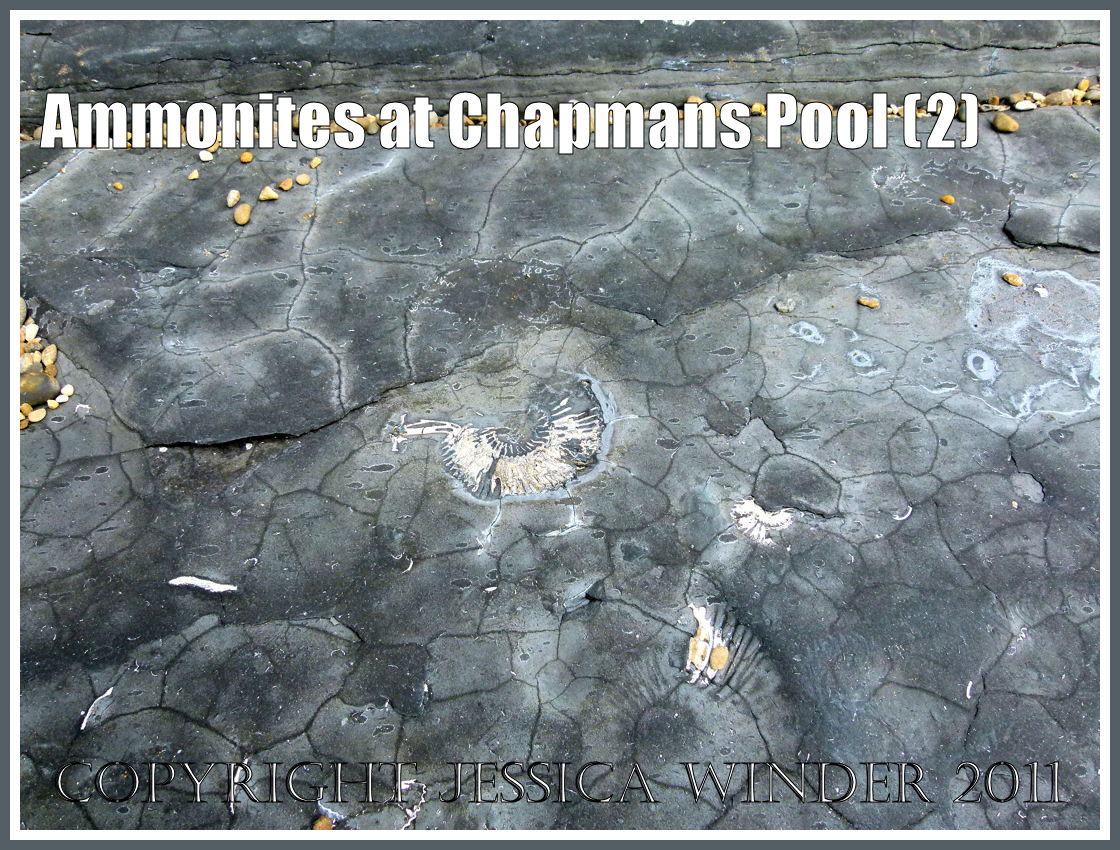
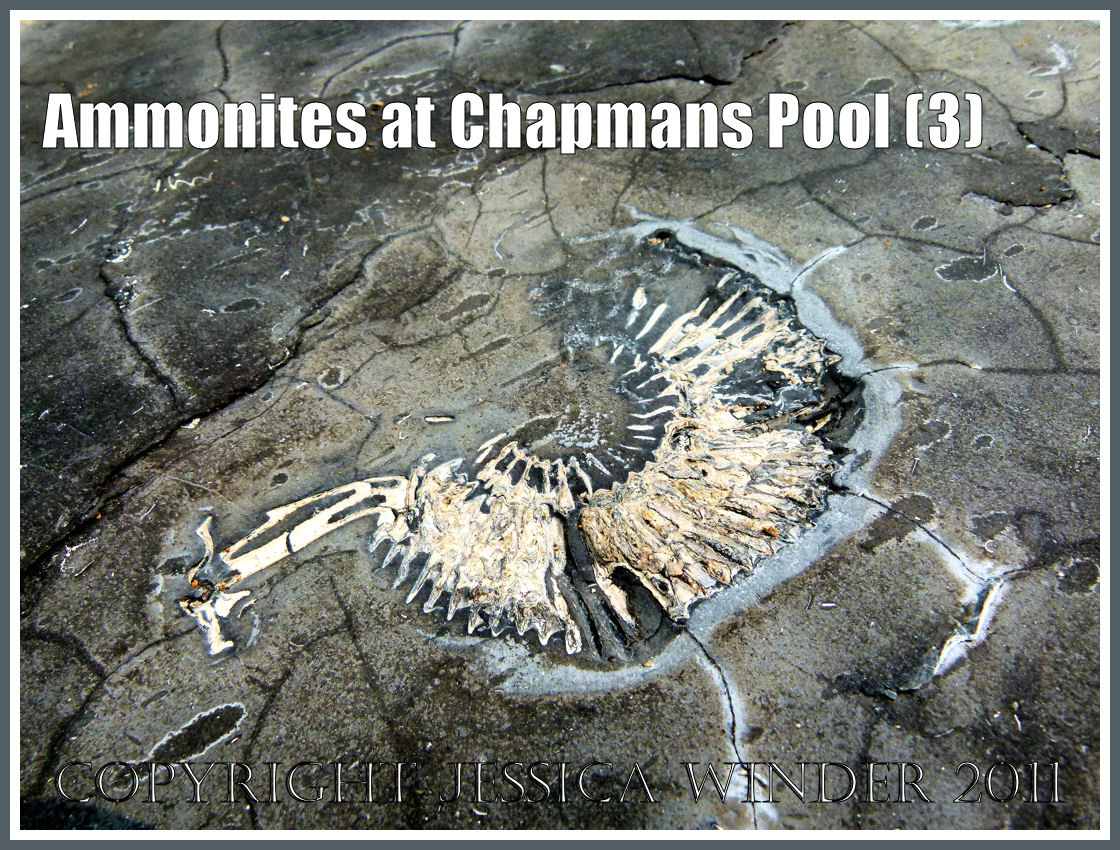
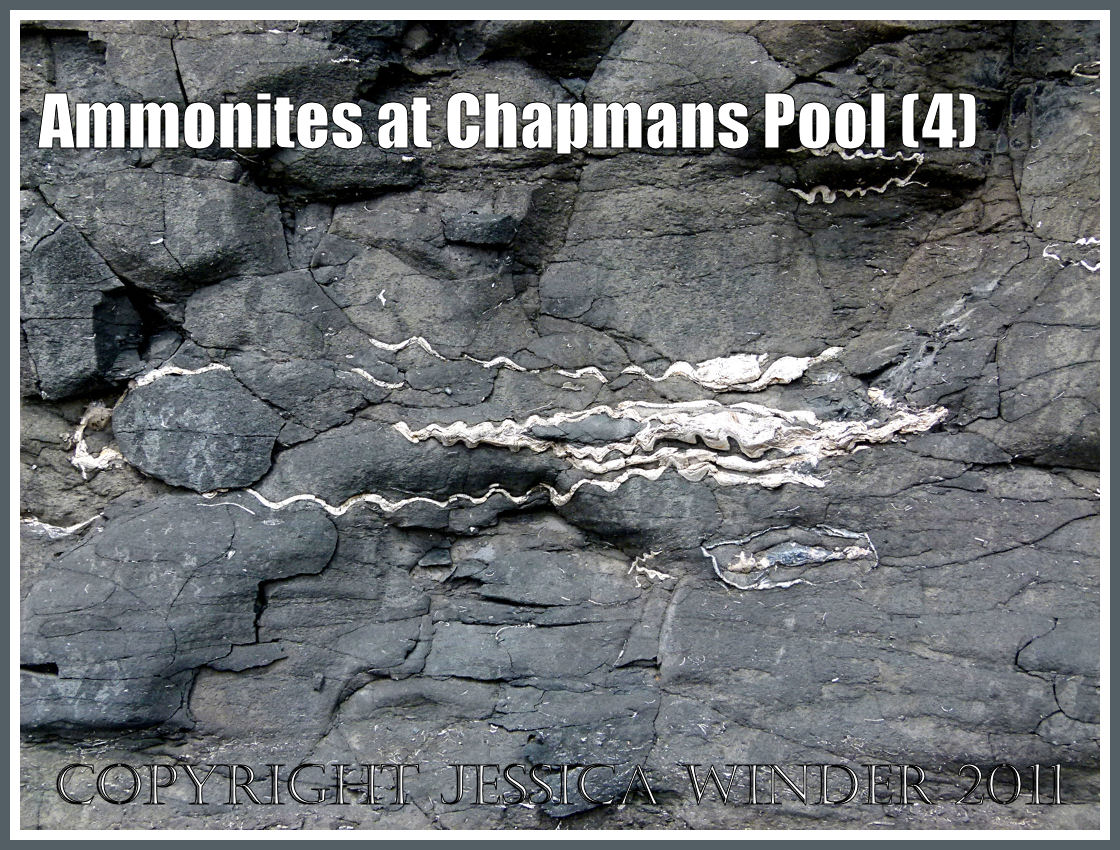
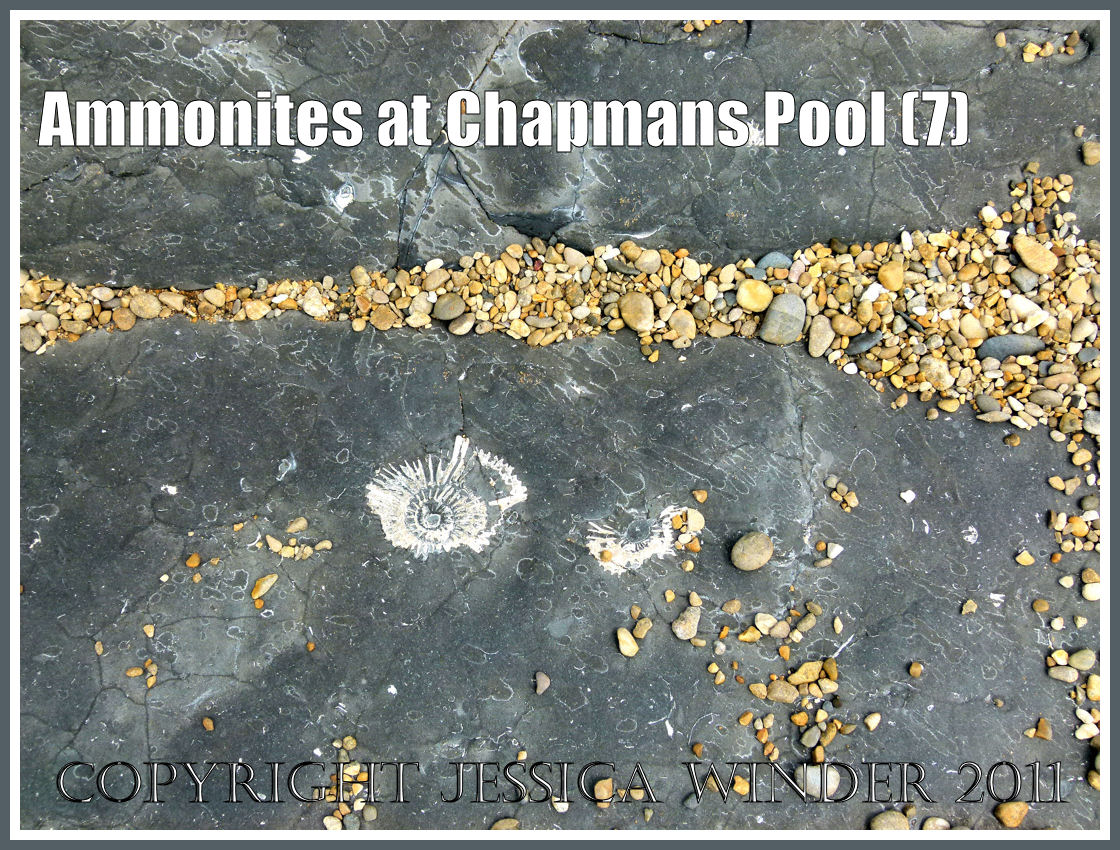
The fossil shells (which are generally fragile and flakey) occur at the western side of the bay, at the foot of Houns Tout. Most frequently, they are found where they have been squashed between the rock layers or strata. It would be very difficult to remove the fossils from the bedrock – although the ammonite impressions are sometimes found in large pebbles or cobbles. Usually, these ammonites are seen on the surface of the shale rock pavement that extends seawards from the base of the cliff, often temporarily concealed by a layer of gravel or pebbles. They can also be found on large sharp pieces of shale that have fallen down from the cliff in piles of scree. The third place they can be seen is embedded in the vertical cliff face where they are usually visible in cross-section in a distinct sloping band that traverses the lower part of the cliff.
COPYRIGHT JESSICA WINDER 2011
All Rights Reserved
 Jessica's Nature Blog
Hi, thanks for the write up Jessica, like the photos, just been to Chapman’s pool today and seen lots of these, came here to find out the rough age, I see you answered our question 🙂 keep up the good work!
LikeLike
Pleased to hear that my article was useful, Stuart. Thank you for letting me know.
LikeLike