

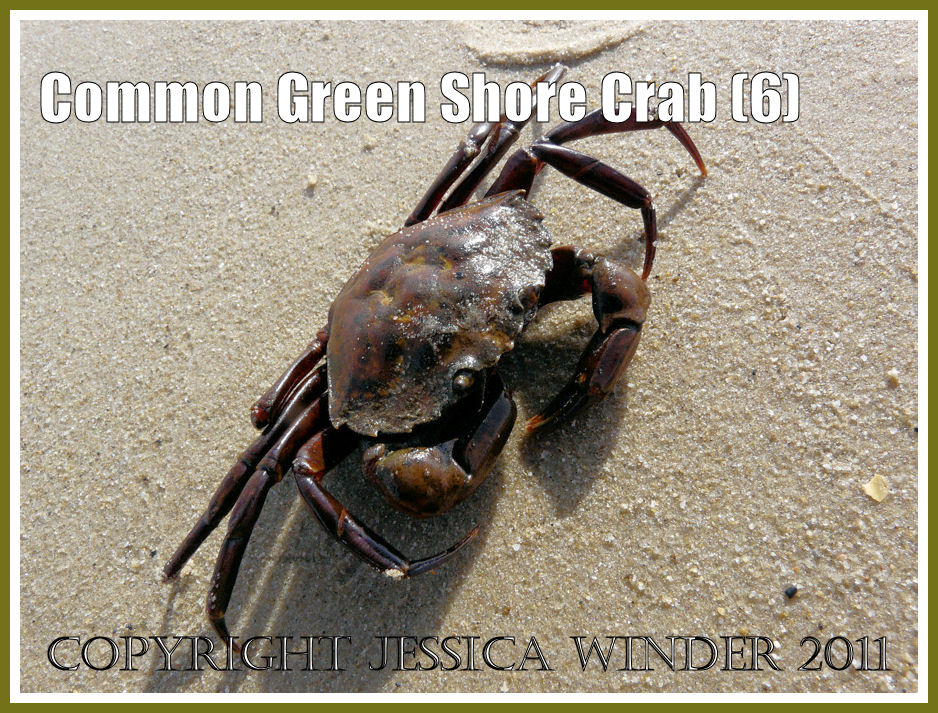
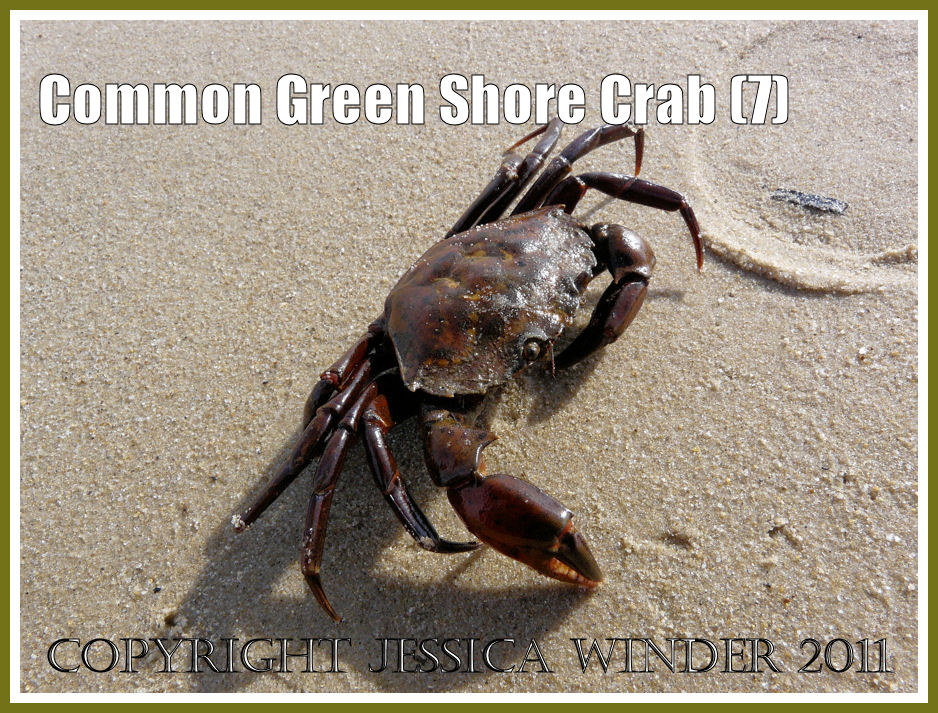
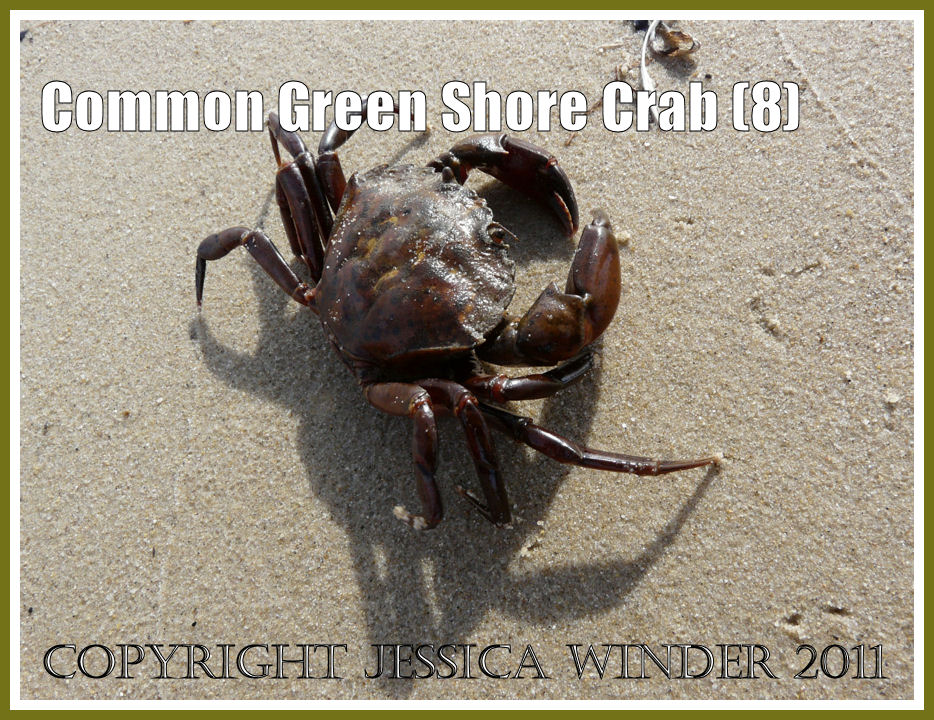
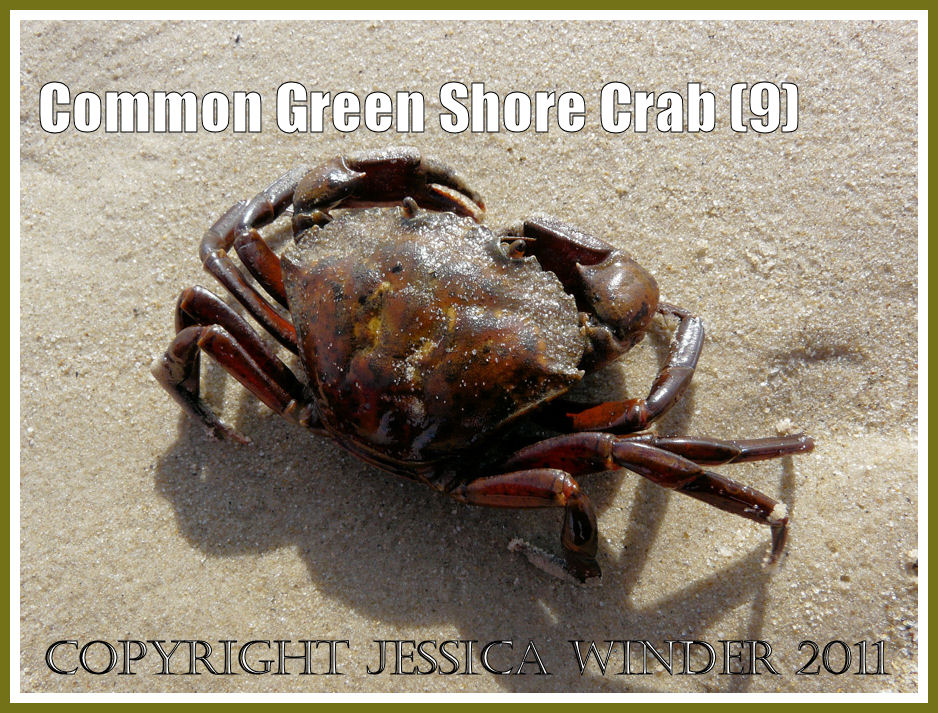
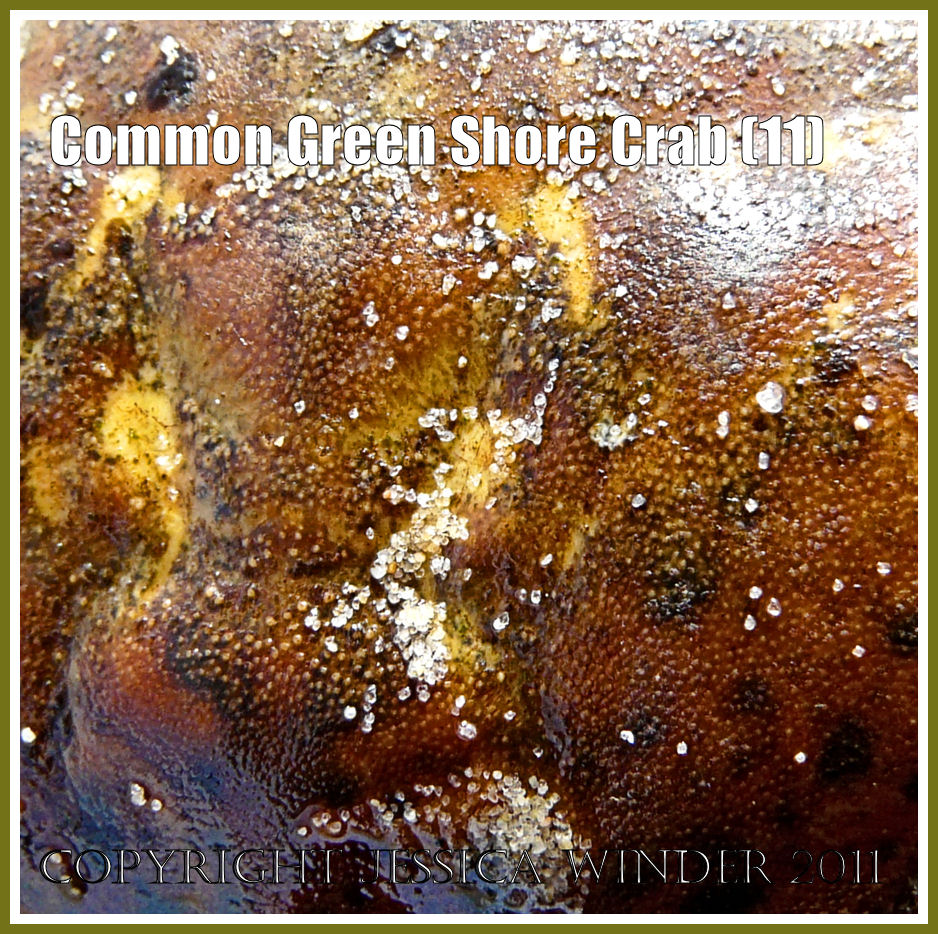
It may seem counter-intuitive … but this is a Common Green Shore Crab – Carcinus maenas (Linnaeus). Honestly. The colour of Green Shore Crabs varies enormously and the underside of the shell is frequently a brick red or orange colour. The top of the shell carapace is darker, often green, but can be a range of colours and patterns. In this specimen more like a brown mottled appearance.
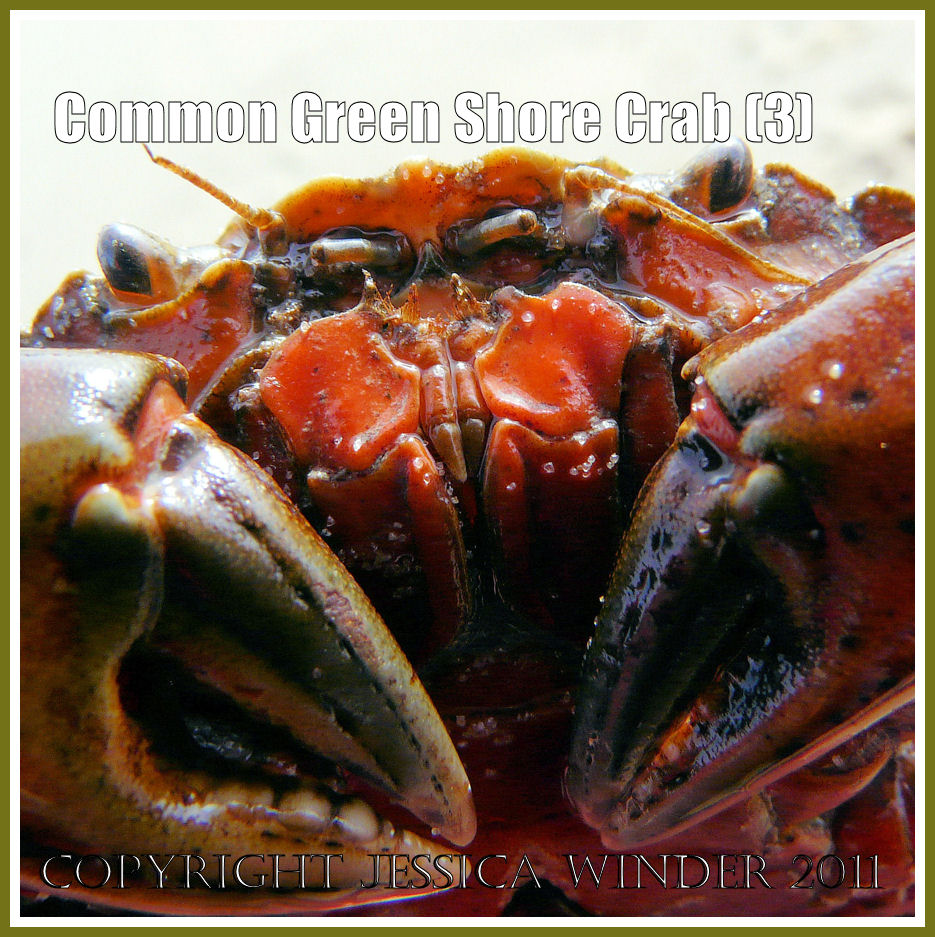
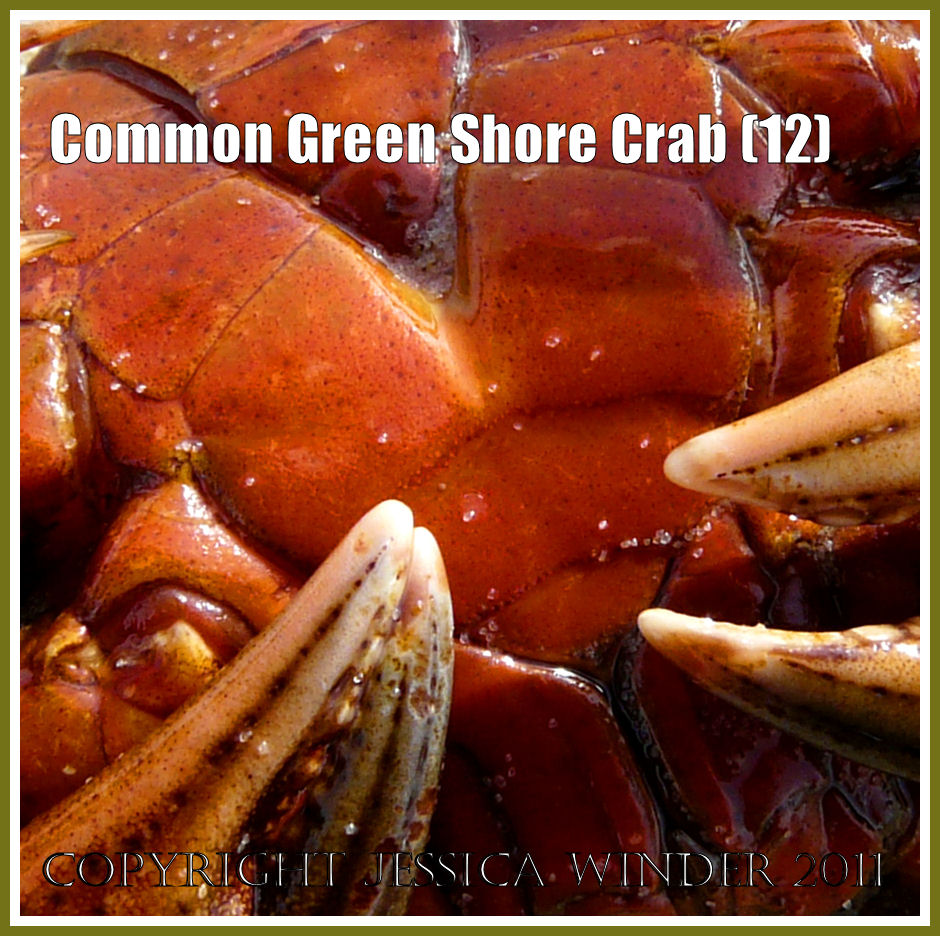
The top photograph shows the crab as it landed on the wet sand after being tossed there by the previous wave to break on the beach. The bright vivid vermilion of the smooth underside of the crab was what caught my eye. The legs were folded protectively against the body. I thought it was dead at first but when I turned it over and picked it up, the eyes popped out on stalks from the recesses in the front edge of the carapace, and it extended its limbs. The two stouter front legs with pincers or claws are called chelipeds. The four pairs of slimmer walking legs are pereopods.
This crab wasn’t very big – about 50 or 60 mm across the carapace – as you can see in the photo below. They can grow up to a carapace size of 88 mm across. The shell looked in perfect condition and may have been newly formed and hardened. The almost glossy undersurface looked and felt a bit like Japanese lacquer work. The upper carapace surface had a contrasting granular or grainy texture.
The shape of the carapace in Green Shore Crabs is much broader than long and there are three characteristic small bumps along the edge between the eyes – with the central one sticking out a bit further than the other two. On each side of the carapace, towards the front, are five equal-sized forward-pointing sharp antero-lateral protrusions or ‘teeth’.
Shore crabs are very common intertidally and right down to a depth of upto 200 metres. They can be found in the splash zone pools at the top of the seashore, saltmarshes, and estuaries. Once placed on the sand, the crab I had found soon unfolded its legs and prepared for its escape. In a sideways movement, that was not unlike a car doing a multi-point turn, it inched its way around until it faced away from me and towards the sea. As there was no place for it to hide on the sandy beach, no seaweedy strandline shelter on that day, I gave it a helping hand back into deeper water.




Revision of a post first published 24 March 2010
COPYRIGHT JESSICA WINDER 2011
All Rights Reserved


Fascinating closeups, Jessica. The first photograph, very red indeed, made the crab look cooked. When I saw it against your hand, so little, I was glad to read that you had helped it back to the water.
LikeLike
I was pleased to find a live crab because on this beach I usually only find empty moulted crab shells. This one really was splendid.
LikeLike
The only crabs I ever see are dead and usually not intact.
Your photos are lovely.
Sybil
Eastern Passage, NS
LikeLike
Thank you for leaving a comment, Sybil. I usually find only dead crabs and shells when I beachcomb the seashore strandlines…. but sometimes I find small ones living at low tide levels and amongst rocks…..or like this one, cast ashore by the incoming tide.
LikeLike