
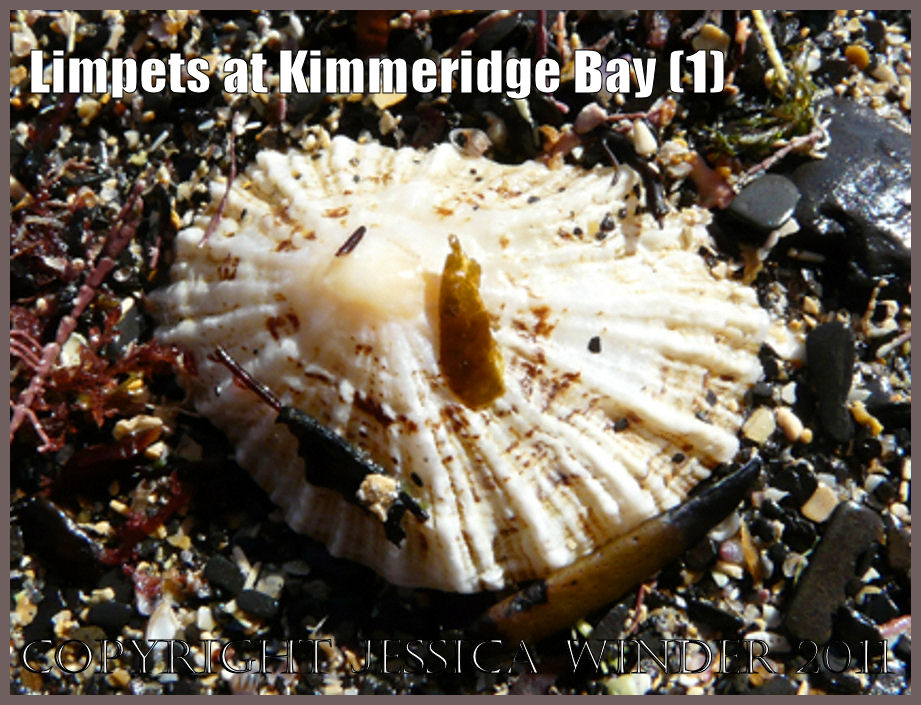
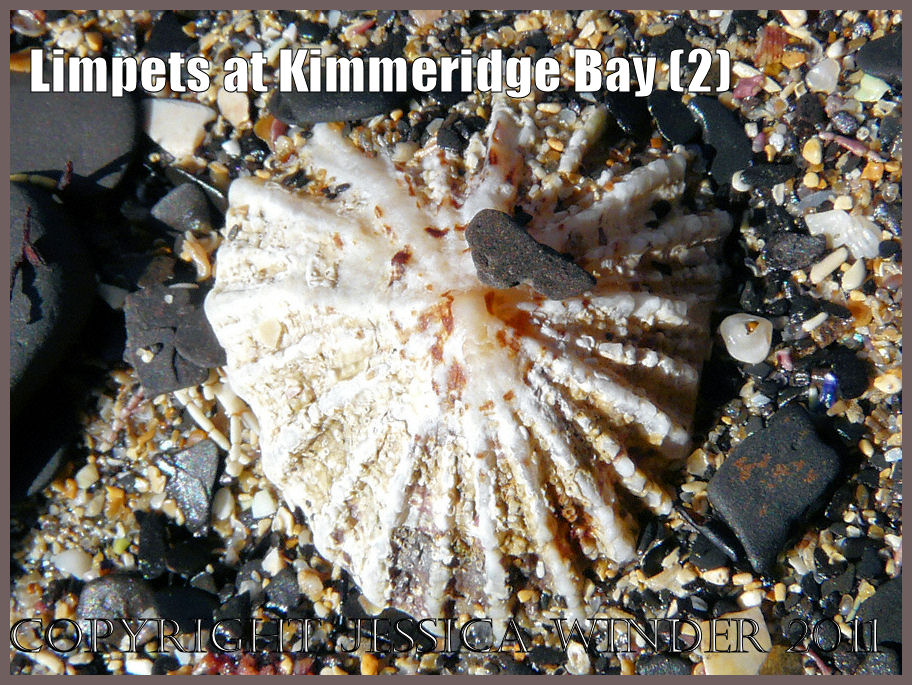
I just love limpets. The ones immediately above and below are just empty shells on the strandline. But living limpets are such hardy seashore creatures, quietly grazing and munching away at the algae and effectively keeping the populations of seaweed under control. You hardly ever see them moving but you can often see where they’ve been. They have a home territory to which they belong and, if they survive long enough, they leave a circular impression in the rock. They also leave trails in the surface algal film where they have been roaming and scraping with their rough tongues.
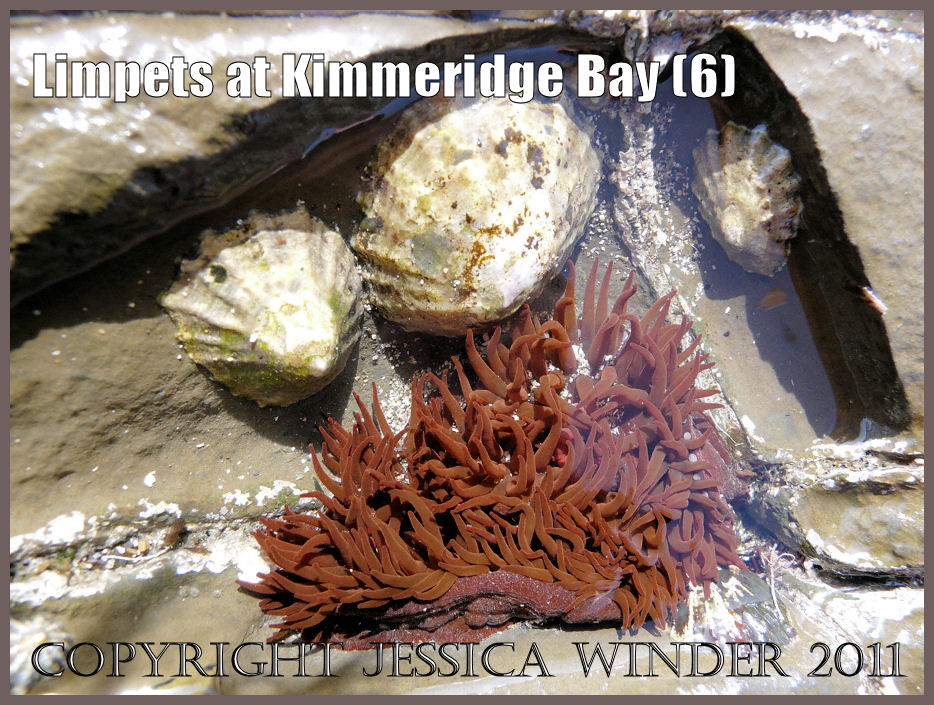
I would like to tell you with authority the names of the different species that illustrate this post. But I can only say with certainty that they are all Patella species and judging by the height of the shell and the position of the apex of the cone, there is probably more than one sort. The trouble is that limpet shells are so very variable; and I do not like to knock them off the rocks to see their hidden fleshy parts.
The three most commonly occurring species are the Common Limpet (Patella vulgata Linnaeus), the China Limpet (Patella ulyssiponensis Gmelin that used to be called P. aspera Roding), and the Black Footed Limpet (Patella depressa Pennant).
So, shown below is a selection of pictures of limpets at Kimmeridge Bay.

This one was big and shows unusually noticeable growth stages as well as having patches of the blue-green coppery colour I often remark on.

This one seems all alone in its spendid orange-stained setting.
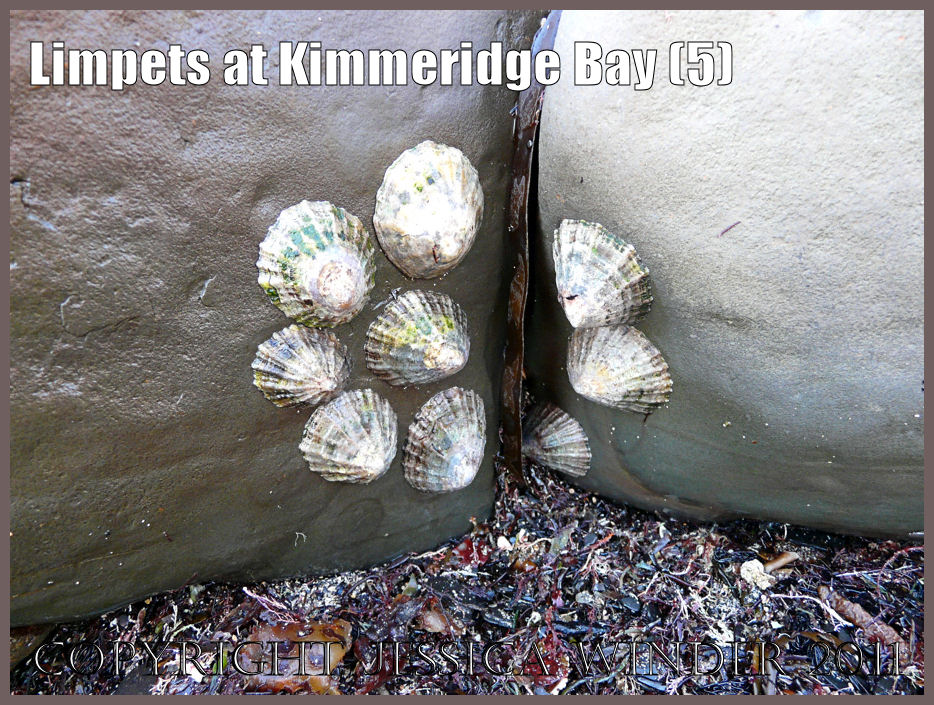
And this cluster in a crevice of the rock pavement look as if they have been daubed with paint – which they might have been if they were part of an experiment. Perhaps someone knows.
Although I have never seen limpets budge from their home base, a video clip has been put on You Tube (by someone whose nom de plume is BoringPiddock) showing speeded-up footage of Kimmeridge limpets wandering around at night – six hours compressed into just 5 seconds -essential viewing!
For more information about Kimmeridge Bay see the Purbeck Marine Wildlife Reserve Web Site.
Click here for more posts about LIMPETS on Jessica’s Nature Blog.
COPYRIGHT JESSICA WINDER 2011
All rights reserved
 Jessica's Nature Blog
Another limpet fan! I too have been photographing limpets this week. They are such sculptural creatures. The empty shell at the top of your post has a strangely ceramic quality, almost glassy. The live ones have amazing colours up close.
LikeLike
They are so variable I can’t resist photographing them. I heard today that some people this weekend at Kimmeridge were prising hundreds of these limpets off the rocks and then crushing them or throwing them away; also sea anemones scraped up into buckets. It’s a tragedy. The place is a nature reserve and yet its wildlife get treated like that.
LikeLike
Their behaviour is barbaric. The sea’s wildlife just does not get the respect it deserves.
LikeLike
Really love the vibrancy of your blog. I will be posting the link to it on my profile. Beautiful images.
Encouraging to meet (via the web), other likeminded individuals, passionate about conservation. Look forward to reading more!
LikeLike
Thank you for your comments. I am also enjoying the way that the blog is allowing me to get in touch with other enthusiastic naturalists with shared interests.
LikeLike