
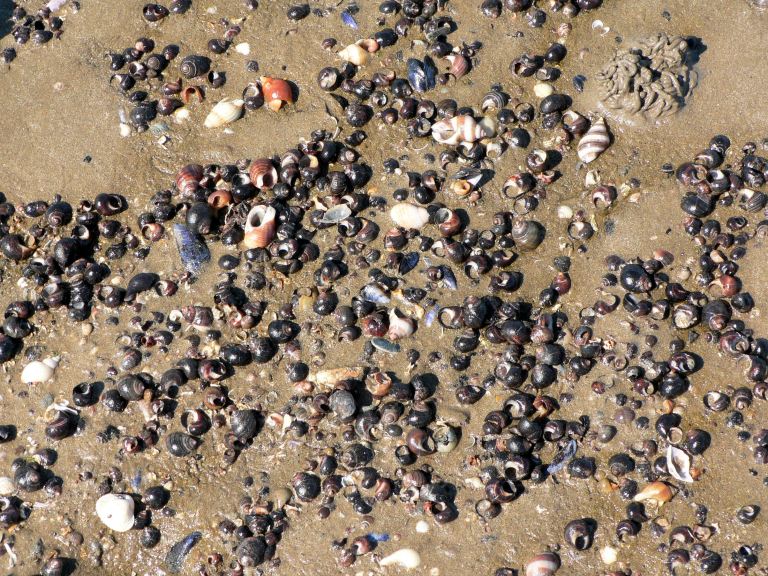
Today’s post is about the common winkles, Littorina littorea (Linnaeus), at Whiteford Sands. The picture above shows mostly common winkles or common periwinkles, wet and glistening like globular black buttons against the yellow sand. Winkles are one of the four types of marine mollusc that dominate this particular Gower seashore. Cockles and mussels are the two best known commercially exploited species at Whiteford. Both of these are filter-feeding bivalves – but whereas cockles live buried in the sand and mud, mussels attach themselves to rocks and other objects above ground.
Winkles and dog whelks are the other two species. These are not collected. Both are gastropods living on sand, mud and rock – but while the black and grey-shelled winkles are vegetarian and live by grazing the algae, the dog whelks are carnivorous predators that drill into other shelled animals and suck out their meat. The dog whelk shells (pictured above with the winkles) are longer, more brightly coloured and sometimes striped.
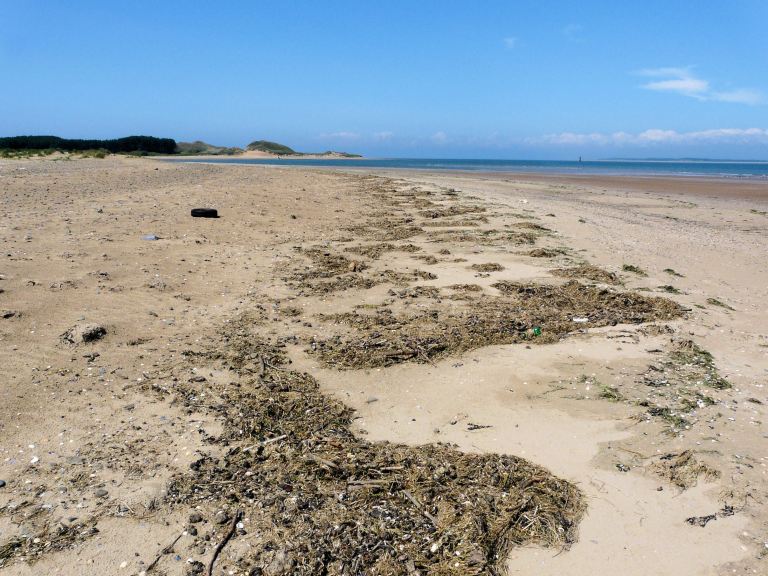
Empty common winkle shells seem to accumulate in large numbers at one particular point on the strandline – the north estuary-facing side of Whiteford Point. This is a fairly isolated part of the seashore with a unique character and atmosphere. The foundation of this sandy spit is thought to be the terminal morraine of a glacier from many millennia ago. The photograph above shows the strandline right at the top of the shore in this area one day late in June this year .
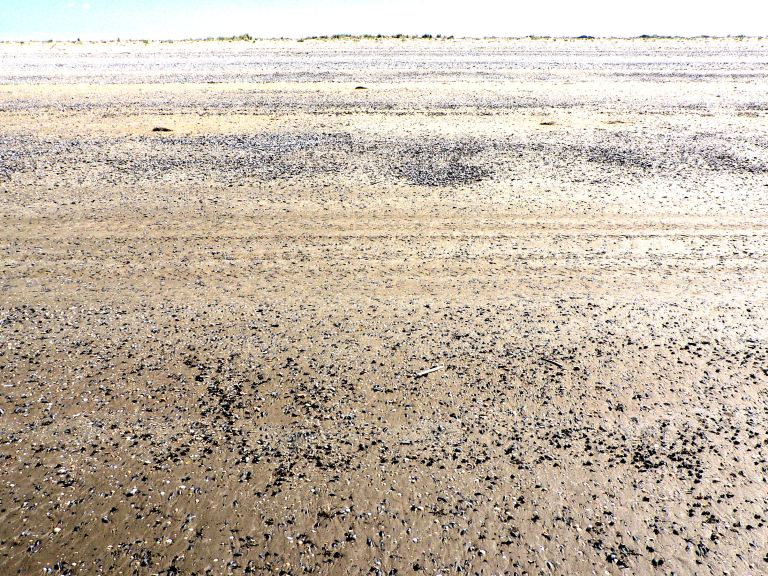
A bit difficult to capture in a photograph, the striped pattern of successive strandlines made up almost entirely of empty gastropod mollusc shells with a high proportion of common winkle shells. These lines of shells extend from the top of the beach (capped by dunes and marram grass), where there is also a deposit of seaweed and other debris, down to the lowest level of the shore. The more pronounced lines mid-way up the shore are the the tracks made by vehicles used by local fishermen.
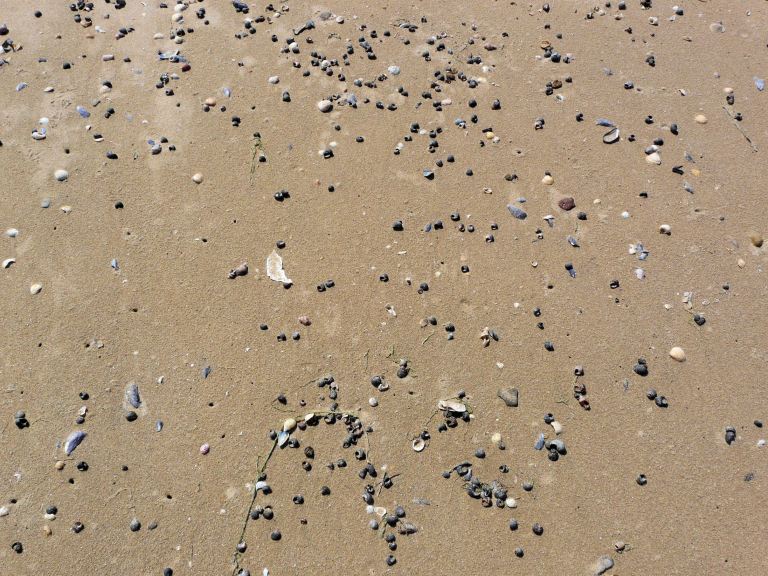
This picture shows a scattering of dry, sand- and salt-encrusted empty common winkle and other shells on the sand at Whiteford Point.
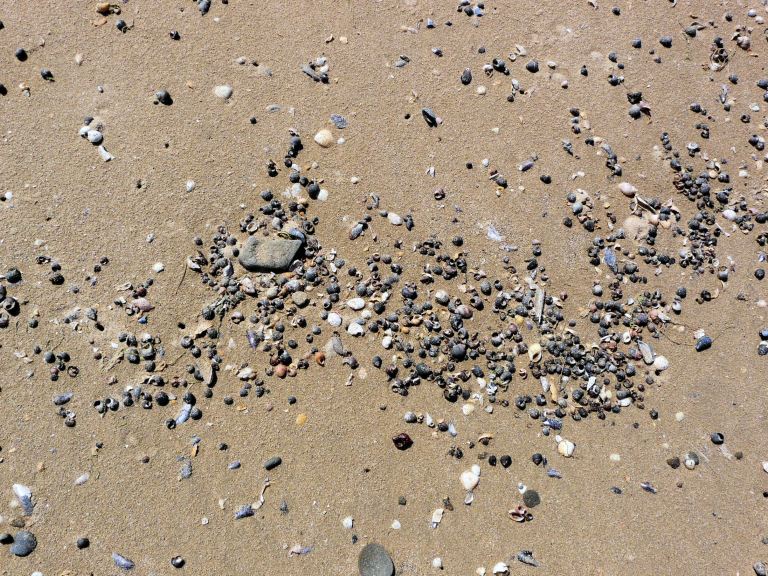
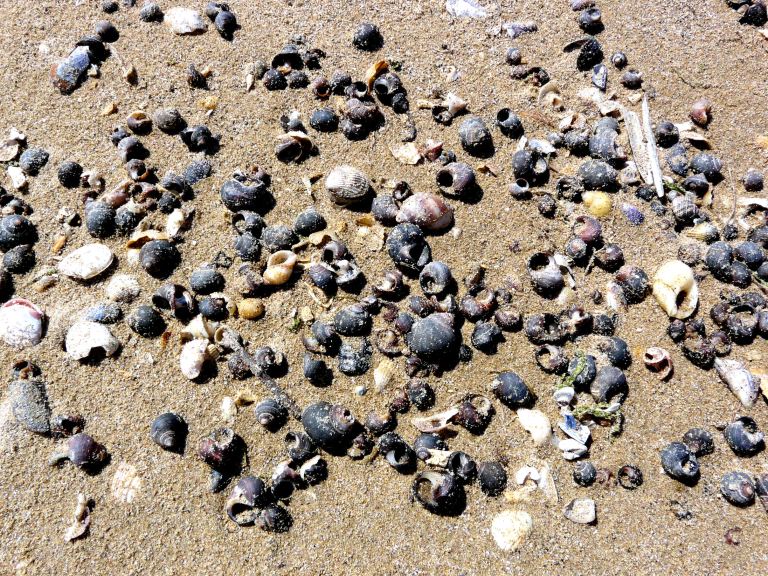
One of many more distinctive successive linear strandline accumulations of dull, dry, grey, black or brown common winkle shells at Whiteford Point. The detail of the same shells illustrated below shows them dulled and roughened by a probable combination of age, abrasion, and attached sand grains, salt crystals and minute calcareous animals that are possibly newly-settled barnacles.
Winkles have also been discussed in an additional information page and earlier posts on this blog; these are listed below and you can click on the titles to get straight to these articles:
Holdfast habitat at Ringstead Bay
Winkles and Razorbills at Ringstead in January
COPYRIGHT JESSICA WINDER 2013
All Rights Reserved
 Jessica's Nature Blog
One Reply to “Winkle shells on Whiteford strandline”