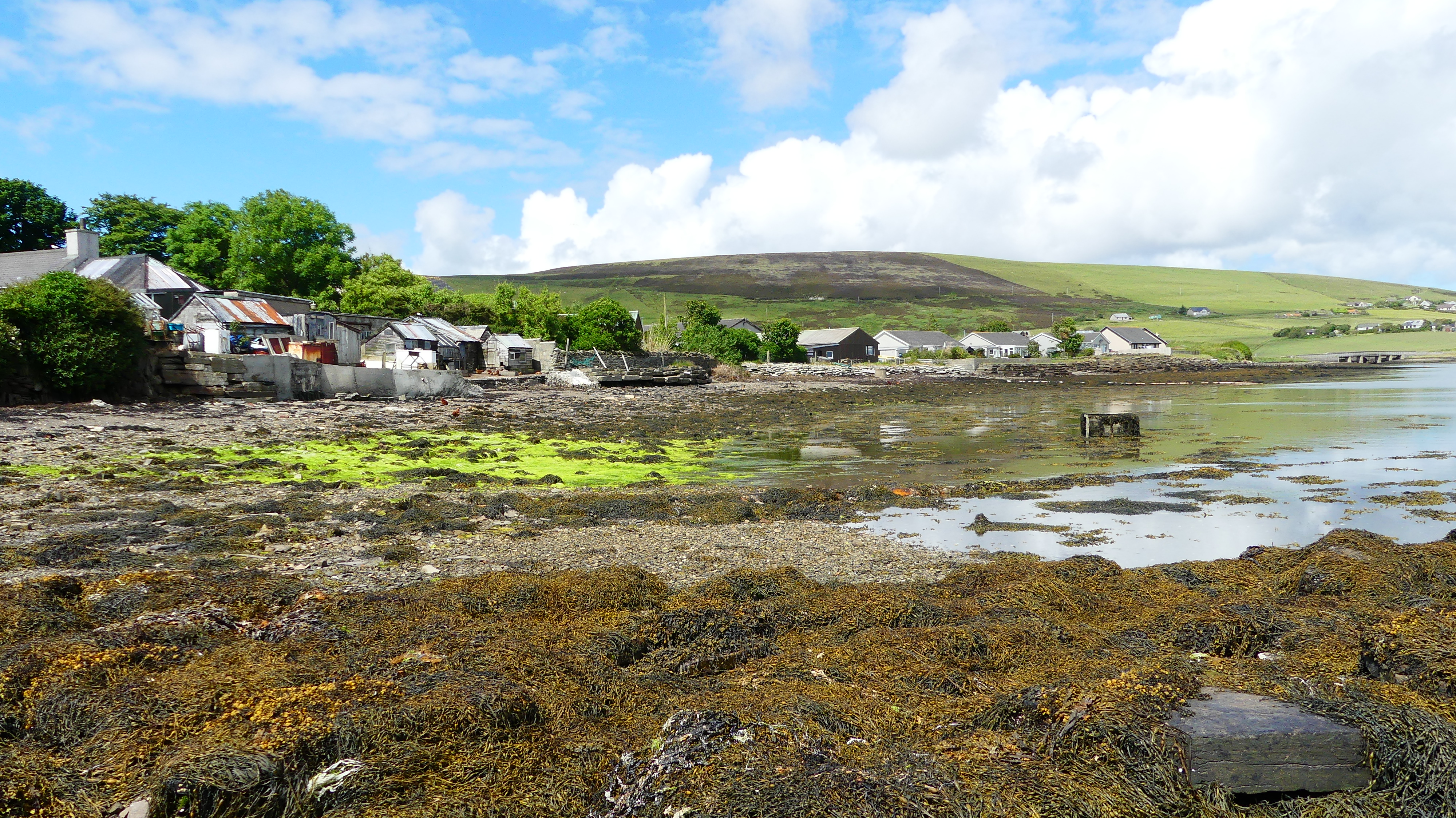
Orkney Shores – Finstown 15 – view looking west along the shore at Finstown, Orkney, with seaweed-draped old stone jetty in foreground, June 2018.
https://natureinfocus.blog
Orkney Shores – Finstown 15 – view looking west along the shore at Finstown, Orkney, with seaweed-draped old stone jetty in foreground, June 2018.
 Jessica's Nature Blog
Hi…is that the old Oyster pier?
LikeLike
Sorry, Eoin. I just don’t know. It might be.
LikeLike
Thanks. It’s something I’ve been trying to elucidate for a while. There was a traditional artisanal oyster fishery in the Bay of Firth which served local needs for centuries. At the end of the nineteenth century things became a lot more commercial …oyster dredges were imported and Oysters could be be exported to the Edinburgh market, this attracted more fisherman .
The Finstown pier dates from this period
LikeLike
I did not know that there had been a trade in oysters from Orkney in the past. You may be aware already of my interest in oyster growing and trade from ancient times in the British Isles. I have another blog called Oysters etc. which contains some of my work. https://oystersetcetera.wordpress.com/
LikeLike
Thanks for the link. As you probably know significant neolithic oyster middens occur on some of our Outer Isles, notably Papa Westray and Orkney rentals dating from the 14th and and 15th list part payments of rent in weights of oysters.
LikeLike
I knew of significant shell middens from the region but thought they were mostly made up of other shells species. And I hadn’t heard the historical data about rents paid in oysters. Fascinating.
LikeLike
To cut along story rather short…the Bay of Firth fishery entered
A ‘tragedy of the commons” phase during which the prolific natural beds of the
Bay were depleted.
A commercial syndicate formed by local businessmen emerged
which tried to gain control of the extant beds with a view to restoring
them; a consultant from Essex was hired who recommended
various remedial actions including relaying spat from the River Blackwater.
This triggered what came to be called “the Orkney Oyster War”….a spat
about the relevance of “traditional” Norse Udal law to local marine resources
versus more mercantile Scots law. The syndicate eventually triumphed and the restored fishery
yielded modest returns until 1914 when First World prevented fishing.
LikeLike
Thank you very much for that information. I am always delighted to learn new things about the history of oyster fishing.
LikeLike