
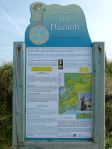
 The wide sandy beach at Ventry lies on the south coast of the Dingle Peninsula in Ireland and is home to a small harbour where boats leave for tours of the Blasket Islands, and it also marks the route of an ancient pilgrims’ way. According to the sign posted in the car park, the Saints’ Road (Cosán na Naomh) starts here in Ventry (Tráigh Fionnetrá) and finishes in Baile Breac at the foot of Mount Brandon over 18 km away. It is today waymarked by the symbol of a monk, and is thought to have been in existence for over a thousand years.
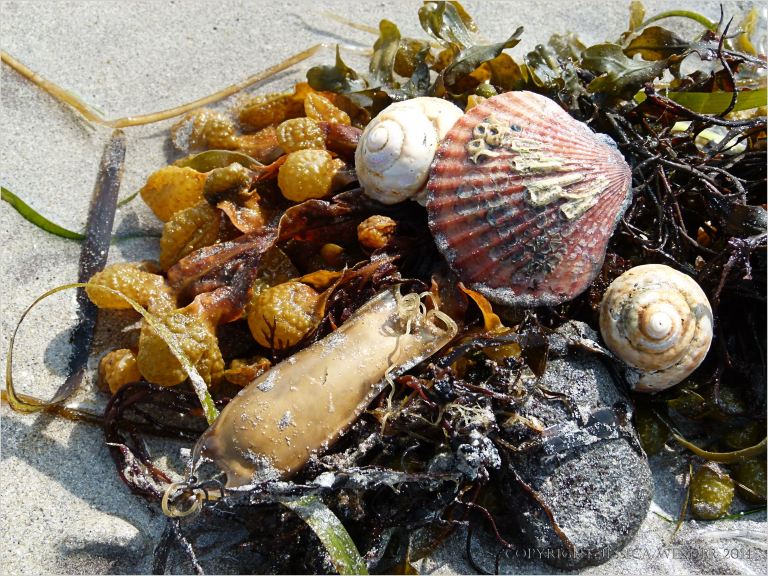
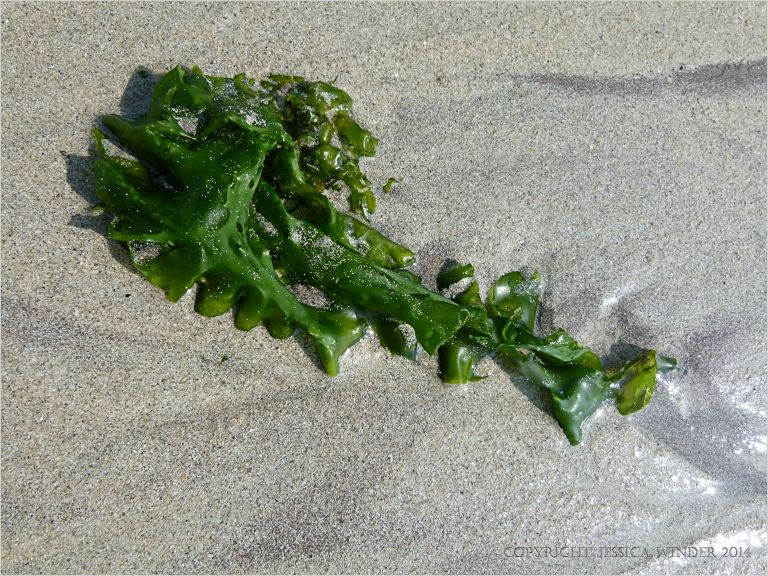
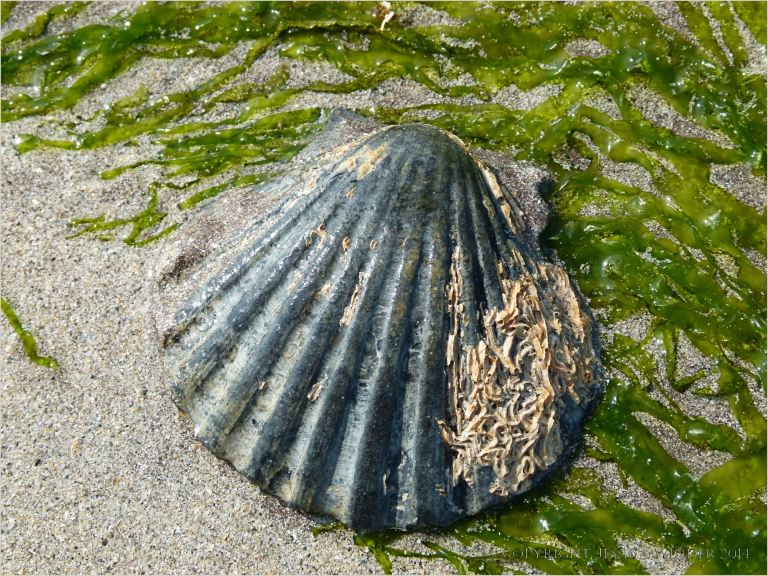
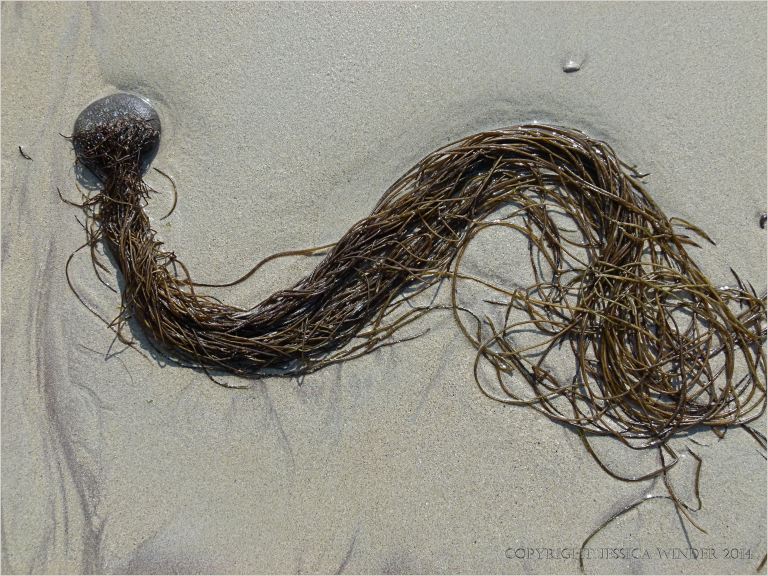
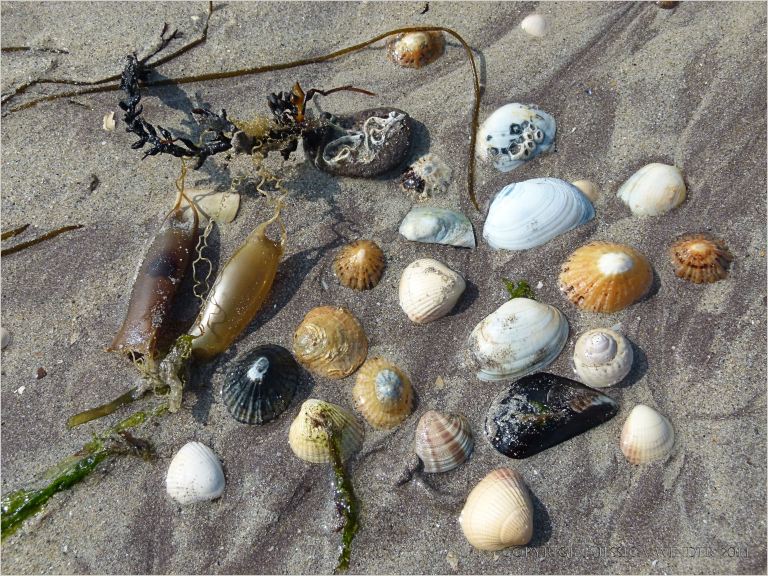
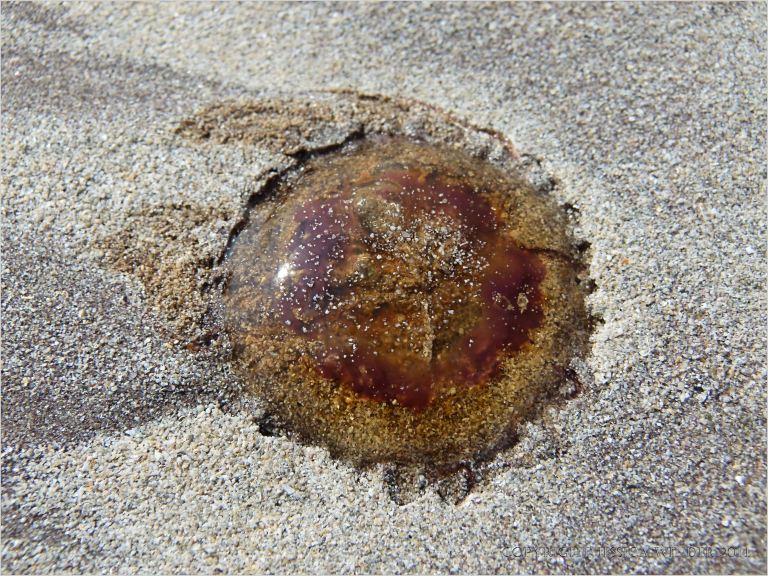
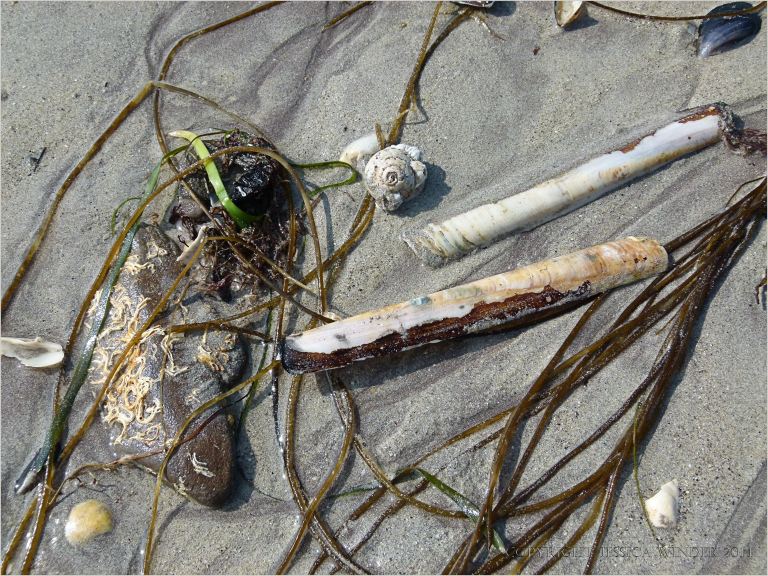
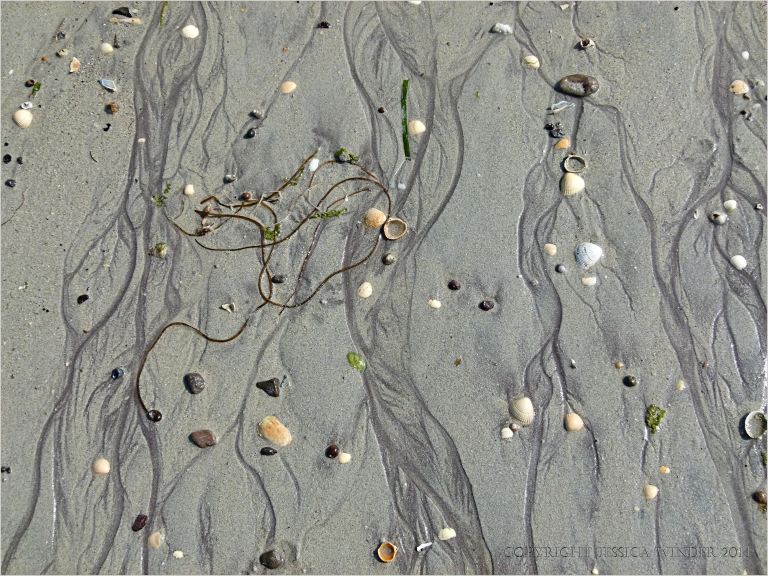
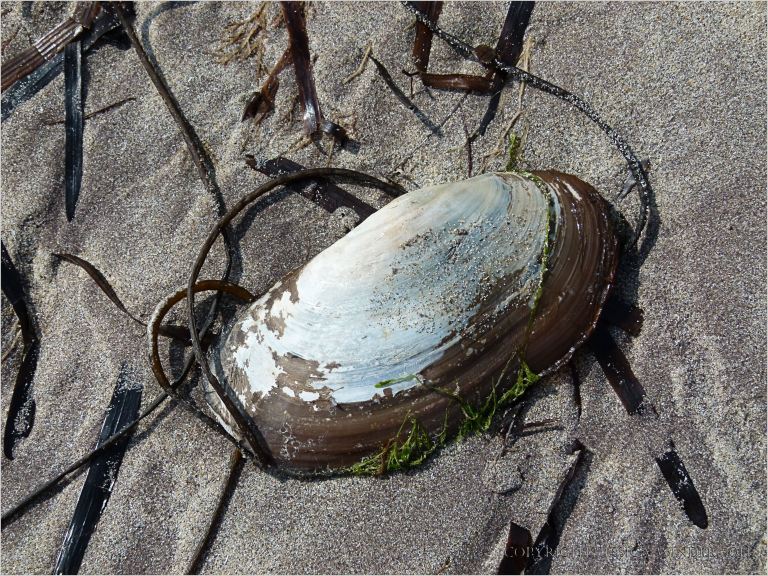
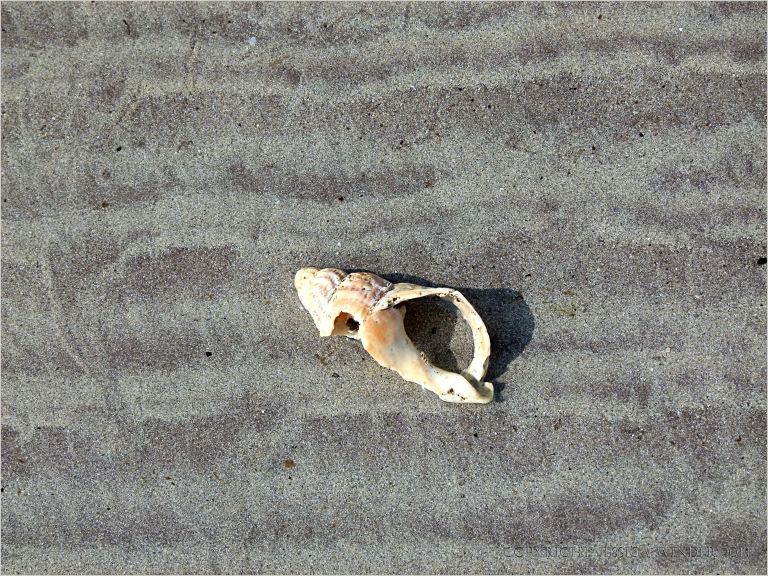
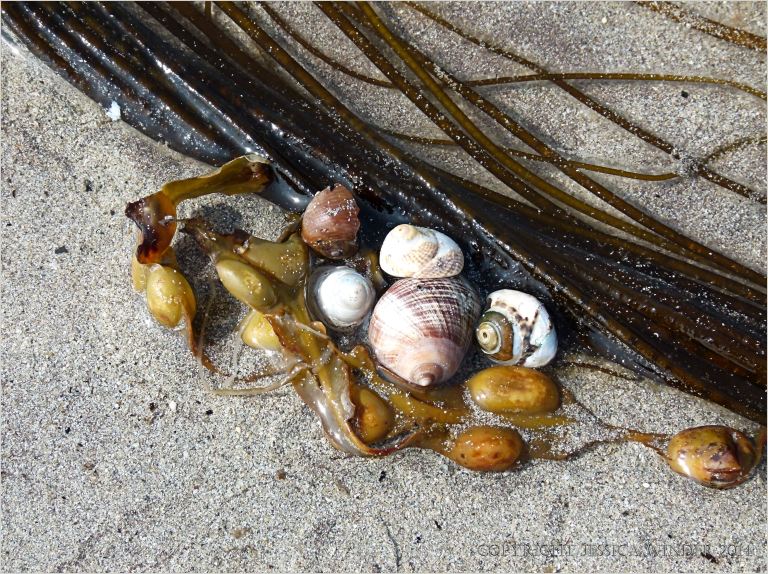
 The notice says that “In Old Irish literature, this beach was the scene of a somewhat mythical encounter known as Cath Fionntrá (the battle of Ventry) in which the great hero Fionn Mac Cumhaill overcame the Emperor of all the World except Ireland, Daire Donn”. Now all is calm on the beach with the only sign of struggle being that of the sea against the land. The sand is strewn with pebbles, shells, and sea weed; while the dunes are protected from erosion as in so many other places these days by the placement of large boulders (a structure known as rip-rap).
 Jessica's Nature Blog
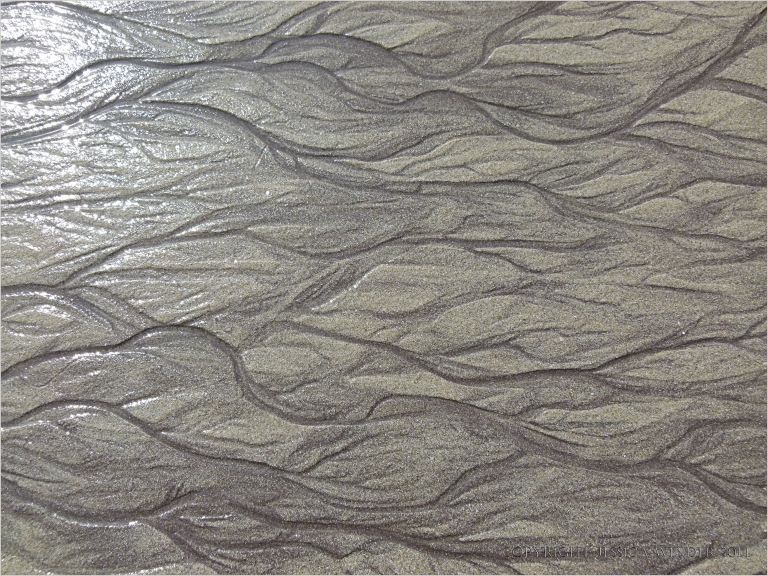
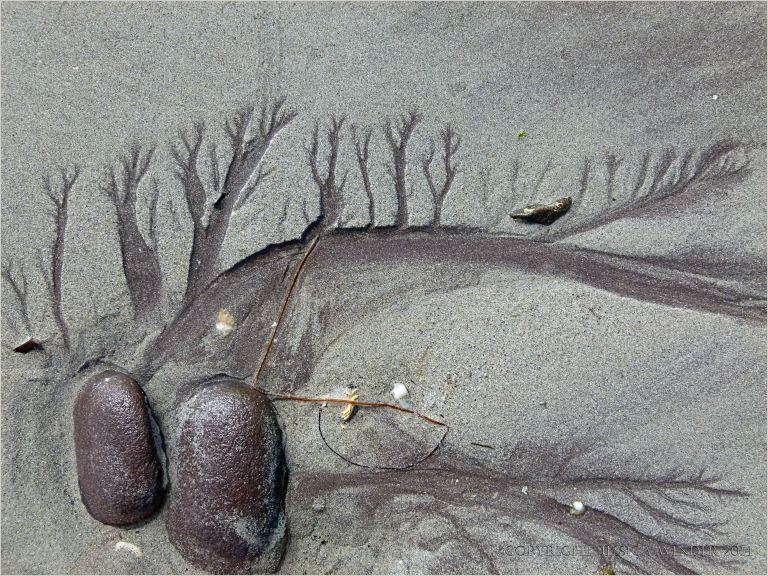
Really great images Jessica. The sand seems to form particularly pleasing two tone patterns on that beach!
LikeLike
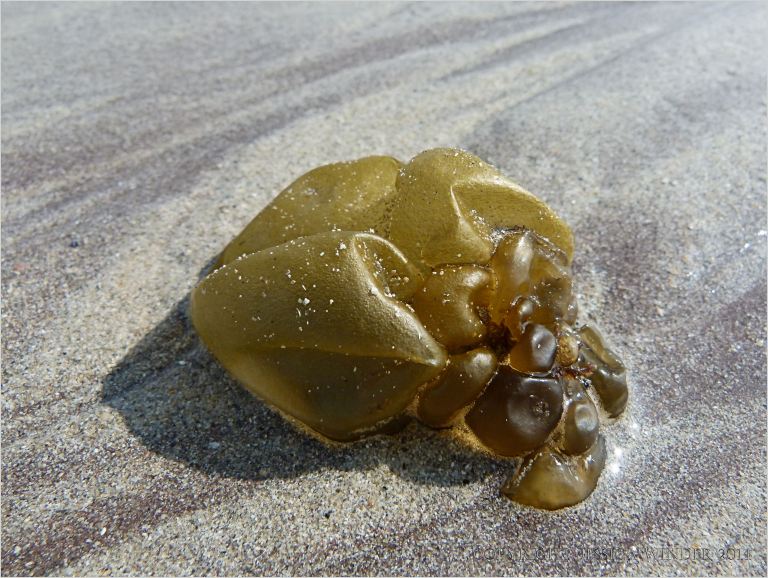
Seems like the beach has a smaller quantity of light, whiter sand (perhaps derived from shells?) and a majority of heavier purple/red grains originating in the Devonian rocks of the surrounding geology. These two components get sifted and sorted by the waves so that the lighter grains form a thin layer on the surface in some places, and water draining down the beach then etches patterns in the surface layer, revealing the darker one below.
LikeLike
Agree with Aidy, lovely pictures – and to your comments, its often the simplest and most overlooked things that can give the greatest reward.
LikeLike
Thank you, Coleshed. The patterns in the sand were very photogenic and ever changing.
LikeLike