
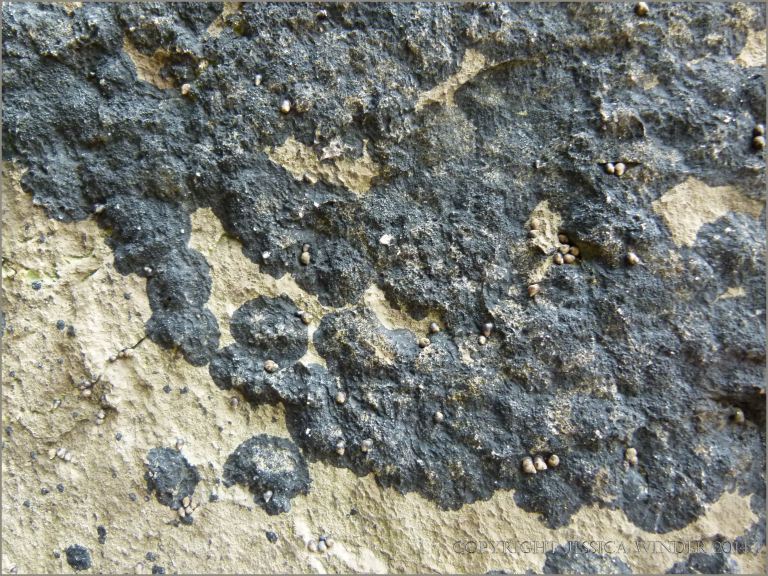
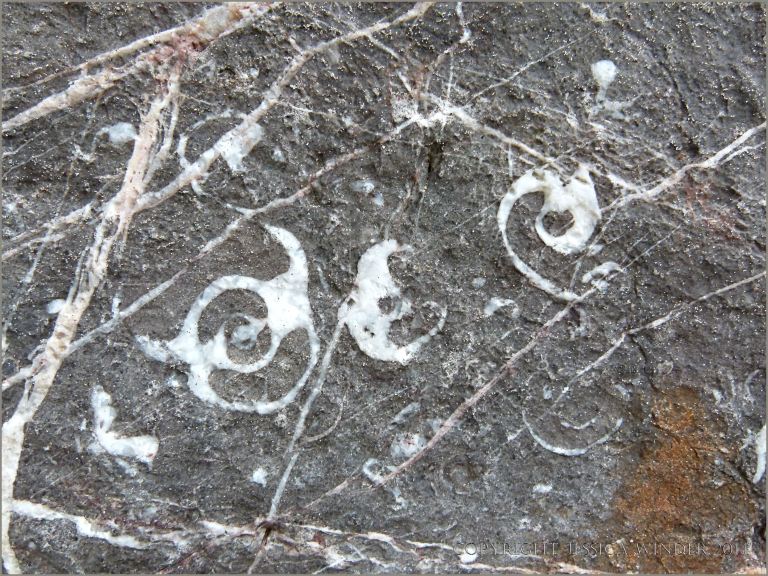
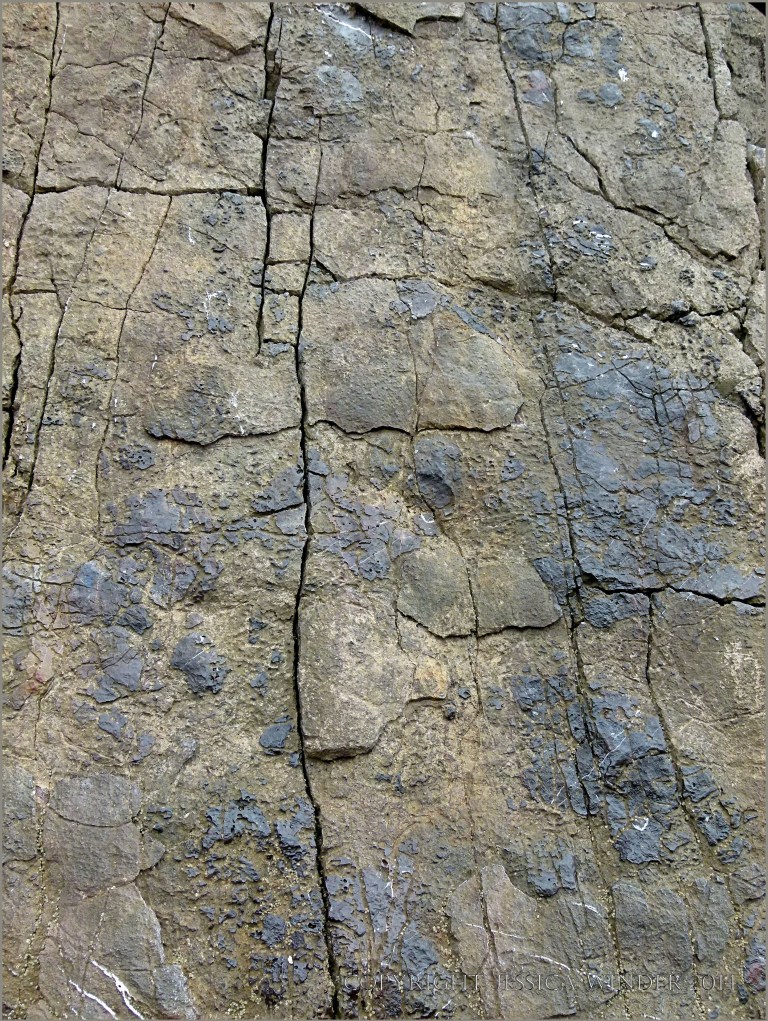
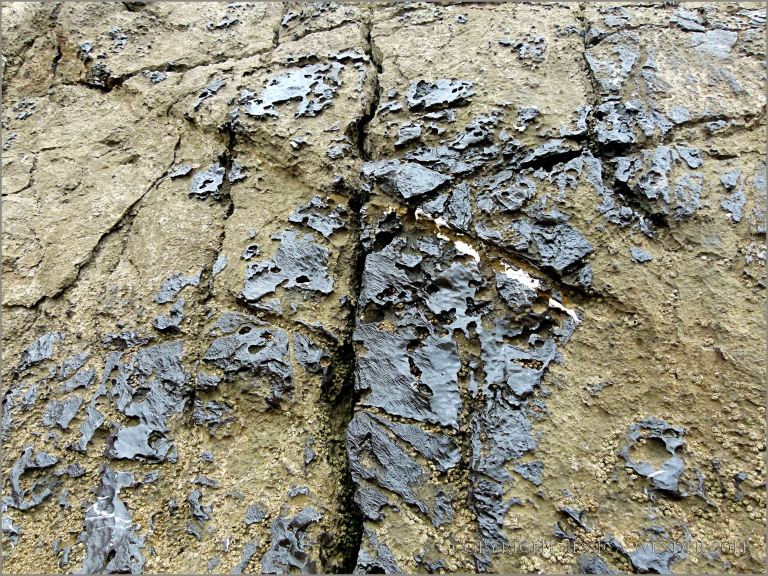
More natural patterns and textures in rocks from South Beach cliffs at Tenby in South Wales. Organisms like bacteria and lichen that grow on the surface of rock (as shown in some of these photographs) can be agents of erosion, especially those species capable of penetrating the first few millimetres of the surface of the substrate: their growing habits can result in a weakening of the rock surface. Small gastropod molluscs such as periwinkles feed on the bio-film created by the bacteria, lichens, and other organisms like algae and fungi. Those molluscs with particularly hard radula teeth, for example limpets, actually remove small particles of the weakened rock along with their food. This minor activity over long periods of time contributes to the wearing down of the rock surface and the production of a pitted surface. Erosion of rock by biological phenomena is referred to as bio-erosion and it occurs in conjunction with other chemical and mechanical erosional processes.



P.S. Don’t forget that you can click on the pictures to enlarge them and see a description of the image.
COPYRIGHT JESSICA WINDER 2014
All Rights Reserved
 Jessica's Nature Blog
Isn’t it amazing how much information you can pick up from rock formations? Fascinating.
LikeLike
I was initially just drawn to the variety of wonderful textures and patterns in rocks but then wanted to know what to call them and understand what made them. So I am on one of those long journeys towards understanding the processes involved.
LikeLike
Taking us along with you on your journey Jessica! Didn’t know about those bacteria colonies on rock surfaces.
LikeLike