
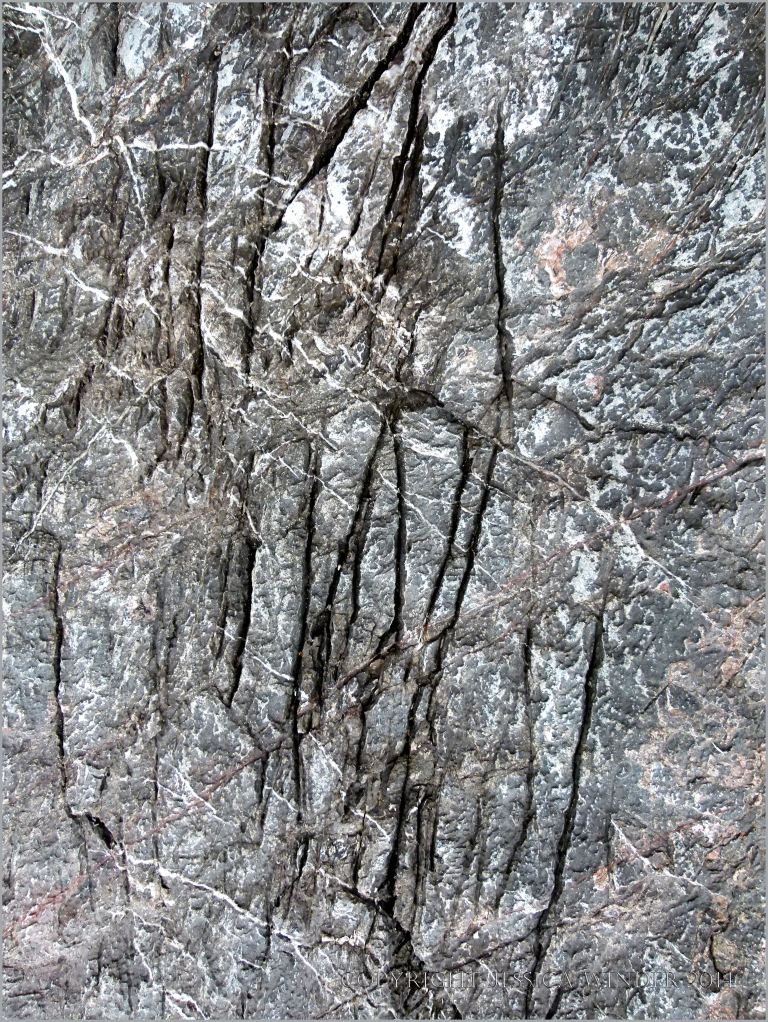
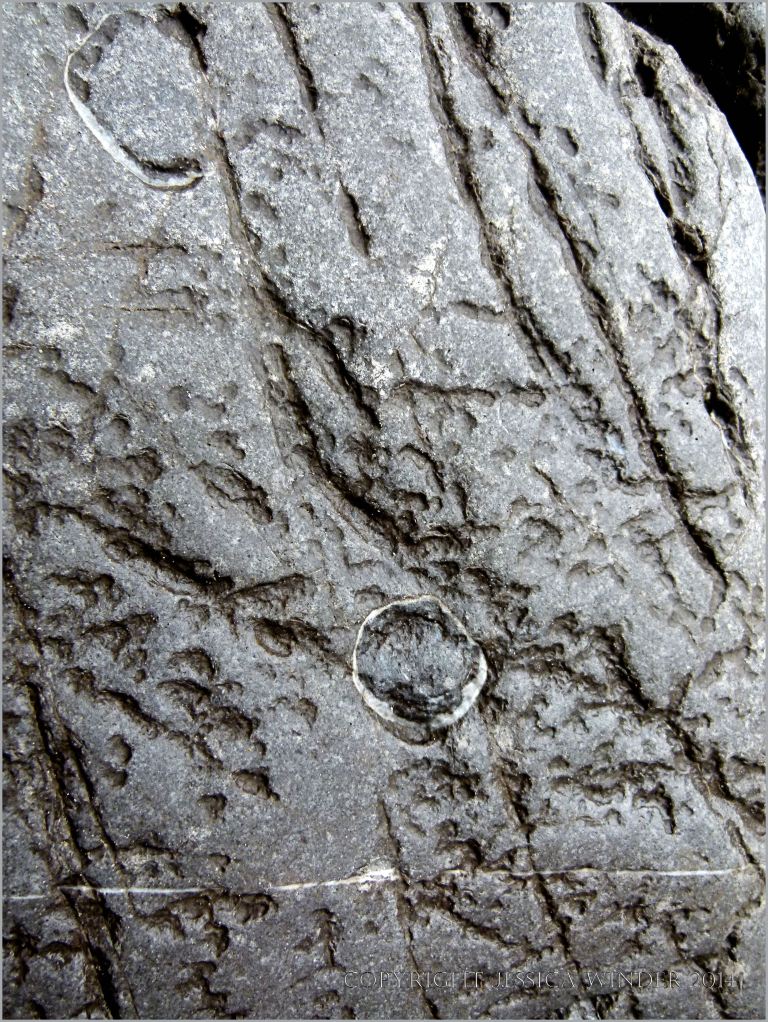
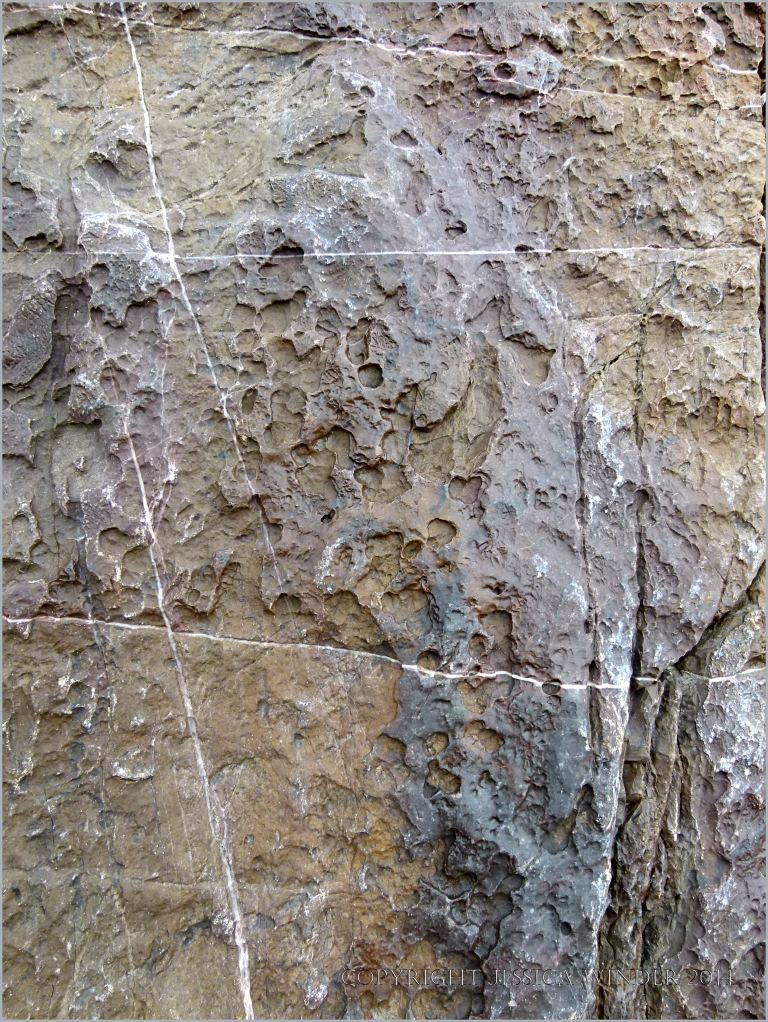
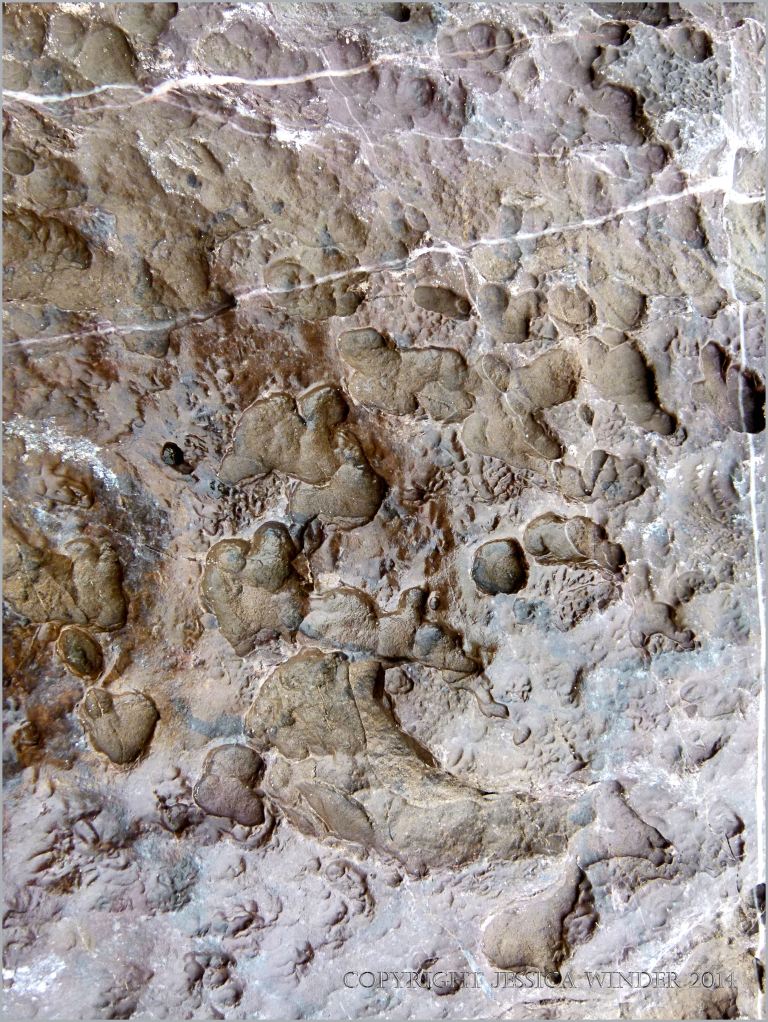
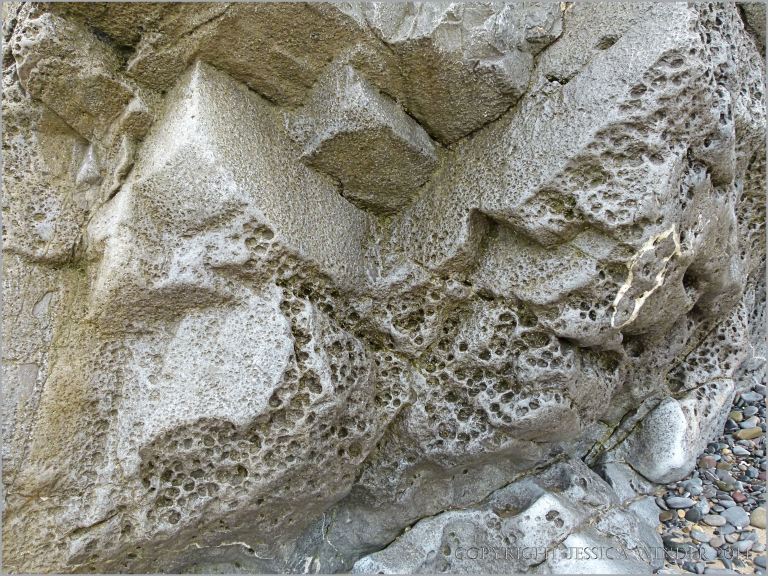
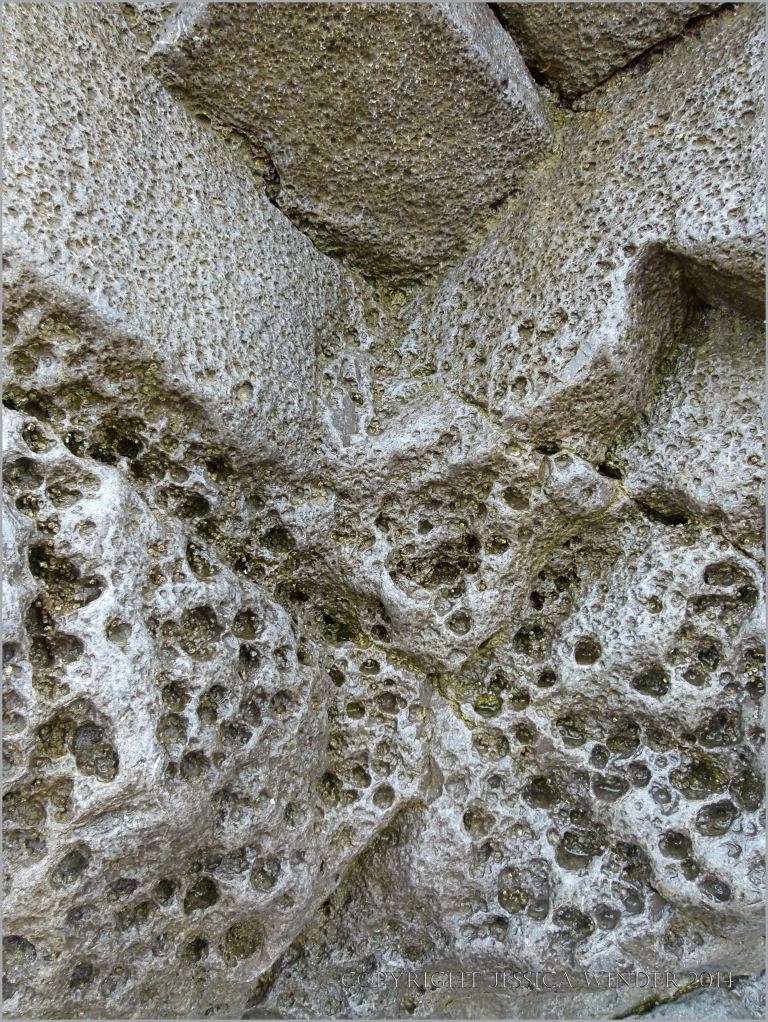
The Carboniferous Limestone cliff rocks at South Beach in Tenby, South Wales, are covered with numerous pock marks, hollows, grooves and holes, making honey-comb, lace-like, linear, heiroglyphic, and random patterns. These variations in surface texture in the Hunts Bay Oolite Subgroup strata shown here are thought mostly to be caused by different forms of weathering and erosion activities acting in unison to degrade and remove the surface of the rock.


COPYRIGHT JESSICA WINDER 2014
All Rights Reserved
 Jessica's Nature Blog
i know its not the case, but some of the patterns are so regular they look like they were planned. Amazing what little changes can do over time.
LikeLike
Your photos are amazing-I love rocks!!
LikeLike
Thank you, Hilary. I am pleased you like the pictures and share my love of rocks. Rocks rock!
LikeLike
I am intrigued by the ways these erosional patterns actually get into the rocks. I have recently spent a couple of days up at the British Library in London looking at the the most recent research findings to try and understand what is going on. I have made a little headway but it is complex, with many factors involved. I have a lot more reading to do, and it will take time to assimilate, but it is fascinating.
LikeLike