
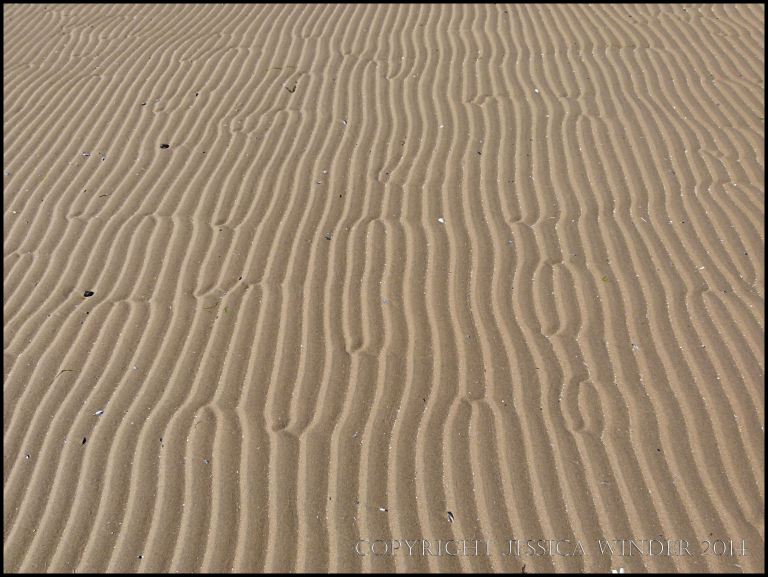
Linear ripples
There are many photographs of sand patterns and sand ripples on Jessica’s Nature Blog but I am considering here a few generic types of ripple form because of the previous couple of posts in which I have been showing photographs of the amazing patterns in the White Strand Formation rocks at Garrettstown Strand in County Cork, Ireland, and discussing how the designs in the weathered and broken surfaces may have originated. The rocks are mostly variations on an alternation of mudstones and sandstones from the Namurian part of the Carboniferous Period. They were formed in a shallow water coastal environment and in some places encapsulate sediment ripple formations.
The complexities of the patterns in the Garretstown Strand rocks might be partly explained by the nature of the sand and mud ripples that have been trapped in space and time and consolidated into the hard stone. Ripples come in a great number of shapes dependent on the tides, currents, waves, and freshwater inputs and other environmental variables at that moment in time. Some of the more common types of ripples are shown here (linear, sinuous, isolated, interference, linguoid, lunate, tiled, and other complex forms) but they are endlessly varying and a source of huge fascination. It’s possible to understand what an important factor any particular ripple form could have had in influencing the final weathered patterns.
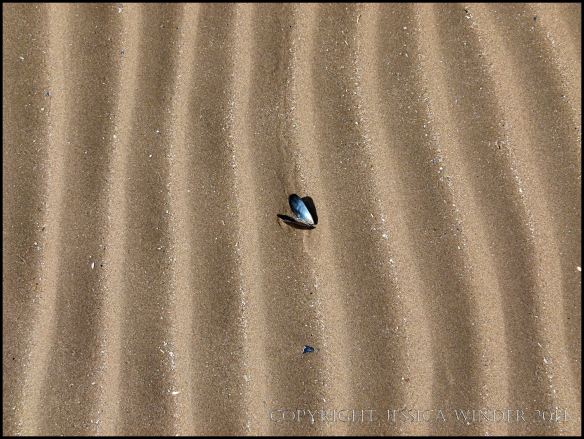
Linear ripples
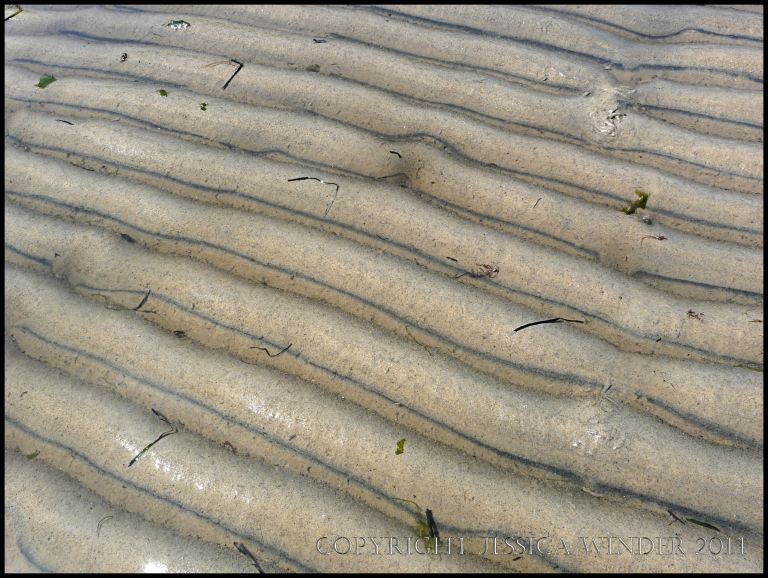
Linear ripples with sediment sorting.

Linear ripples with sediment sorting.
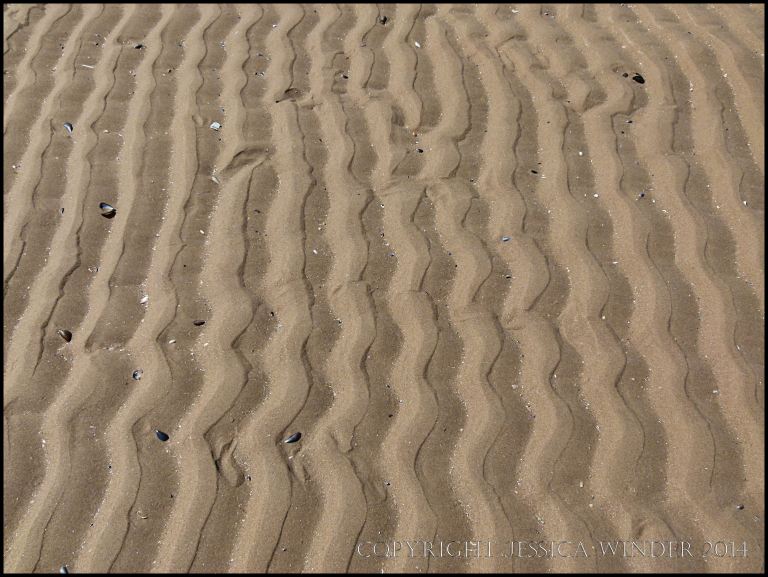
Wavy or sinuous ripples.
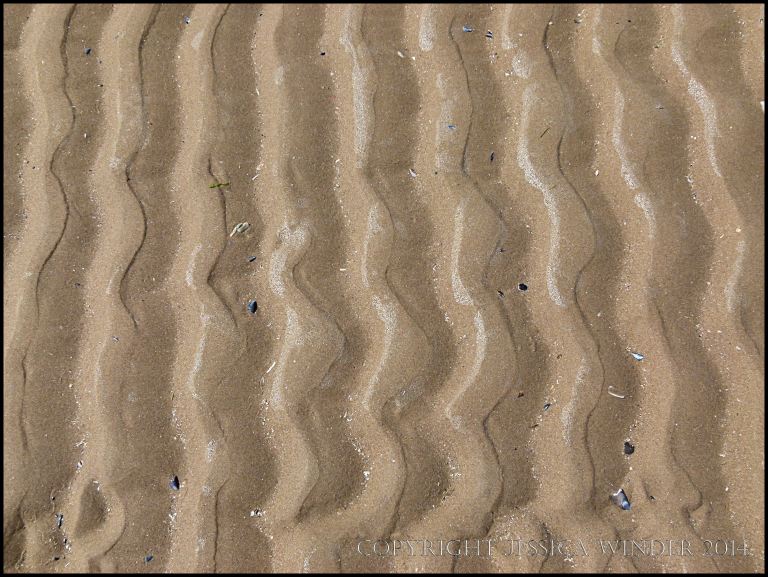
Sinuous or wavy ripples.

Wavy or sinuous ripples with flattened ridge tops.

Wavy or sinuous sand ripples.

Isolated sand ripples.
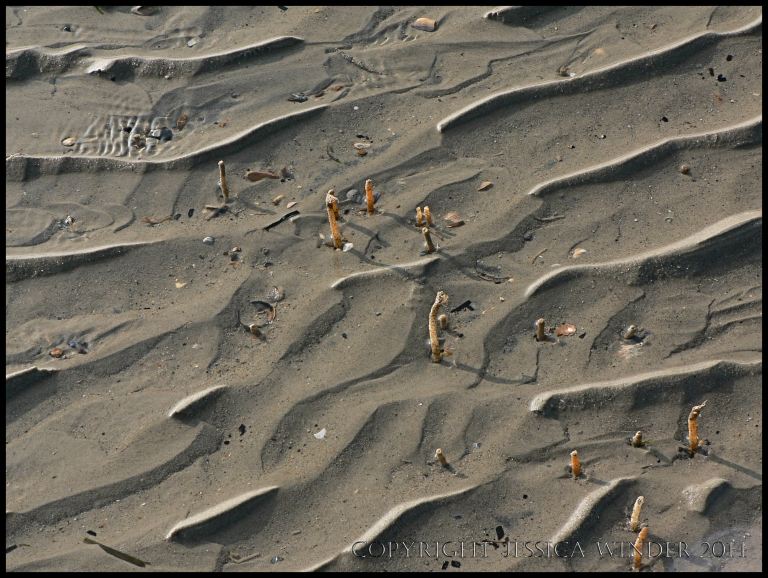
Isolated sand ripples.
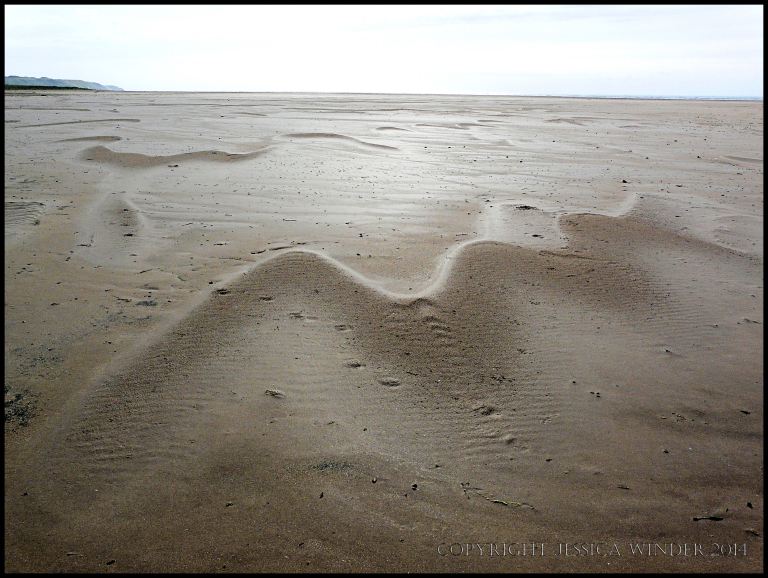
Isolated linguoid sand ripples.
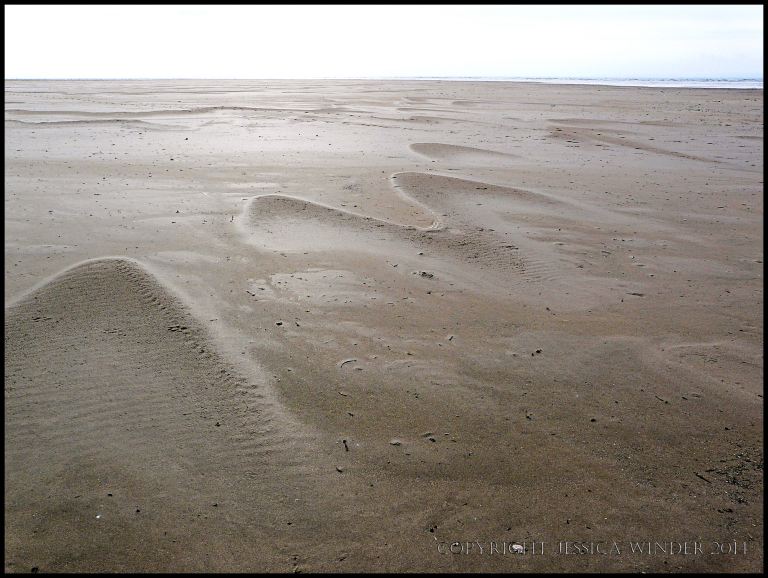
Isolated linguoid and lunate sand ripples.

Lunate sand ripples.

Tile sand ripples.

Tile sand ripples.
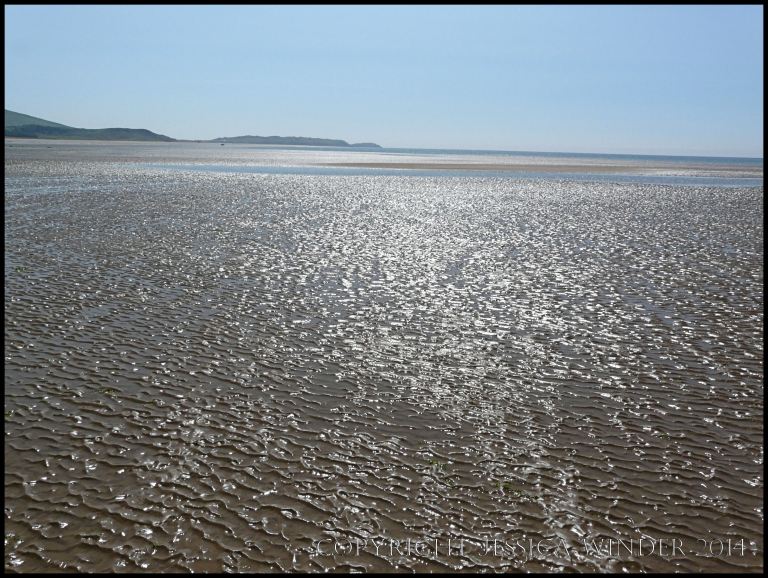
Complex sand ripples.
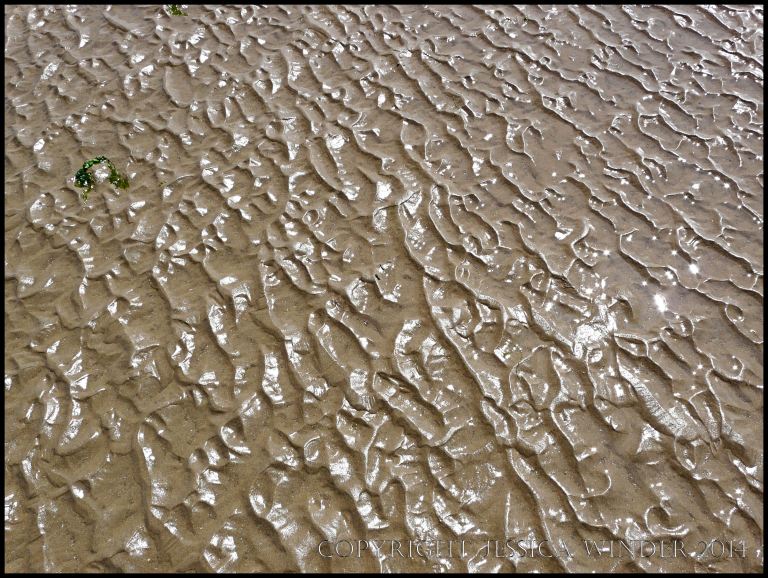
Complex sand ripples.
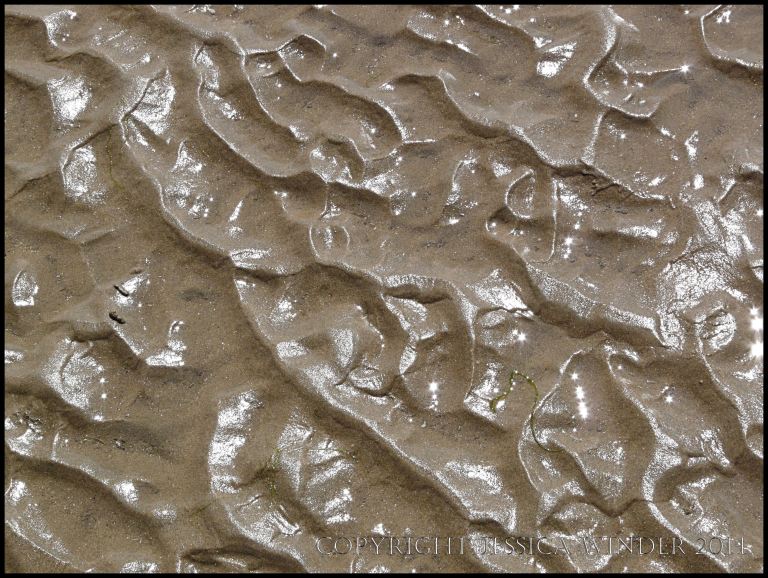
Complex sand ripples.

Interference sand ripples.

Interference sand ripples.
COPYRIGHT JESSICA WINDER 2014
All Rights Reserved
 Jessica's Nature Blog
Excellent complementary pair of posts Jessica. Really clarifies the process.
LikeLike
Thank you. It was just me working things out for myself but very simply.
LikeLike
These are wonderful, Jessica. I’m just starting to take notice of sand patterns and textures – I’ve mostly taken them for granted in the past…
LikeLike
I have long been attracted by the patterns in the sand and am only now getting to understand some of the complex physics which contribute to their formation.
LikeLike
beautiful series! Thanks!
LikeLike
Thank you. I am pleased you like it.
LikeLike