

The Common Winkles (Littorina littorea (Linnaeus) that live on the rocks of the Worms Head Causeway on the Gower Peninsula have a tough time! It’s an exposed and turbulent environment in which to find a home. There is certainly some shelter in deeper pools and beneath seaweeds on the outer fringing rocks of the causeway – but when the tide comes surging across the jagged strata, most winkles must be stripped from rock and weed to be tossed and battered by waves, currents, and flying debris like stones and pebbles. Winkles don’t have the same ‘sticking power’ as the limpets which can cling on and withstand the battering.
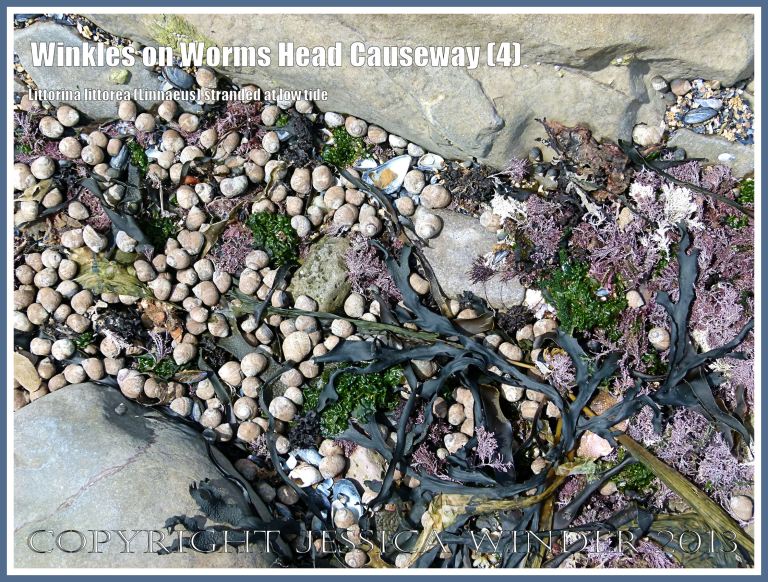
The ebbing tide leaves hundreds of thousands of winkles literally high and dry. A few of these small marine gastropods do manage by chance to remain in the more favourable conditions of temporary tide pools, even if barely covered by a few centimetres of water. Most winkles seem to stay in the open air, approximately where they have rolled by chance, lying loose and unattached in large clusters around the bases of upstanding rocks and amongst the mussel beds. Some cling on to the bare rocks, bone dry in the sun, waiting for the return of the waves.
The life style of the winkles is clearly seen in the dull surface of the rough and pitted thick shells. The shells are more comparable to those of the winkles found at nearby Whiteford Point also on Gower – and contrast markedly with the lovely pristine striped and grooved shells of winkles found among the seaweed on relatively sheltered shores like Ringstead Bay on the South Coast.
Winkles living on Whiteford wood and stones
Holdfast habitat at Ringstead Bay




COPYRIGHT JESSICA WINDER 2013
All Rights Reserved
 Jessica's Nature Blog