
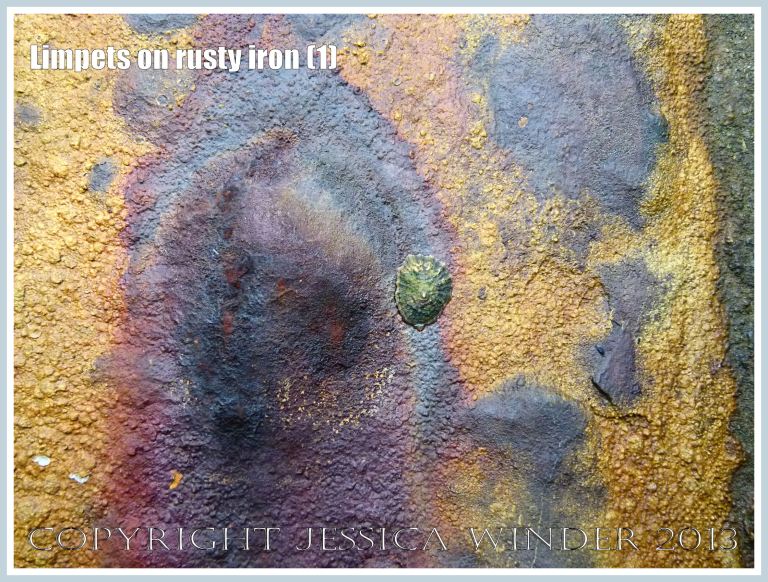
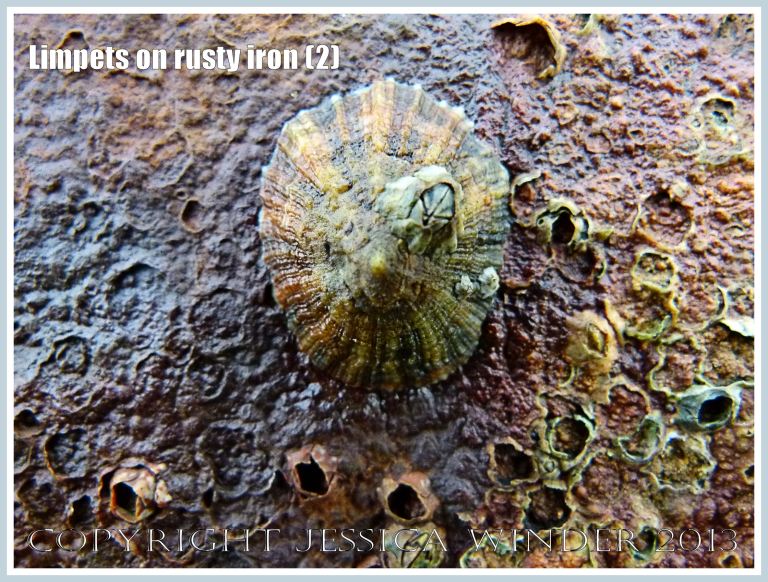
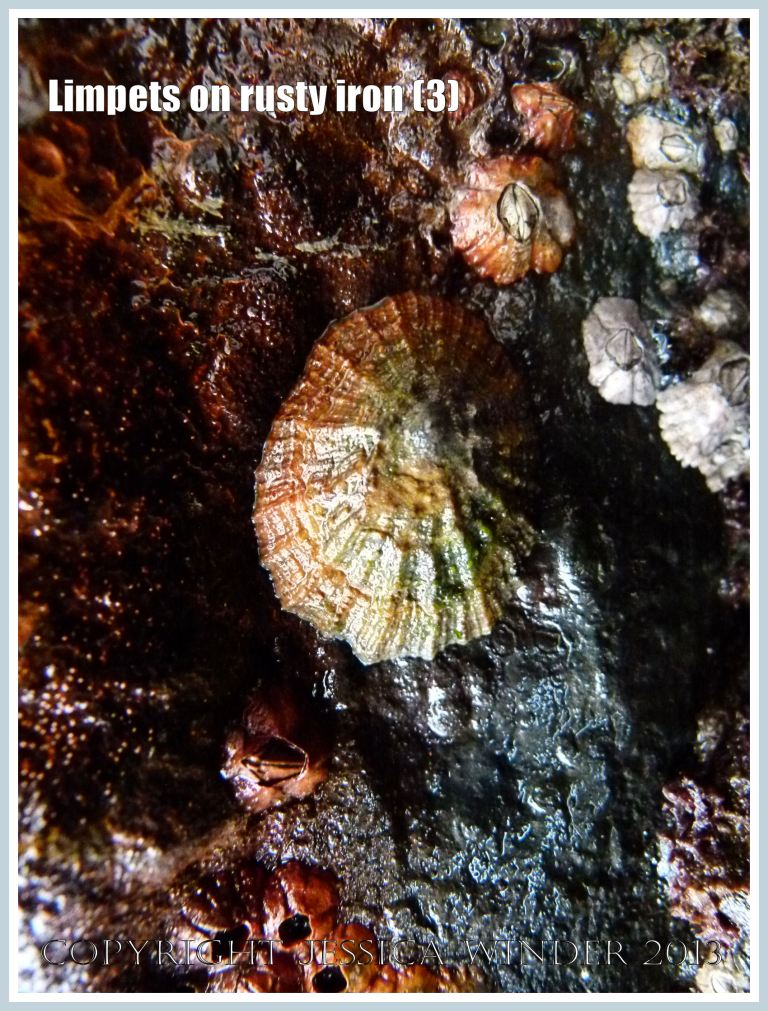
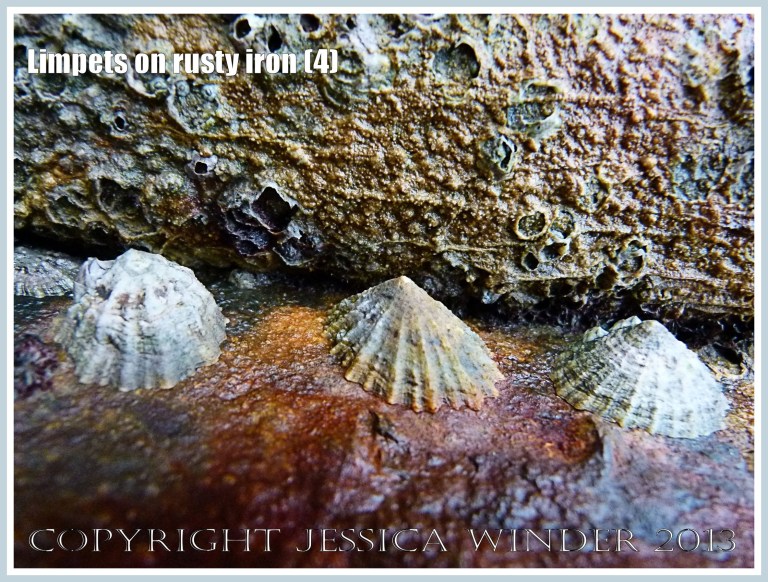
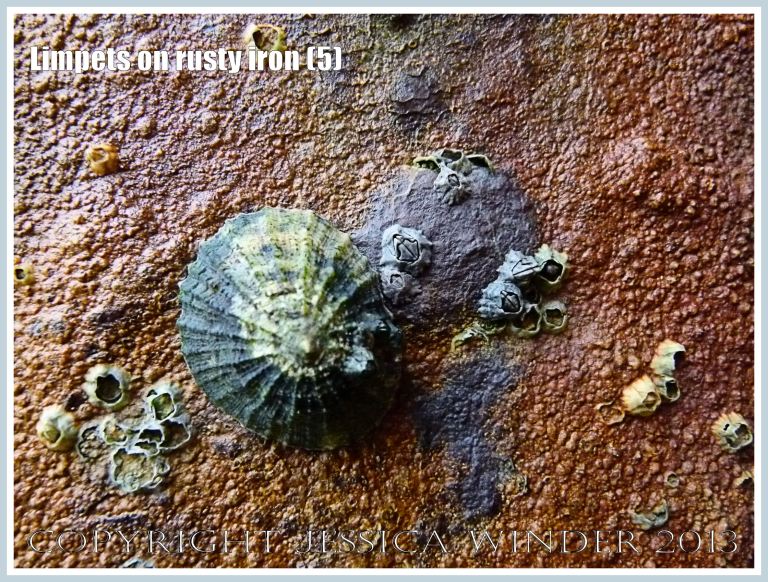
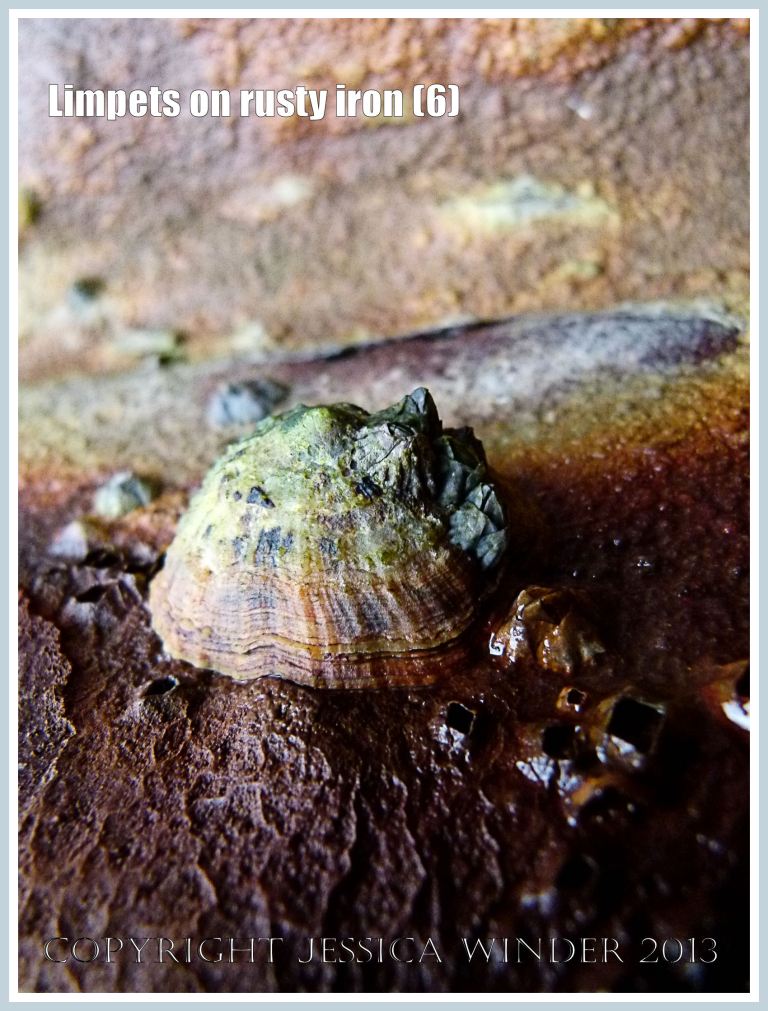
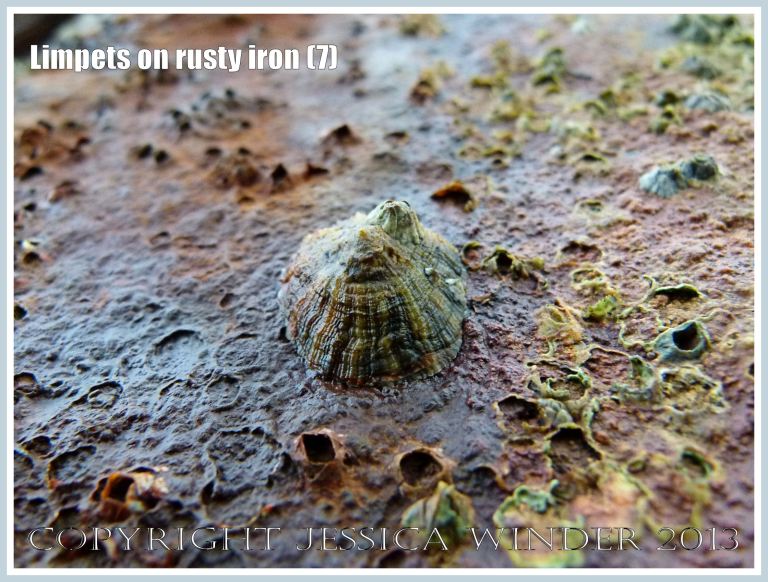
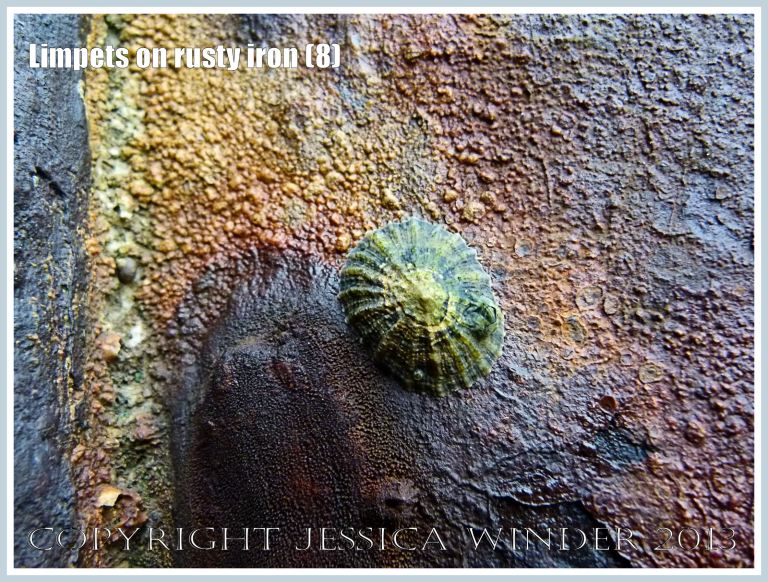
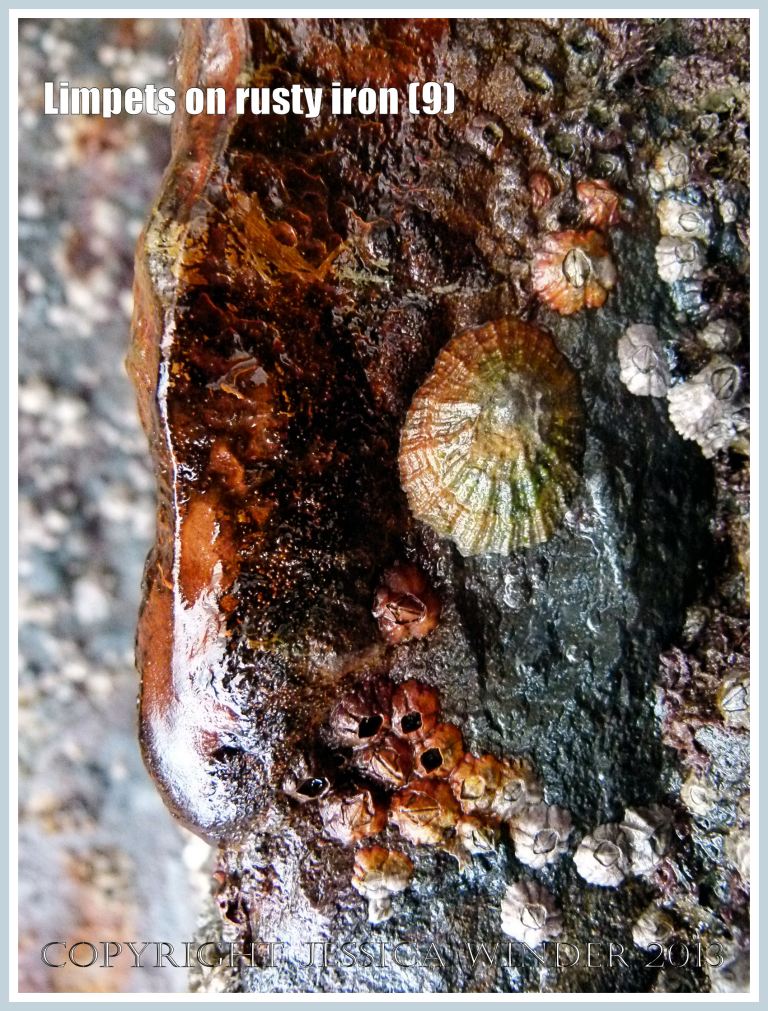
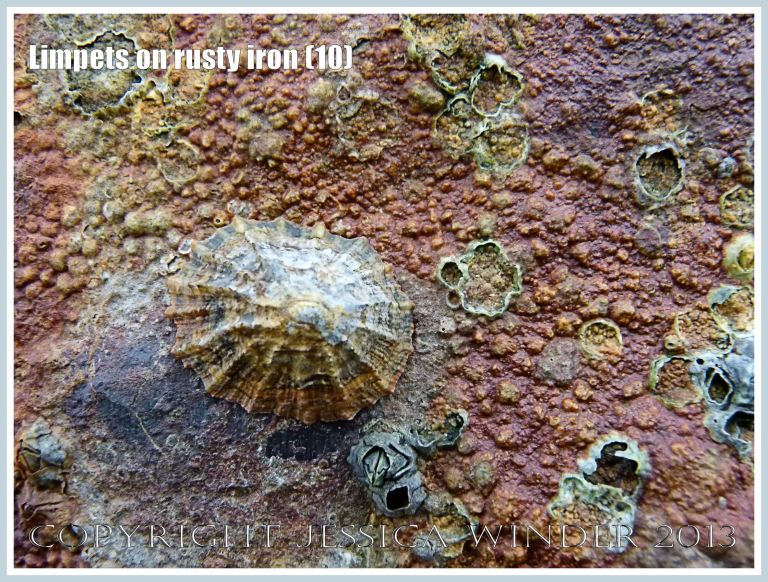
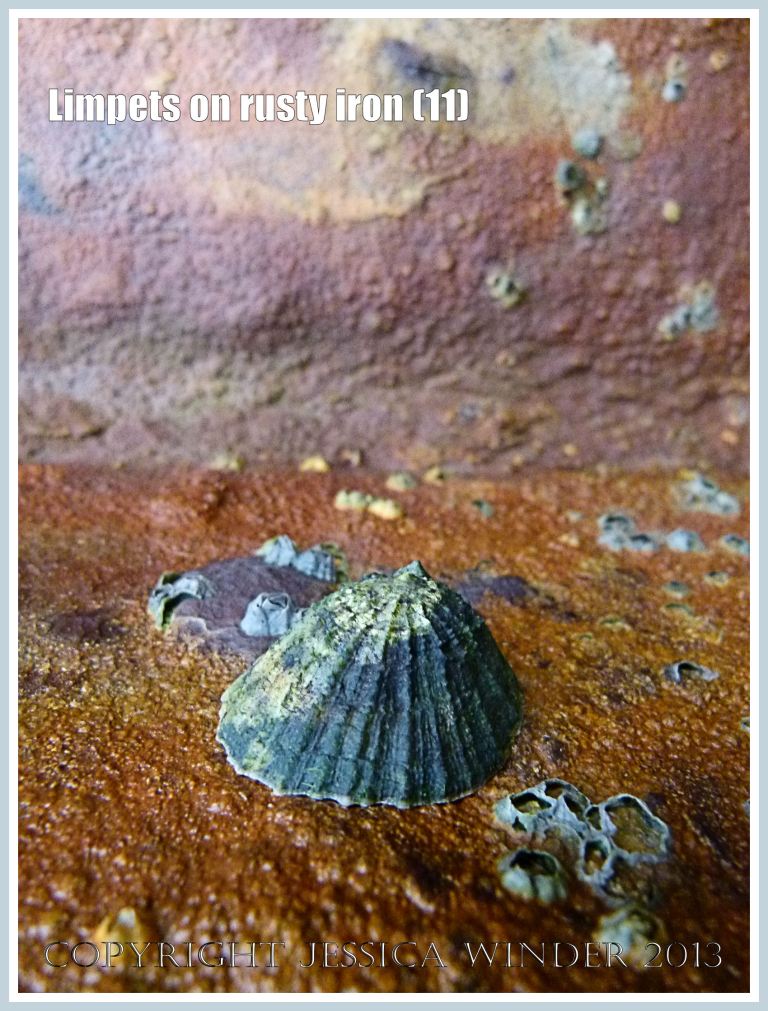
I like the appearance of rust and I’m always looking out for interesting colours, patterns, and textures in oxidising iron. A good place to look is the metalwork on seaside groynes and piers which are invariably corroded by seawater. I find it amazing that small seaside creatures like limpets settle in these seemingly inhospitable locations where they eek out a living by grazing the microscopic algae that coat the surfaces. In their turn, as the limpets cling on to these man-made objects, the shells become stained by the orange of the rust and the green of the algae so that they blend into the overall constantly evolving design.
COPYRIGHT JESSICA WINDER 2013
All Rights Reserved
 Jessica's Nature Blog
Great photos. I can’t believe how stained some of the shells are. We’ll be looking out for these now when we go down to the coast…
LikeLike
I believe the coloration to be staining – as it were from the outside. However, I am wondering if it could also be that ferrous compounds have been incorporated into the shells through digestion. It would be interesting to know how much iron actually ends up being ingested by the limpets as they scrape the algae from the rusty iron. Could be that the result of eating so much iron makes the limpets super strong – like Pop-Eye eating so much spinach!
LikeLike
Yes – that would explain why you can never prise the things from their resting places – everything is suddenly falling into place!
But if the iron is being ingested would it make it to the outside of the shells? I don’t really know enough about how the shells develop. Curious indeed and I feel like I need to know the answer now – time to get the books out this evening I think!
LikeLike
Shells consist of an organic proteinaceous framework on which crystals of various kinds of calcium carbonate are arranged. The particular arrangement and crystal type depends on the class of mollusc and the species. The shell is created by the soft tissue that envelops the body and is called the mantle.
It has been discovered from an analysis of fossil Brachiopods with coloured shells (Brachiopods are bivalved marine invertebrates like molluscs but are not molluscs) that natural organic pigments from the food which they had been eating had been incorporated into the crystals during shell formation. The unaltered pigment could be extracted from the crystals and further investigation of their structure provided clues to the diet of the creature from millions of years ago. Also, it is known that marine mollusc shells store heavy metals and can be used as indicators for heavy metal pollution. So, this leads me to think that it might be possible for iron to be included in the construction of the limpet shells. Maybe a biochemist could say whether this is a real possibility or not with these limpets.
References
Curry, G (1991) Fossils in colour, in New Scientist 16 November, 1991, No. 1795, pp 32-34.
Coglan, Andy (1994) Shells tell tales on toxic sins of emission, in New Scientist, 17 December, 1994, No. 1956, p 21.
LikeLike