
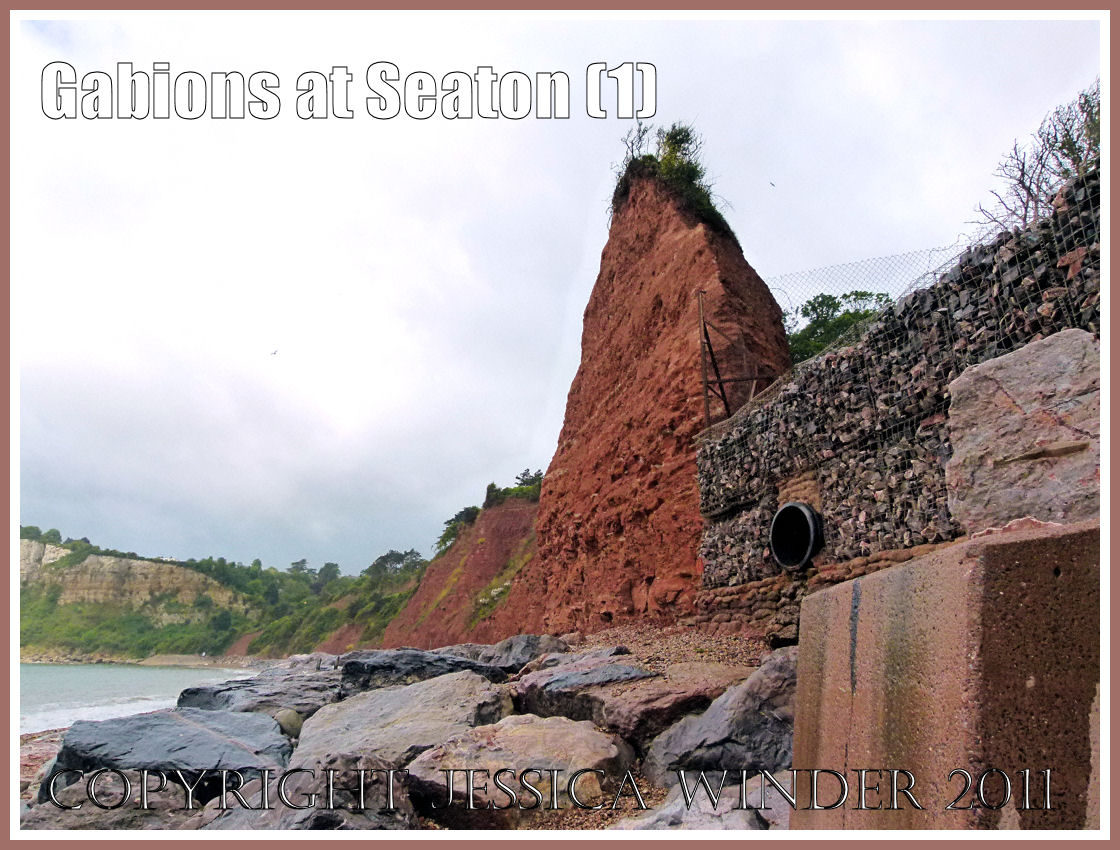
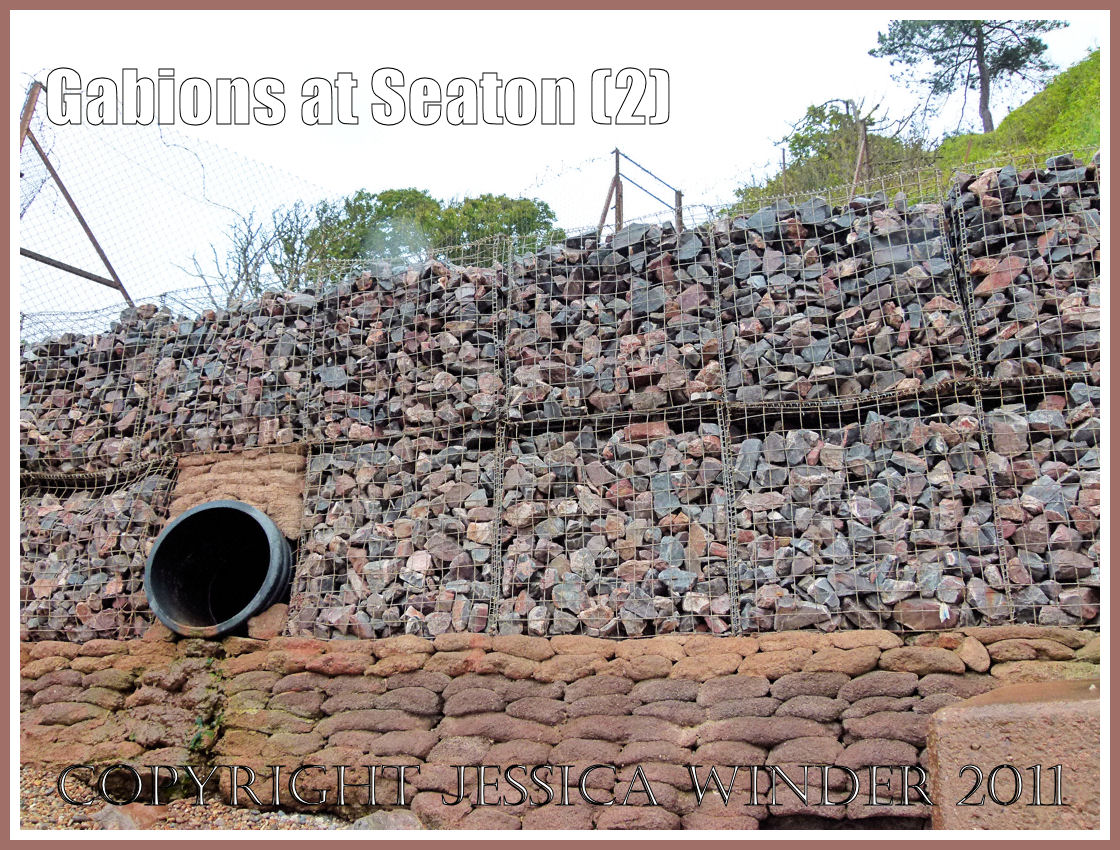
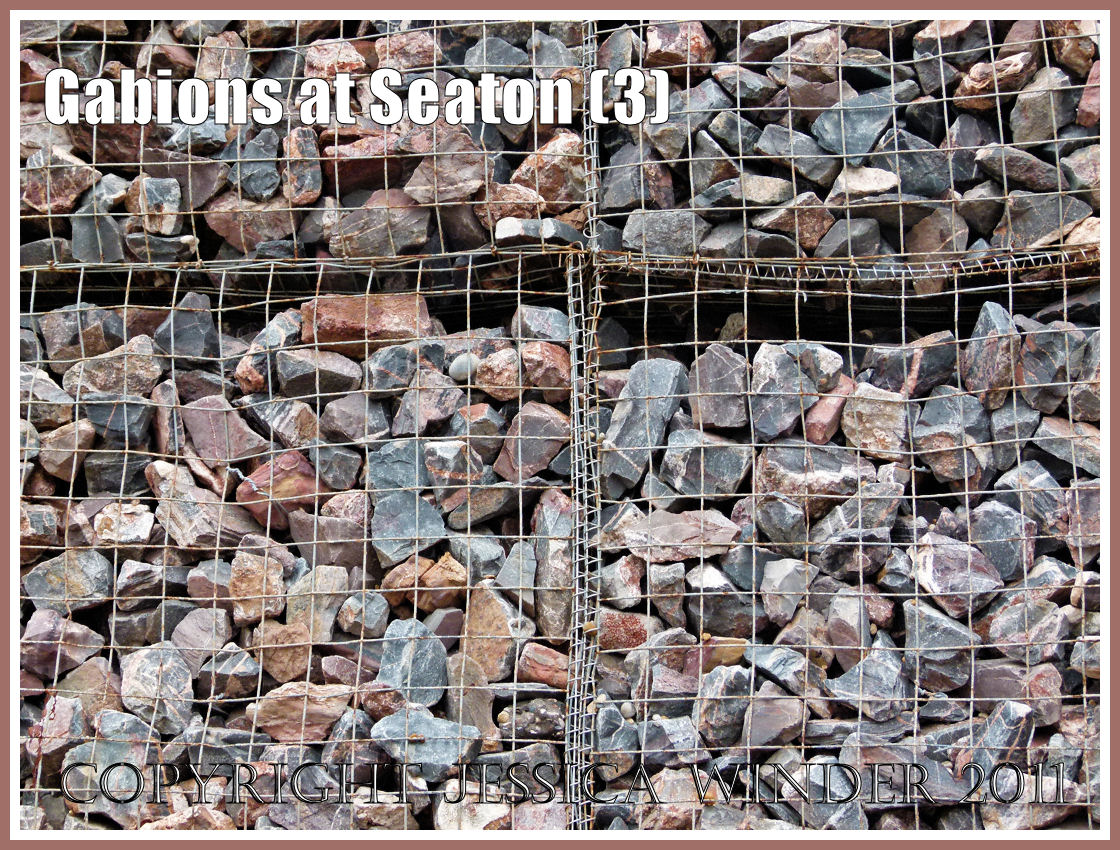
Assorted angular rock fragments from various sources fill the metal wire cages that comprise the sea defence gabions on the beach at Seaton in Devon, UK. The soft red Mercia Mudstone rocks of the cliff (top photograph) have been eroded back by wave action so that the steep pyramidal hill, that used to exist on the shore front, looks as if it has been neatly sliced down through the middle and the seaward half removed. The remaining portion is very precarious and vulnerable.
Large boulders have been placed on the seashore to protect the seaward base of the cliff from erosion by the waves. The rock-filled gabions have been positioned to the side of the cliff as an additional sea defence, to prevent the high-tide and stormy seas from rushing through the gap at the side and around the back of the remaining pinnacle of rock, where they could potentially undercut the remaining rock on the landward side.
See also:
Rock patterns on the beach at Seaton – Part 1
Geological abstract art from Seaton
COPYRIGHT JESSICA WINDER 2011
All Rights Reserved
 Jessica's Nature Blog