

Something different today. I normally write about seashore things in this blog but I photograph all sorts of other natural things – and man-made ones too. As it is the season of mellow fruitfulness, I thought you might like to see some pictures of common and colourful fungi that grow locally in the Wessex Countryside here in Dorset, UK. I am not an expert in fungi identification – so any names applied to the fungi in the pictures are tentative.
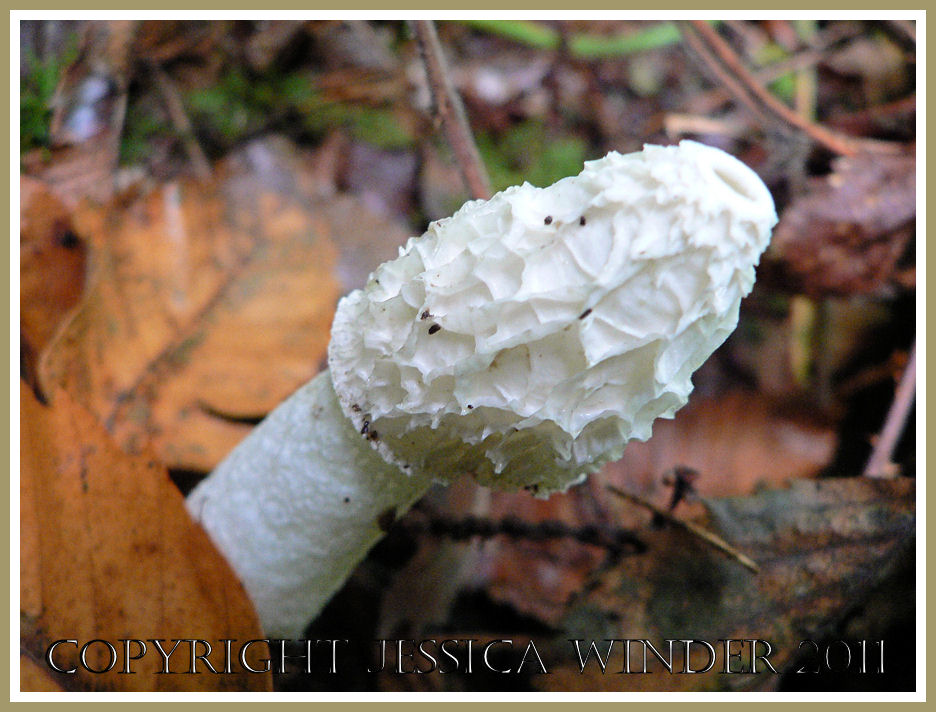
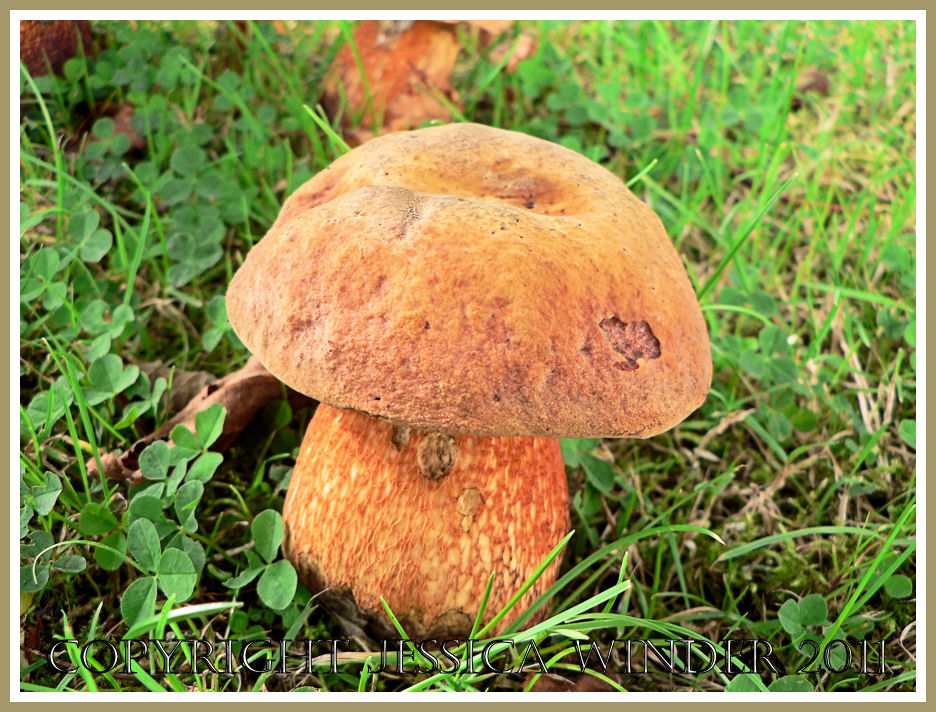
At the top are two red-capped Fly Agaric toadstools. Below: the lilac-capped Amethyst Deceiver fungus amongst beech leaf litter; a small bracket-type fungus with concentric bands of different colours growing on a fallen tree; a Stink Horn amongst dead woodland leaves; a Boletus mushroom (probably edible) growing on a lawn; and finally another Agaric-type toadstool with the cap faded from red to orange-brown (growing on grass beneath a silver birch tree).



Revision of a post first published 5 November 2009
COPYRIGHT JESSICA WINDER 2011
All Rights Reserved


Glorious!!!
LikeLike
Thanks, Viv. I hope you have altogether glorious day. The sun is shining brightly here and the world out there looks lovely.
Did your picture of the fish come out alright? That seemed a very good sign for you.
LikeLike
I still can’t upload it; I have been having some problems with my usb router which gets snitty if I use the other usb port for my phone connector. I have no idea what is wrong so I may try and upload on another computer and transfer it.
It’s a bit grey and grim here but we’re heading out for Sussex tonight.
LikeLike
Jessica, your fungi photographs are all lovely, but I think the Amethyst Deceiver is my favorite, both for its appearance and its wonderful name.
LikeLike
Great shots!
That penny bun (if it is such) looks luscious – I haven’t found any yet.
LikeLike
What a great name – penny bun! It does look like one. You are probably right. I saw a lot of these growing in someone’s lawn a few years ago. I asked if I could photograph them. Each year since I pointed out their presence, they have swiftly disappeared – presumably into his kitchen.
LikeLike
Thank you. It is a wonderful name but I am not certain why it is called Amethyst Deceiver – maybe because it looks beautiful but is deadly poisonous?
LikeLike
Hi, Viv. I hope you can resolve the problem of downloading your picture soon – or find an alternative picture of a fish out of water to illustrate your novel.
LikeLike
Jessica, these photographs are clearer than the ones in my Audubon field guide to mushrooms. They’re all so beautiful! Lovely colours.
LikeLike
I am surprised! I don’t even use an SLR camera – just a high end compact or bridge camera with a zoom. I agree with you about the colours; interesting textures too. I found a really wonderful toadstool when I was out walking yesterday. It was still unopened but I reckon the cap will be 30 cm in diameter when unfurled. I think it was a Parasol Mushroom – apparently delicious.
LikeLike
It’s that time of year! Look out for a post on mine in a few days which dabbles in fungi! I too love the Amethyst Deceiver pic.
LikeLike
Thank you. I look forward to seeing your fungi posting.
LikeLike
There’s something Jurassic about fungii!
LikeLike
Until your comment, I had never even considered the possibility that there might be a fossil record of ancient fungi. I looked it up – and lo and behold there really are fossil fungi! Unbelievable. Not just any fungi fossils but ones that were 6 metres tall dating from before the Jurassic, before the Triassic, before the Permian, before even the Carboniferous – as far back as the Devonian Period and beyond, 350 million years ago. They are called Prototaxites and you can read more about them at
http://www.newscientist.com/article/dn11701-mystery-prehistoric-fossil-verified-as-giant-fungus.html
LikeLike
I sat on a old silver birch tree not knowing how rotten it was and it snapped leaving debris and the rotten tree broken I was camped in the wood line on a walking trip when this happened later that evening I noticed the area glowing orange and thought this would be some unusual fungi in the daylight I inspected it but saw nothing just rotten wood any clues as to what this was as I’m intrigued.
LikeLike
Hello Darren. I am not a fungi expert but I did write a post some time ago about Luminous Fungi. Maybe this is relevant to the glowing orange that you observed.
LikeLike