
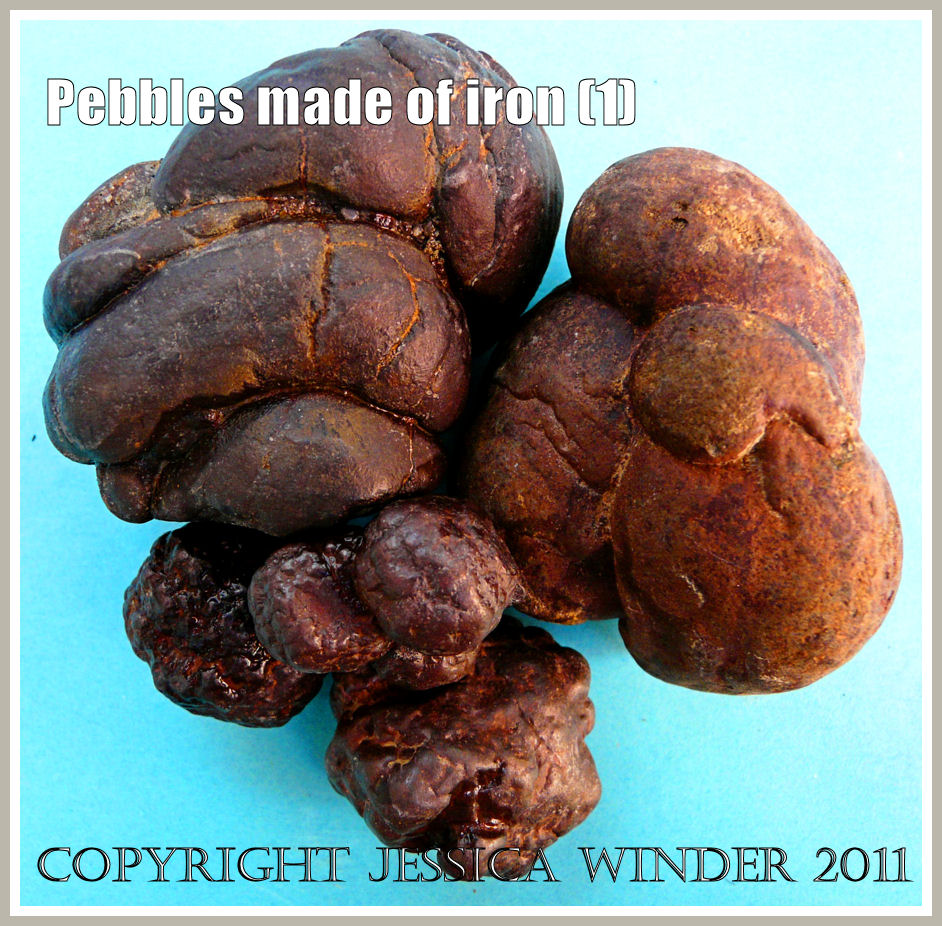
Immediately recognisable because of their heavy weight, nodules of iron pyrites commonly weather out of the cliff face rocks along the Jurassic Coast in Dorset, UK. The top photograph shows an arrangement of iron pyrites pebbles from the seashore at Charmouth.
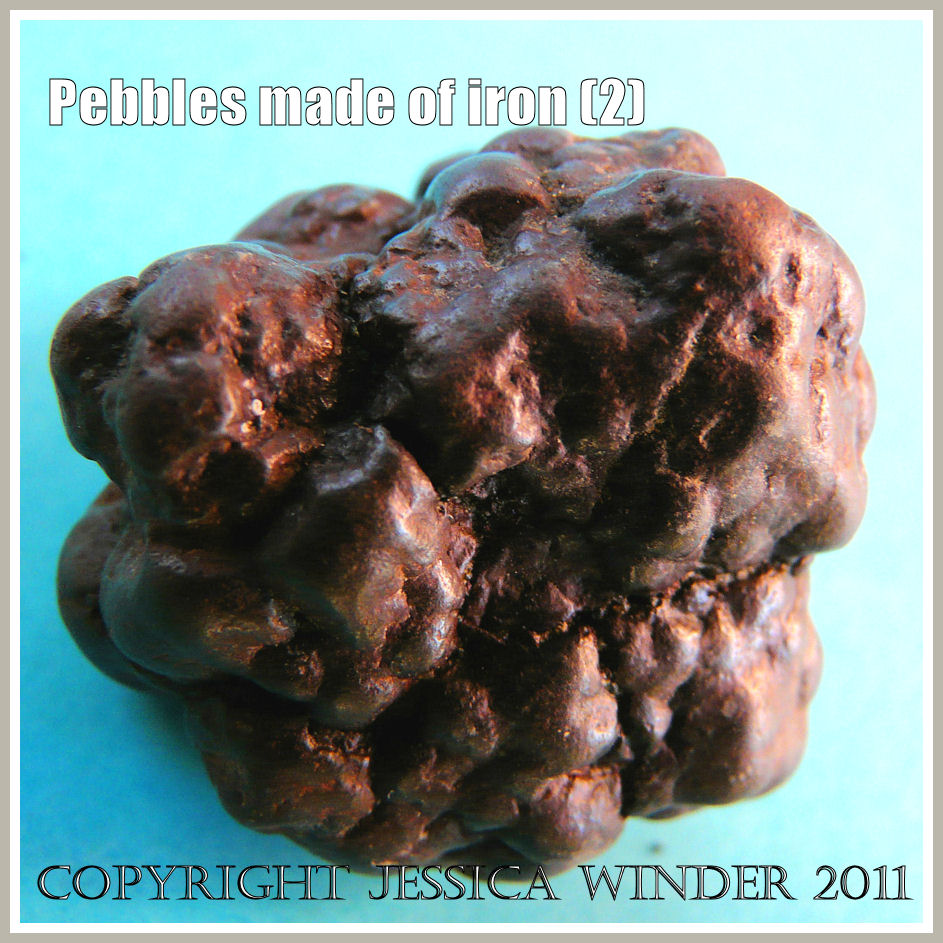
These metal pebbles are composed of a mixture of iron and sulphur. The name pyrites derives from the Greek word meaning fire – because sparks fly when they are struck by another stone or metal. The smooth rounded shapes are natural and not the result of wear while rolling around on the beach. Inside, they have a crystal structure. Iron pyrites is also found as veins through rock joints; and the replacement of the original organic compounds in fossils such as ammonites.
If you would like to learn more about ‘what is pyrite?’, click here for the website Discovering Fossils – bringing the prehistoric world to life.


Revision of a post first published 27 November 2009
COPYRIGHT JESSICA WINDER 2011
All Rights Reserved


They look so organic!
LikeLike
Let’s be honest, these pebbles look like faecal matter, or in laymen’s terms ‘pooh’. There was no way I could photograph these iron pyrites stones that would make them look any other way, or even pretty…and believe me I tried.
LikeLike
Do they attract a magnet?
LikeLike
You know, I’m not too sure. They are not in themselves magnetic – they do not seem attracted to each other or other metal objects. However, they probably could be picked up by a strong magnet as they are very high iron content. I also suppose that it might be possible to magnetise them – make them polarised with positive and negative poles – so that they would attract other metal objects. Maybe I should try it out and see?
LikeLike
I found similar pebbles at Bexhill on the beach. When placed next to each other they melded together and finally disintegrated into a fine powder. I wonder whether they could be from a meteor shower.
LikeLiked by 1 person
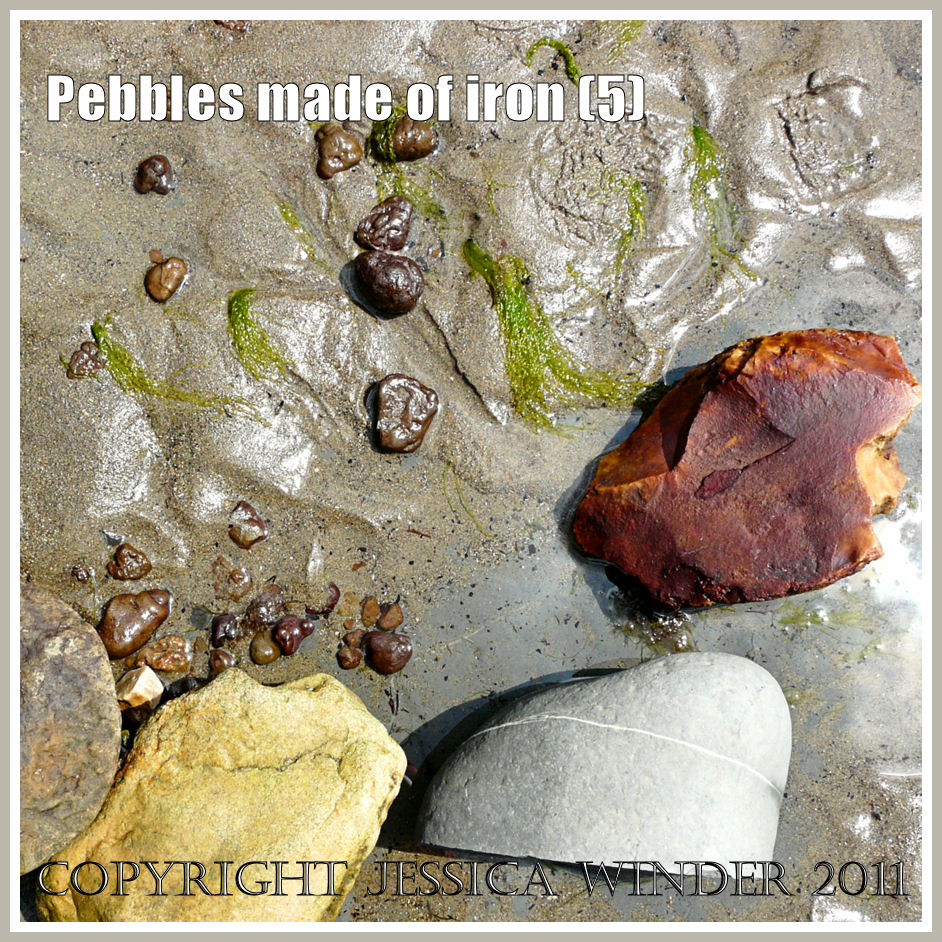
Hello Kate. I am not really sure what your pebbles were. I have never come across a situation where iron nodules I have picked up on the beach have melded together and disintegrated to powder. I have kept samples for many years without that happening. I wonder if yours were out in the garden and exposed to rain etc. Iron nodules like the ones in my blog post are common on beaches and weather out of the rocks by the shore. They are natural geological phenomena. Some of the iron nodules found at Cooden Beach (which I believe is close to Bexhill) contain fossils. There is an account online about a geology field trip to Cooden which describes iron nodules with fossils of pieces of shark. https://www.researchgate.net/publication/339630051_HDGS_field_trip_to_Cooden_near_Bexhill_East_Sussex_Sunday_1st_July_2012
I don’t think that your pebbles are from a meteor shower. Meteor material is extremely hard and unlikely to disintegrate in the way you describe. Hope this information helps.
LikeLike
Kate Baileys disintegrating pebbles could be Marcasite. These are a form of iron pyrite known as white pyrite that decompose in humid air to produce iron sulphides and sulfuric acid. The wikipedia link is worth looking at. I hope this is useful.
https://en.wikipedia.org/wiki/Marcasite
LikeLiked by 1 person
Thank you for the information, Will. I wonder how frequently marcasite is found in the UK south coast? It sounds as if it would be an unusual occurrence.
LikeLike
I got some nice pieces from Seatown. I cracked the bigger pieces open to see the lovely clean pyrites. Is there any way of making them shine after the matrix or lias is removed. I have tried vinegar 2 to water 1 and also water 2 to baking powder 1, both soaked for 5 hours.
LikeLiked by 1 person
Hello, Mike. I am sorry but I do not know how to restore the shine to iron nodules. Maybe mechanically polish them to remove the outermost layer?
LikeLike
Char mouth yesterday. Picked up a 23cm long 4.4kg lump of pyrites. Surface covered with little ‘bobbles’. My first day fossil hunting. Any idea what to do with this v. heavy specimen?
LikeLiked by 1 person
I am not certain how to answer your question except by asking another one. Why exactly did you decide to pick up and take away this large iron pyrites nodule? It is not a fossil. I do not think it has any particular value academically or monetarily. It is an interesting object and may be aesthetically pleasing as a souvenir. In Victorian times it might have been put in a ‘cabinet of curiosities’.
LikeLike